
Gong can connect to only one CRM at a time.
Organizations relying on multiple CRMs may need to select one for the supported CRM connection or assess a separate data workflow.
Evidence source ↗
Gong captures and analyzes customer calls and other interactions, connecting conversation insights with CRM data for sales coaching, deal analysis, and forecasting.
The product combines conversation capture, analysis, CRM context, coaching, and forecasting. G2 reports a high aggregate rating, while accessible review excerpts mention navigation complexity and occasional transcription or AI-output errors. Pricing is quote-based, with a per-user license and platform fee.
This profile combines documented product information and independent evidence where available. It is not a hands-on test unless TechZella explicitly identifies one.
Gong is a revenue software platform that records and analyzes customer interactions, then connects conversation data with CRM information. Its capabilities include call analysis, coaching workflows, deal analysis, and forecasting.
Its fit is strongest for revenue teams that will use conversation data beyond meeting notes. Buyers should account for a quote-based pricing model and CRM setup requirements when assessing rollout effort.
A quick way to understand who this product may suit, where its limits matter, and which facts are most relevant before you compare alternatives.
Revenue organizations that want to connect recorded customer conversations with CRM activity, coaching, and deal or forecast analysis.
Teams seeking only basic meeting notes, or buyers requiring published seat prices and a self-service free plan, may find Gong’s quote-based pricing and broader platform scope unsuitable, and should evaluate alternatives such as Salesloft or ZoomInfo Chorus instead.
API, Cloud, SaaS, Web, Zoom
7.9/10
These are the product-specific differences that may matter when deciding whether the software fits your workflow. They are based on documented evidence rather than a universal ranking.
These are documented constraints or practical friction points that may matter before you adopt the product.
Organizations relying on multiple CRMs may need to select one for the supported CRM connection or assess a separate data workflow.
Evidence source ↗Salesforce administrators should verify edition, permissions, available storage, and custom-field capacity before implementation.
Evidence source ↗Buyers need a tailored quote to determine total cost for their team size and selected products.
Evidence source ↗Per-user licenses plus a platform fee based on supported users. Gong asks prospective customers to request a customized proposal; integrations with an existing technology stack are listed as free.
Check current pricing →Pricing may change. Verify current plans on the vendor's website.
Compare similar products directly, then see which alternatives may make more sense when your requirements differ.
| Decision factor | Gong.io | Fathom |
|---|---|---|
| Core scope | Conversation intelligence connected to CRM data, coaching, deal analysis, and forecasting. | Meeting recording, transcription, AI summaries, and team features, with paid Business features including CRM sync and coaching metrics. Source ↗ |
| Published pricing | Per-user licenses plus a platform fee; Gong requires a customized proposal. | Publishes a free individual plan and per-user paid plans on its pricing page. Source ↗ |
| CRM and workflow scope | Native CRM connections include Salesforce, HubSpot, and Microsoft Dynamics 365; the generic CRM API is limited to importing data. | Fathom lists CRM field sync on its Business plan. Source ↗ |
| Conference integrations | Official documentation lists Zoom, Google Meet, Webex, Microsoft Teams, and additional providers. | Fathom describes meeting capture and recordings on its pricing page; that page does not list the same provider-by-provider integration set. Source ↗ |
Only factors supported by the available research are shown. The comparison is descriptive, not a ranking.
These products address broadly similar requirements. The descriptions focus on documented reasons a buyer might compare them with Gong.io.
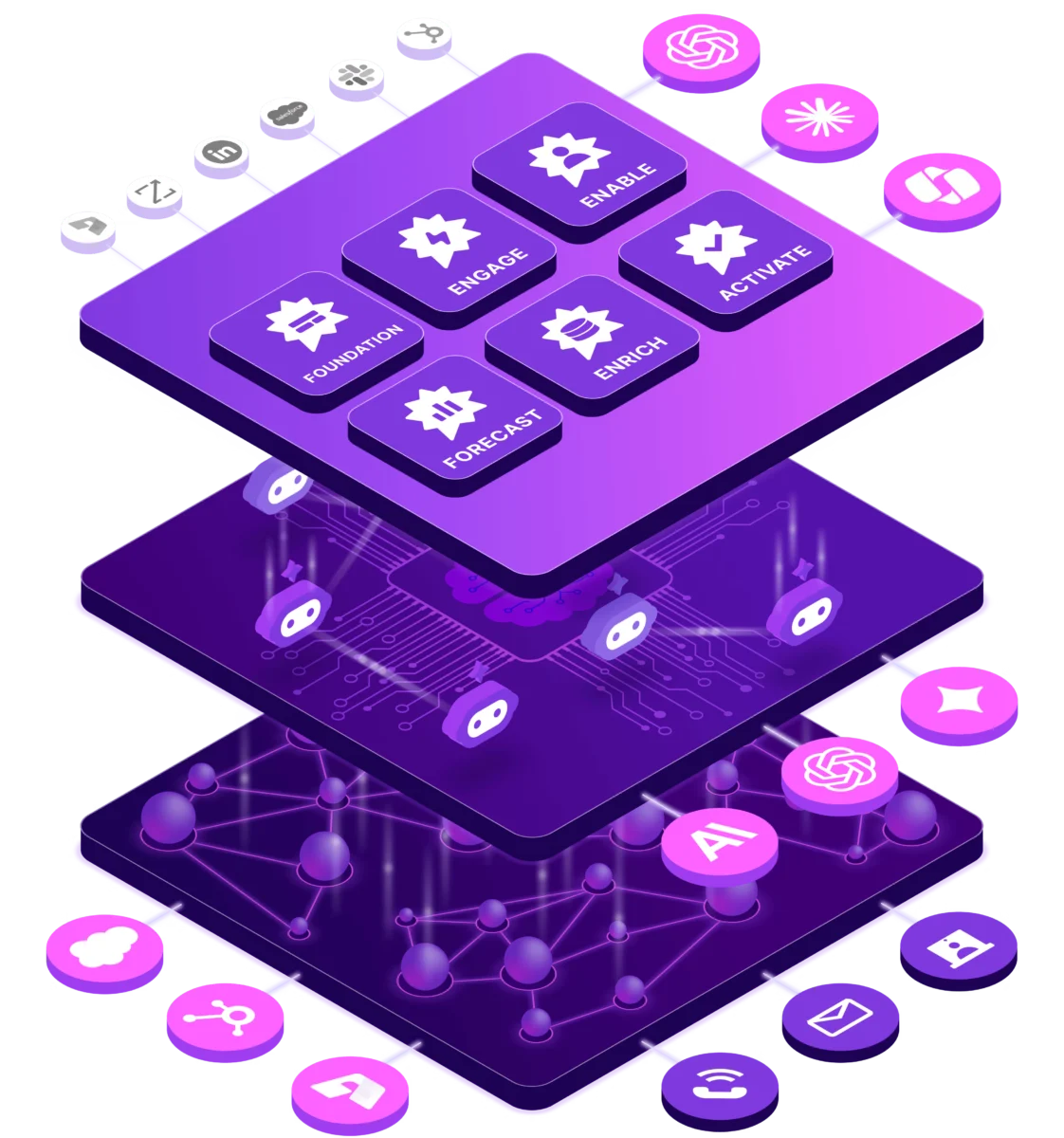


| Deployment | Cloud-based SaaS |
|---|---|
| API | Available to customers and partners; supports call and CRM data workflows |
| Native CRM integrations | Salesforce, HubSpot, Microsoft Dynamics 365 |
| CRM integration limit | One CRM integration at a time |
| Video-conferencing integrations | Zoom, Google Meet, Webex, Microsoft Teams, GoToMeeting, and others |
| Standard data retention | Lesser of three years and customer term; company-library calls have a stated exception |
| Pricing model | Per-user licenses plus a platform fee; customized quote |
Verified installation, hosting, administration, or environment details that can affect implementation.
| Hosting | Cloud-based software; Gong’s official materials describe its revenue platform and hosted services. Source ↗ |
|---|---|
| Conference capture | Integrates with Zoom, Google Meet, Webex, Microsoft Teams, GoToMeeting, and other listed providers. Source ↗ |
Documented portability, standards, export, or switching considerations. No switching-cost score is shown unless the evidence supports one.
The API supports retrieving analyzed call data and uploading CRM data. Gong documents one CRM integration at a time and notes that the generic CRM API is more limited than native integrations.
Evidence source ↗A proprietary editorial score based on product capabilities, usability, value, performance, support and user sentiment evidence.
The product combines conversation capture, analysis, CRM context, coaching, and forecasting. G2 reports a high aggregate rating, while accessible review excerpts mention navigation complexity and occasional transcription or AI-output errors. Pricing is quote-based, with a per-user license and platform fee.
Methodology v1.0. The assessment weighs feature coverage (25%), ease of use (15%), value for money (20%), performance (15%), support (10%) and user sentiment (15%), using researched product evidence and verified review evidence where available. It is a TechZella editorial assessment, not a direct user-review average.
Key claims are linked to the sources used to verify them. This evidence record is separate from third-party user ratings.
TechZella evaluates software using documented product capabilities, pricing information, usability and value considerations, independent user evidence where available, and competitive context. The assessment is an editorial review, not a hands-on test unless one is explicitly identified. Our editorial assessment is based on 6 documented sources.
The pricing page states that licenses are priced per user and that the platform fee depends on supported users.
View source ↗Verified 2026-11-01Gong’s API overview lists audio upload, analyzed call data retrieval, transcripts, scorecards, and CRM data upload capabilities.
View source ↗Verified 2026-11-01The CRM integration documentation names those native integrations and describes the generic CRM API for other systems.
View source ↗Verified 2026-11-01The conferencing documentation lists Zoom, Google Meet, Webex, Microsoft Teams, and other supported providers.
View source ↗Verified 2026-11-01The retention policy gives this standard duration for customer data and separately describes company-library exceptions.
View source ↗Verified 2026-11-01The G2 product-review page displayed the aggregate rating and review count when accessed.
View source ↗Verified 2026-11-01Answers begin with the clearest available response, followed by the context that helps you act on it.
No reviews yet. Be the first to share your experience.
Please log in to submit a review.