
Helpdesk billing is based on tickets, and AI Agent can add a separate outcome-based charge.
Seasonal or unexpected support spikes can change monthly costs; forecast both replied-to tickets and automated conversations.
Evidence source ↗
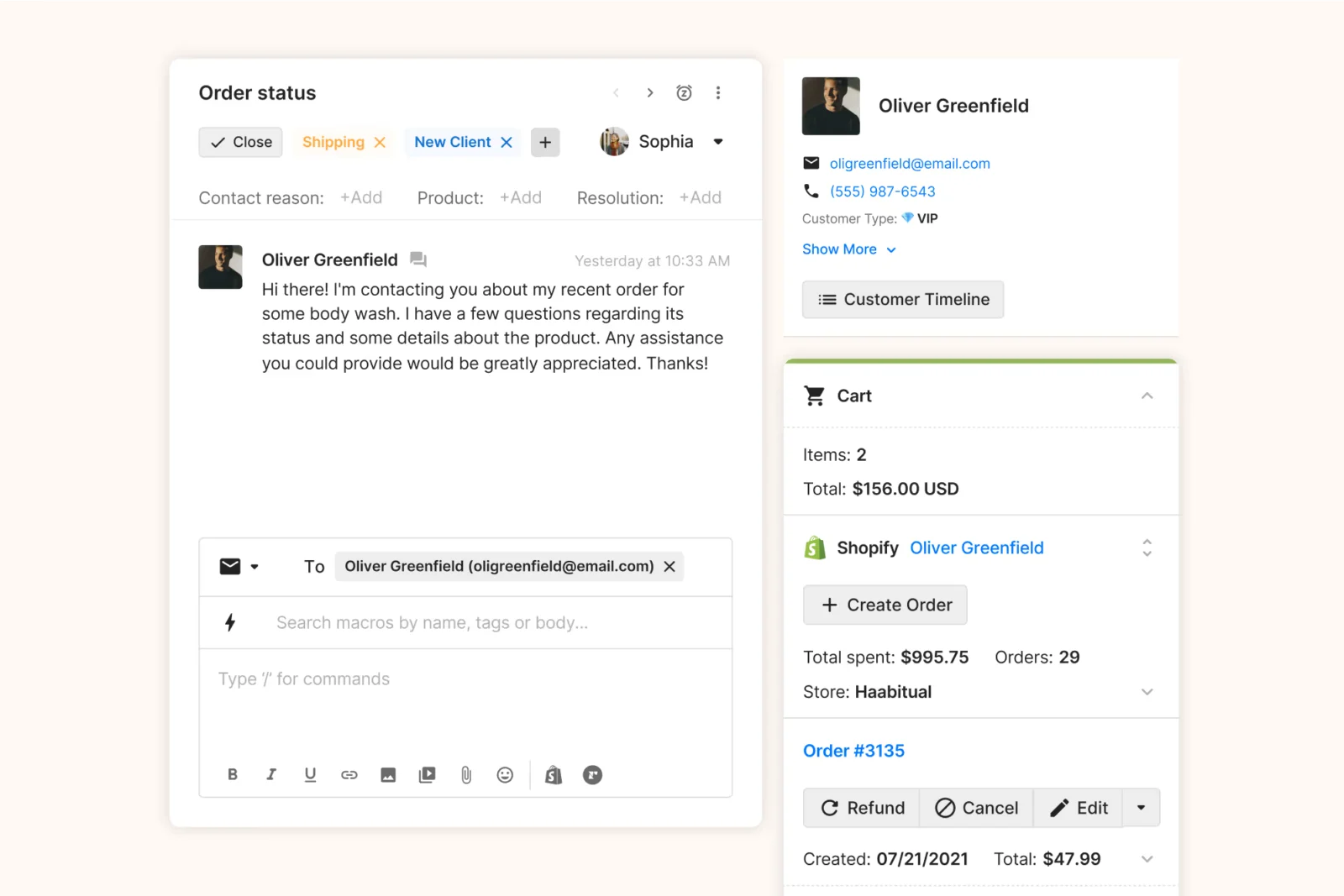
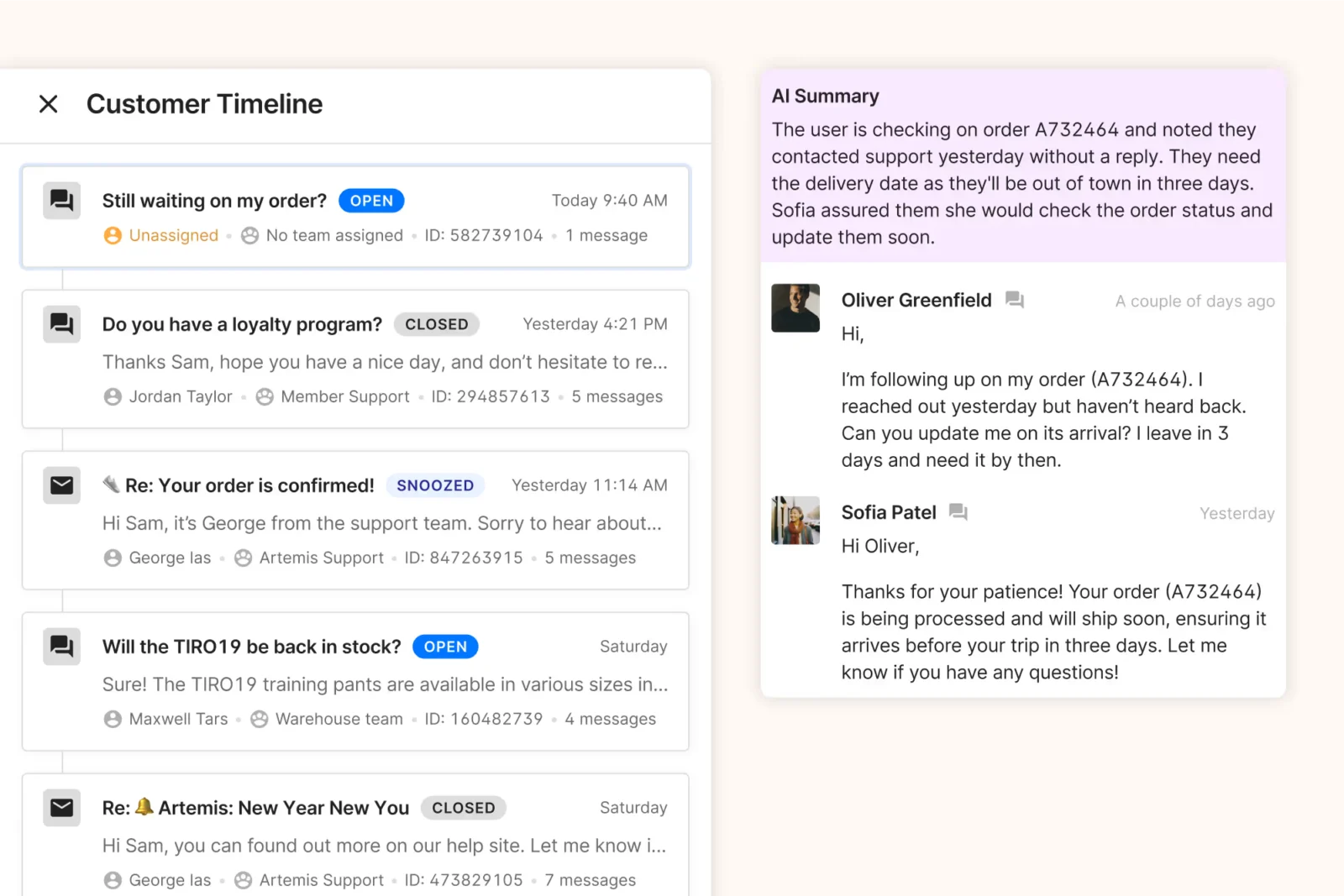
Gorgias is a cloud-based customer service platform for ecommerce teams. It combines a multichannel helpdesk, store integrations, workflow automation, and optional AI Agent features.
Official documentation describes ecommerce-focused ticketing, integrations, automation, and AI tools. Public G2 and Shopify App Store ratings are positive overall; ticket-based charges and setup effort are documented trade-offs.
This profile combines documented product information and independent evidence where available. It is not a hands-on test unless TechZella explicitly identifies one.
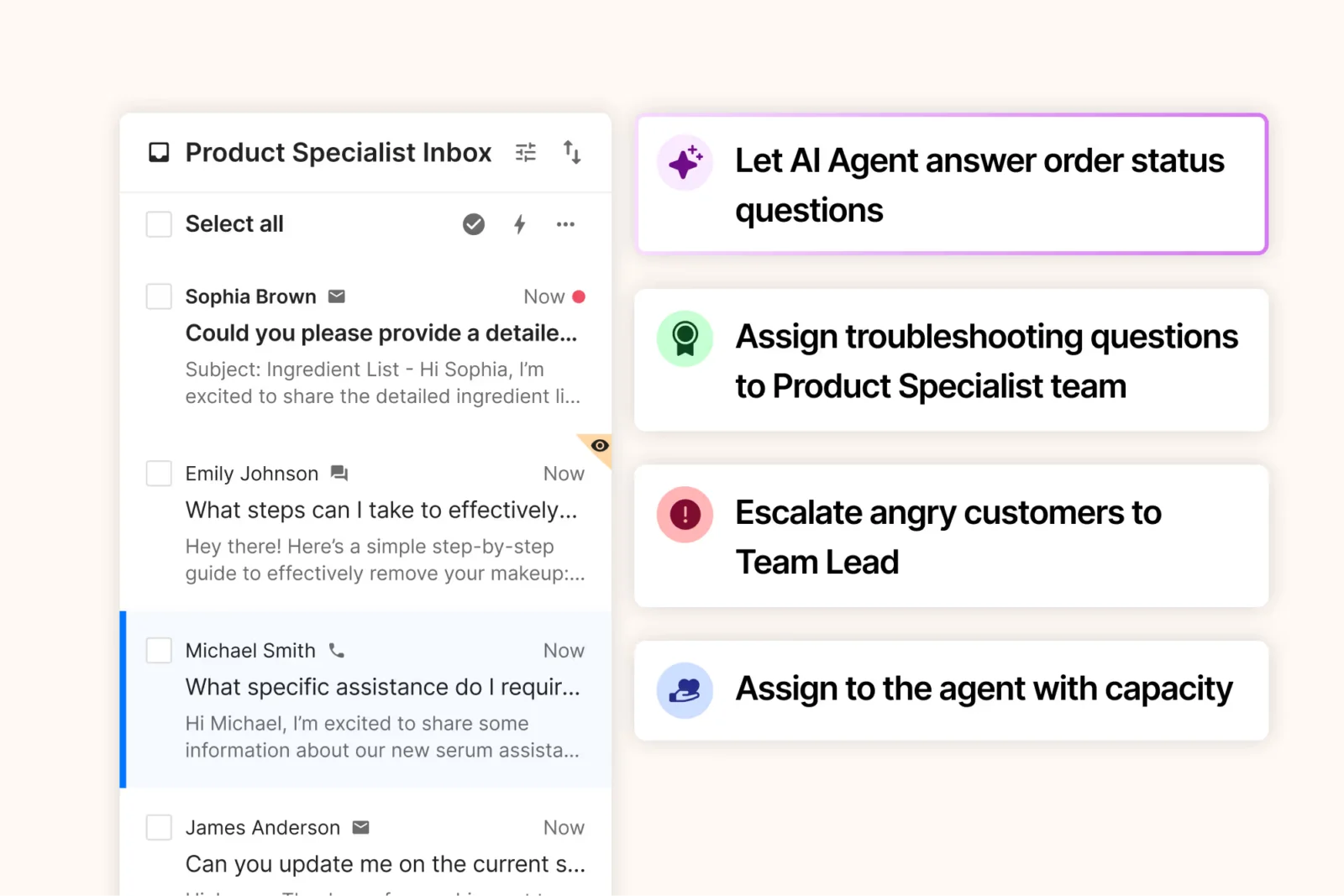
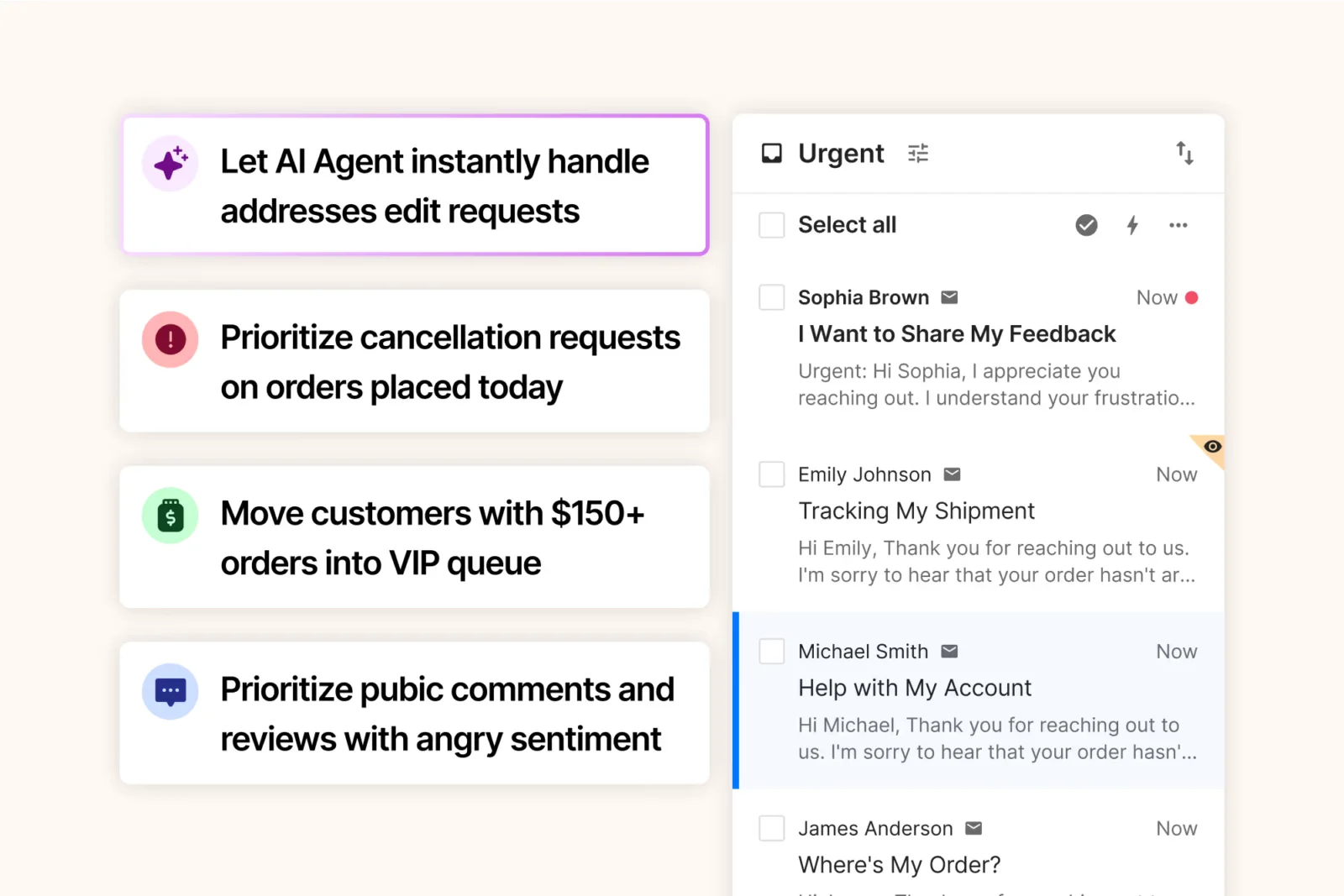
Gorgias is a cloud-based customer service platform designed for ecommerce teams. It brings messages from multiple channels into a shared workspace and connects conversations with customer and store information.
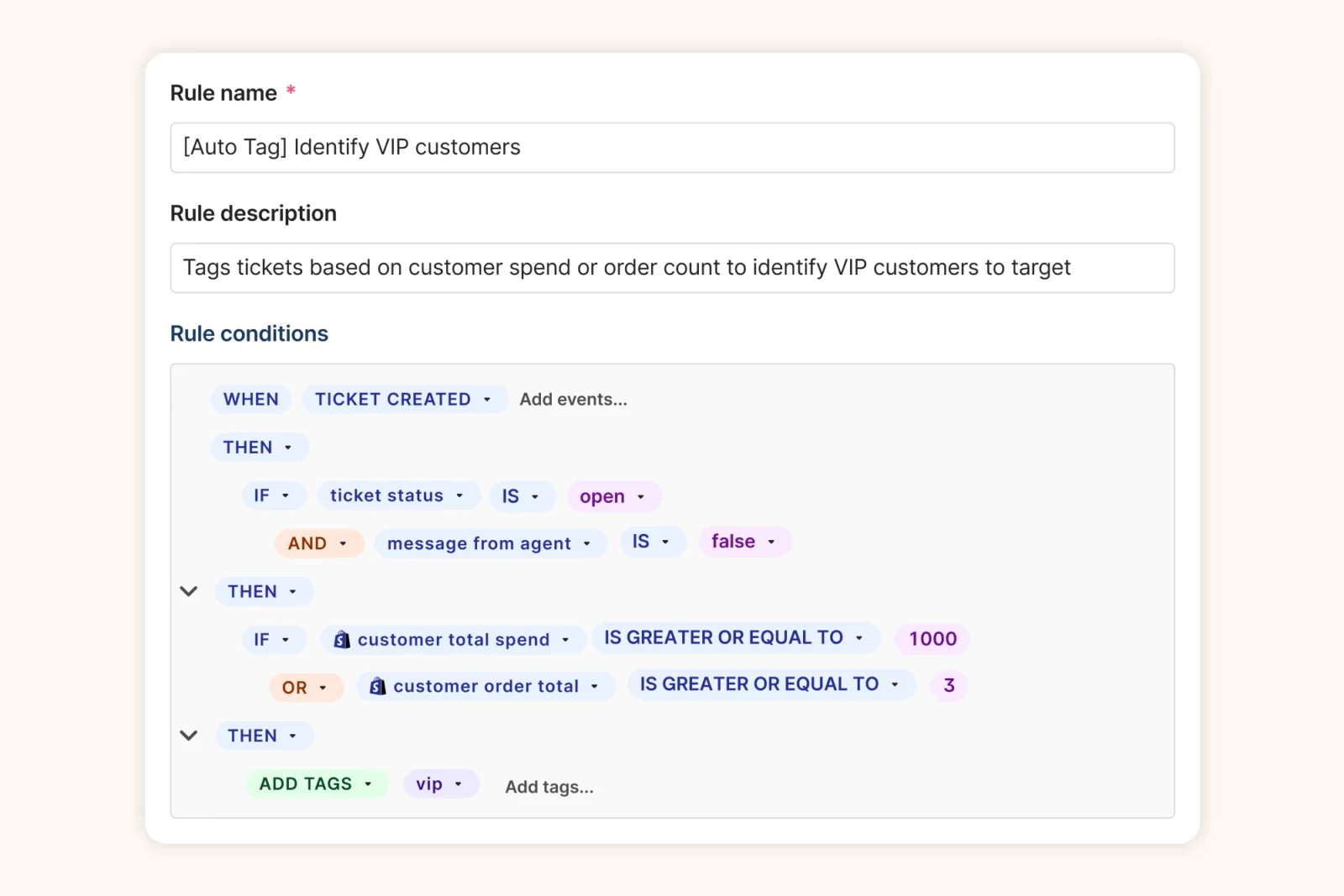
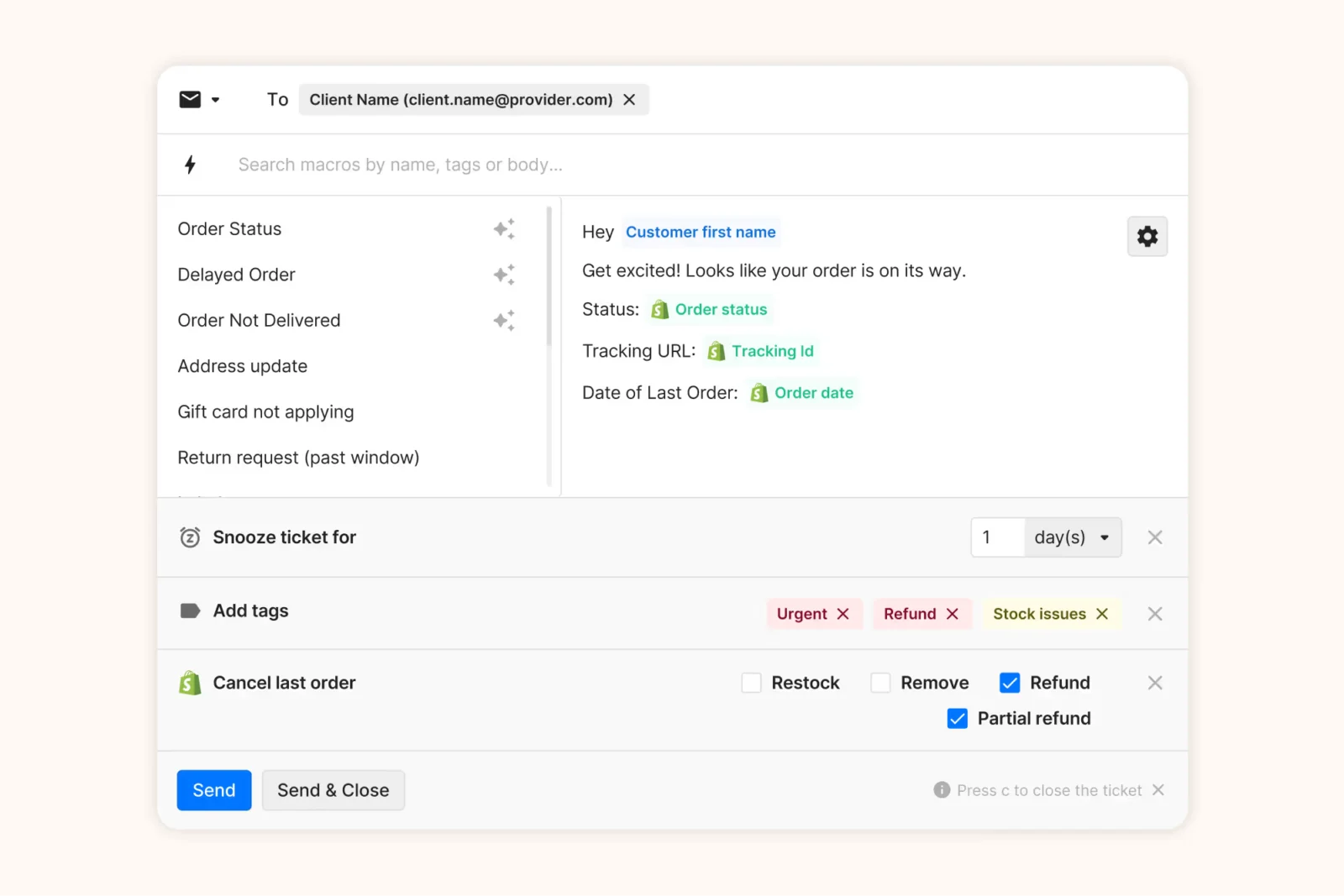
Teams can manage tickets, use rules and macros, connect commerce and service apps, and add AI Agent for automated support or shopping conversations. Its ticket-based billing, separate AI usage fees, and setup requirements are important considerations when estimating operating costs.
A quick way to understand who this product may suit, where its limits matter, and which facts are most relevant before you compare alternatives.
Ecommerce support teams that want customer conversations, store context, and common order tasks in one workspace, especially teams using Shopify.
Teams with variable or high ticket volume should model overage and AI-resolution charges. Buyers seeking a general-purpose service desk rather than commerce-focused workflows may prefer a broader platform, and should evaluate alternatives such as Zendesk or Richpanel instead.
REST API, SaaS, Web
7.9/10
These are the product-specific differences that may matter when deciding whether the software fits your workflow. They are based on documented evidence rather than a universal ranking.
These are documented constraints or practical friction points that may matter before you adopt the product.
Seasonal or unexpected support spikes can change monthly costs; forecast both replied-to tickets and automated conversations.
Evidence source ↗A trial may not reproduce a fully configured production workflow.
Evidence source ↗Teams should allocate time to define what the agent can answer or change, and when it should pass work to a person.
Evidence source ↗Published plan guide lists 50 billable tickets per month and three agent seats.
Check current pricing →Published plan guide lists 300 billable tickets per month. Overage charges may apply.
Check current pricing →Published plan guide lists 2,000 billable tickets per month.
Check current pricing →Published plan guide lists 5,000 billable tickets per month.
Check current pricing →Custom pricing and ticket volumes, according to the published plan guide.
Check current pricing →Trial accounts have outbound email limits and cannot create a help center.
Check current pricing →Pricing may change. Verify current plans on the vendor's website.
Compare similar products directly, then see which alternatives may make more sense when your requirements differ.
| Decision factor | Gorgias | Zendesk | Richpanel |
|---|---|---|---|
| Core scope | Helpdesk and AI features built around ecommerce support and commerce conversations. | Customer service plans span ticketing, messaging, live chat, telephony, and AI features. Source ↗ | Ecommerce helpdesk combining support tools and metered AI usage in its published plan. Source ↗ |
| Pricing model | Helpdesk subscription is based on ticket volume; AI Agent and some channels can add usage charges. | Published plans use per-agent subscription pricing; AI agent costs are based on successful outcomes. Source ↗ | Published pricing lists a per-seat helpdesk fee and metered AI usage. Source ↗ |
Only factors supported by the available research are shown. The comparison is descriptive, not a ranking.
These products address broadly similar requirements. The descriptions focus on documented reasons a buyer might compare them with Gorgias.
| Deployment | Cloud SaaS |
|---|---|
| Access | Web browser |
| API | REST API |
| Integration directory | 100+ listed apps |
| Ecommerce platforms | Shopify, BigCommerce, Magento, WooCommerce |
| Helpdesk billing basis | Ticket volume |
| AI Agent billing | Additional outcome-based usage fee |
| Trial length | 7 days |
| Trial restrictions | Outbound email limits; help center creation unavailable during trial |
Verified installation, hosting, administration, or environment details that can affect implementation.
| Installation or hosting | Cloud-based SaaS helpdesk accessed through a web browser; no self-hosted deployment option was identified in the reviewed product materials. Source ↗ |
|---|
Documented portability, standards, export, or switching considerations. No switching-cost score is shown unless the evidence supports one.
Trial setup is retained until upgrade; if the account is not upgraded, the vendor says account data is permanently deleted after 90 days.
Evidence source ↗A proprietary editorial score based on product capabilities, usability, value, performance, support and user sentiment evidence.
Official documentation describes ecommerce-focused ticketing, integrations, automation, and AI tools. Public G2 and Shopify App Store ratings are positive overall; ticket-based charges and setup effort are documented trade-offs.
Methodology v1.0. The assessment weighs feature coverage (25%), ease of use (15%), value for money (20%), performance (15%), support (10%) and user sentiment (15%), using researched product evidence and verified review evidence where available. It is a TechZella editorial assessment, not a direct user-review average.
Key claims are linked to the sources used to verify them. This evidence record is separate from third-party user ratings.
TechZella evaluates software using documented product capabilities, pricing information, usability and value considerations, independent user evidence where available, and competitive context. The assessment is an editorial review, not a hands-on test unless one is explicitly identified. Our editorial assessment is based on 6 documented sources.
The company's About page gives 2015 as its founding year and says it began in Paris.
View source ↗Verified 2026-10-25The product page describes a centralized inbox and lists email, live chat, social media, SMS, and Voice channels.
View source ↗Verified 2026-10-25Its integrations directory says customers can connect 100+ apps.
View source ↗Verified 2026-10-25The developer resources page identifies an open REST API and links to developer documentation and app resources.
View source ↗Verified 2026-10-25The billing guide describes ticket fees, outcome-based AI Agent charges, and separate Voice and SMS add-ons.
View source ↗Verified 2026-10-25The help article updated October 23, 2026 says Gaia is in open beta and availability may vary by account.
View source ↗Verified 2026-10-25See the product-specific buyer questions below for verified details on trial length, integrations, API access, and billing.
No reviews yet. Be the first to share your experience.
Please log in to submit a review.