
The official company notice says WhyLabs, Inc. is discontinuing operations and the complete platform has been open-sourced.
The former hosted product and company support should not be assumed available to new buyers.
Evidence source ↗WhyLabs was an AI observability platform for monitoring data pipelines, machine-learning models, and LLM applications. Its company discontinued operations and open-sourced the platform.
Historical product documentation and public reviews describe broad model and data monitoring. The hosted service is discontinued, and the open-source platform has no active vendor support commitment.
This profile combines documented product information and independent evidence where available. It is not a hands-on test unless TechZella explicitly identifies one.
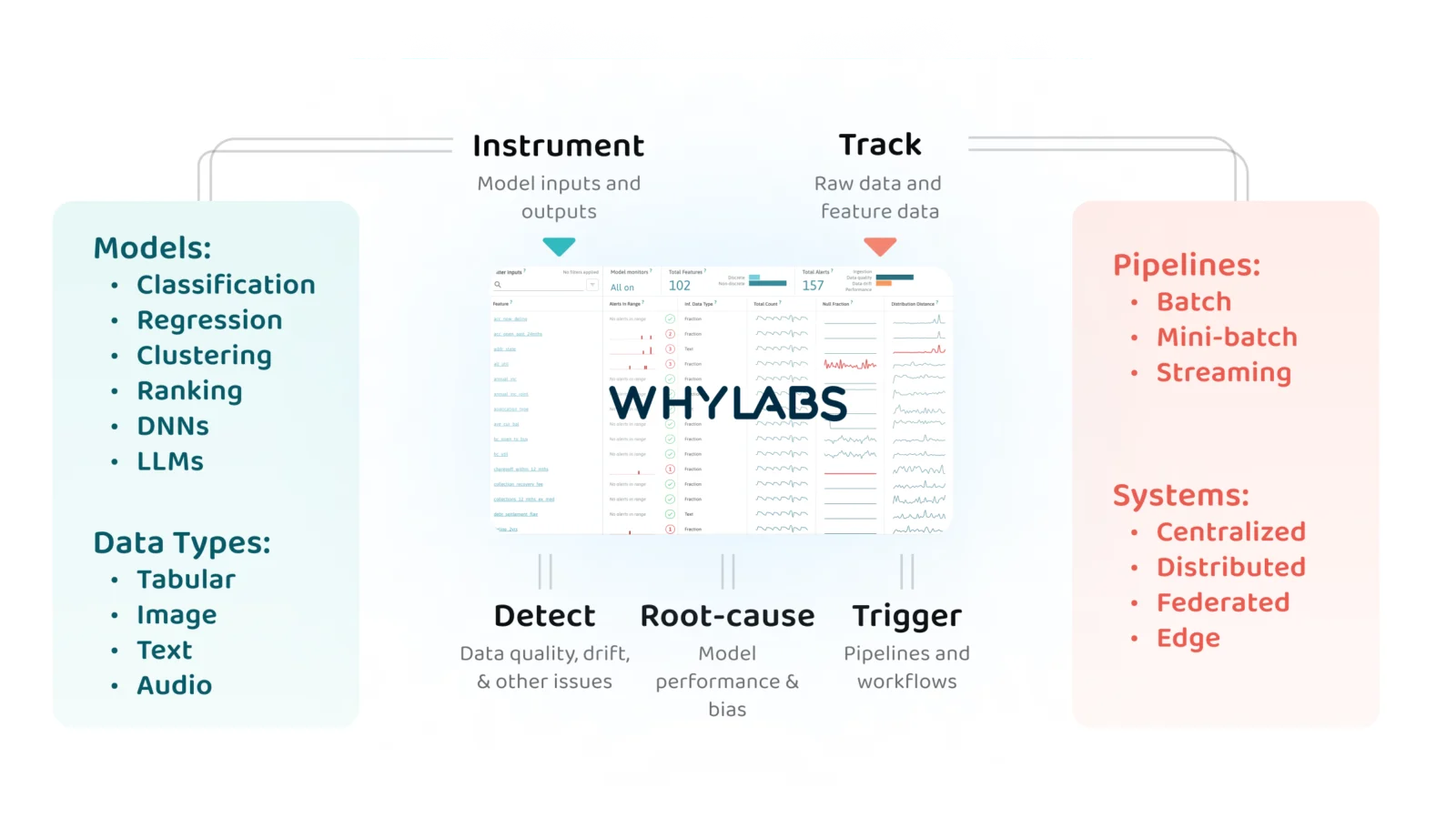
WhyLabs was an AI observability platform for production data pipelines, predictive models, and generative AI applications. Its company announced that it was discontinuing operations and open-sourced the platform.
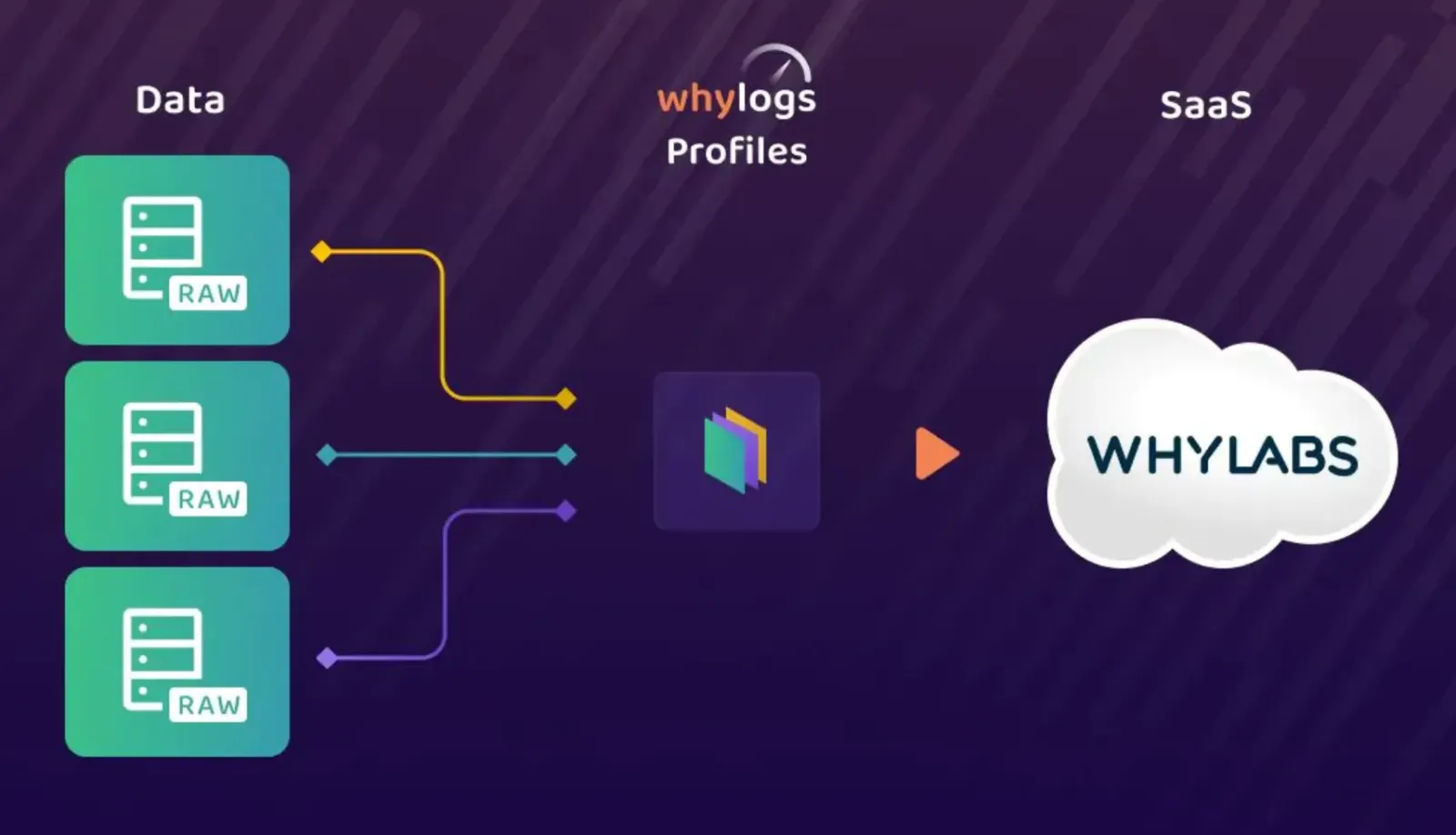
The former architecture used whylogs and LangKit to create statistical profiles locally. Those profiles could be sent to the platform for monitoring and alerting, rather than uploading raw data.
A quick way to understand who this product may suit, where its limits matter, and which facts are most relevant before you compare alternatives.
Technical teams assessing the archived WhyLabs codebase, or adopting its whylogs and LangKit components for self-managed AI telemetry.
Teams seeking a currently hosted WhyLabs service, vendor support, product updates, or a maintained commercial subscription, and should evaluate alternatives such as Arize Phoenix or Evidently instead.
Java, Python, Self-hosted
7.0/10
These are the product-specific differences that may matter when deciding whether the software fits your workflow. They are based on documented evidence rather than a universal ranking.
These are documented constraints or practical friction points that may matter before you adopt the product.
The former hosted product and company support should not be assumed available to new buyers.
Evidence source ↗Self-hosting can require a separate license beyond the open-source platform code.
Evidence source ↗Operators may need to diagnose, patch, and maintain their own deployments.
Evidence source ↗WhyLabs no longer publishes an active commercial plan because the company discontinued operations. The platform code is available under Apache 2.0, but self-hosting requires infrastructure and some dashboard components may require a separate Highcharts license.
Compare similar products directly, then see which alternatives may make more sense when your requirements differ.
| Decision factor | WhyLabs | Arize Phoenix | Evidently |
|---|---|---|---|
| Core scope | Historical platform for data profiles, model health monitoring, drift alerts, and LLM guardrails. | Open-source tool for AI application tracing, evaluation, experimentation, and troubleshooting. Source ↗ | Open-source Python framework for evaluating, testing, and monitoring ML and LLM systems, with built-in metrics and reports. Source ↗ |
| Deployment model | The hosted service is discontinued; the platform source can be self-hosted. | Phoenix is open-source and self-hosted, with local, container, or cloud deployment options documented by its project. Source ↗ | Evidently supports a self-hosted open-source version and also offers Evidently Cloud. Source ↗ |
| Pricing model | No active WhyLabs commercial pricing is published; the platform source is Apache 2.0, with possible separate Highcharts licensing. | Phoenix is free and open source; Arize separately lists managed cloud plans. Source ↗ | Evidently offers an open-source version and a separate cloud service; current cloud pricing was not verified in the cited project page. Source ↗ |
Only factors supported by the available research are shown. The comparison is descriptive, not a ranking.
These products address broadly similar requirements. The descriptions focus on documented reasons a buyer might compare them with WhyLabs.


| Current status | Company operations discontinued; platform source open-sourced |
|---|---|
| License | Apache 2.0, with separate Highcharts licensing potentially required for some visualizations |
| Deployment | Self-hosted platform source |
| Languages and environments | Python, Java, and Spark profiling environments |
| Data handling | Documentation states profiles are generated locally and uploaded; raw datasets are not sent |
| API | WhyLabs API, Python client, and documented quotas |
| Integrations | Apache Spark, BigQuery, Dask, Databricks, Kafka, Ray, Airflow, MLflow, SageMaker, LangChain, OpenAI, among others |
Verified installation, hosting, administration, or environment details that can affect implementation.
| Hosting | The hosted company-operated platform is no longer offered; the source code can be built and run on user infrastructure. Source ↗ |
|---|---|
| License | The platform repository is available under Apache 2.0, with a separate Highcharts license potentially required for visualization components. Source ↗ |
A proprietary editorial score based on product capabilities, usability, value, performance, support and user sentiment evidence.
Historical product documentation and public reviews describe broad model and data monitoring. The hosted service is discontinued, and the open-source platform has no active vendor support commitment.
Methodology v1.0. The assessment weighs feature coverage (25%), ease of use (15%), value for money (20%), performance (15%), support (10%) and user sentiment (15%), using researched product evidence and verified review evidence where available. It is a TechZella editorial assessment, not a direct user-review average.
Key claims are linked to the sources used to verify them. This evidence record is separate from third-party user ratings.
TechZella evaluates software using documented product capabilities, pricing information, usability and value considerations, independent user evidence where available, and competitive context. The assessment is an editorial review, not a hands-on test unless one is explicitly identified. Our editorial assessment is based on 6 documented sources.
The company notice states it is discontinuing operations and says its complete platform was open-sourced.
View source ↗Verified 2026-11-12The GitHub repository identifies the Apache-2.0 license and permits commercial use, subject to the Highcharts licensing note for relevant visualization components.
View source ↗Verified 2026-11-12Documentation says profiles are generated in the user's environment and uploaded by API, rather than sending raw data.
View source ↗Verified 2026-11-12The documentation lists integrations including Spark, Kafka, Databricks, Airflow, MLflow, SageMaker, LangChain, OpenAI, Slack, and PagerDuty.
View source ↗Verified 2026-11-12The API documentation lists per-segment profile limits and operation-specific request-per-second limits, with throttling when quotas are exceeded.
View source ↗Verified 2026-11-12The G2 product review page displays the rating and review count.
View source ↗Verified 2026-11-12Answers begin with the clearest available response, followed by the context that helps you act on it.
No reviews yet. Be the first to share your experience.
Please log in to submit a review.