Editorial overview
Aggregated Overview
The documented toolkit spans dataset curation, annotation, evaluation, exports, Python automation, and training. Local and hosted deployment options are documented, but public pricing and support details for paid Studio editions are limited.
This profile combines documented product information and independent evidence where available. It is not a hands-on test unless TechZella explicitly identifies one.
Overview
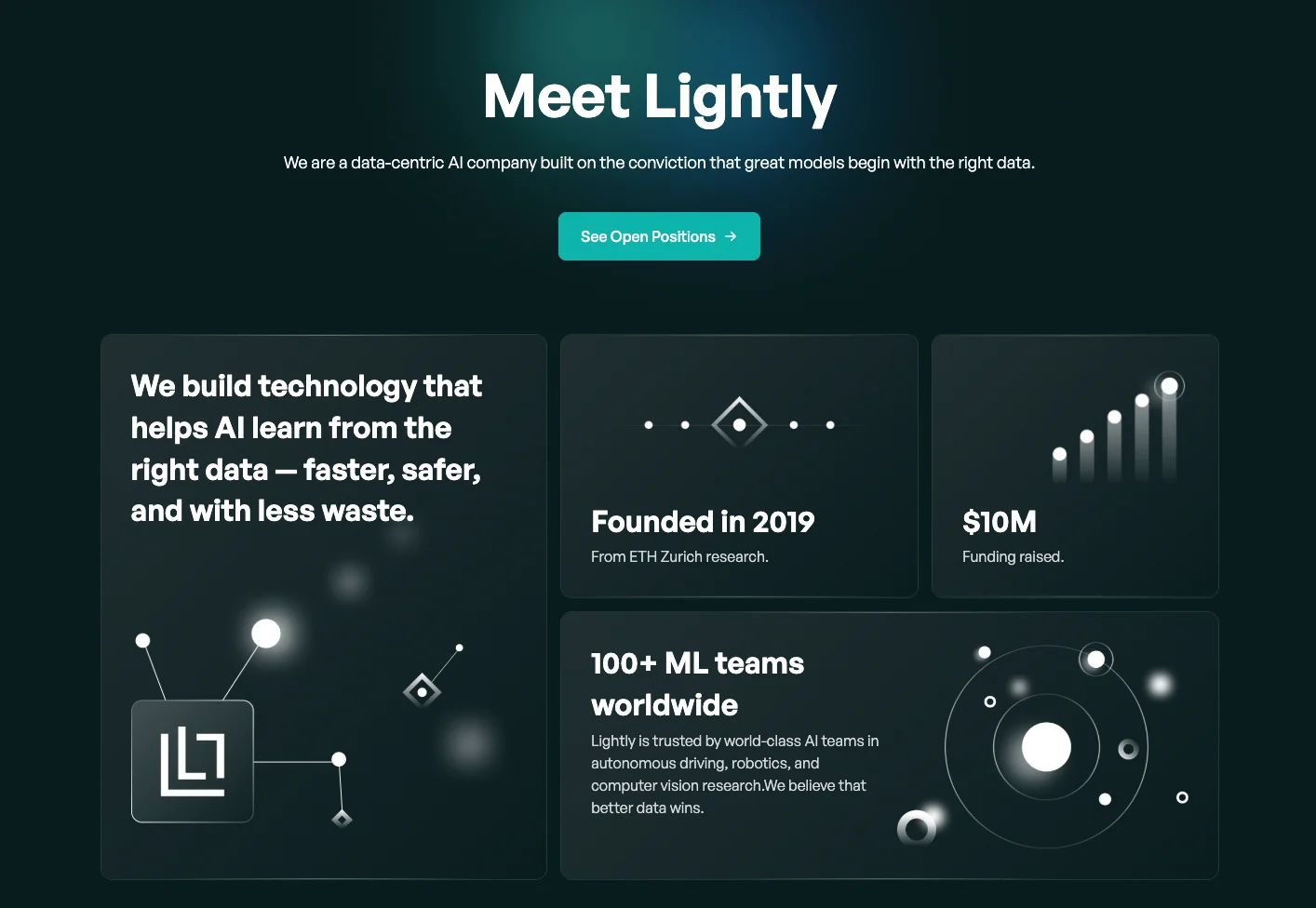
Lightly is a data-centric computer-vision software company founded in 2019. Its product lineup includes LightlyStudio for dataset curation, annotation, evaluation, and management, and LightlyTrain for model training and deployment.
LightlyStudio is available as local open-source software and as a separate Enterprise service. The local version uses a browser interface and Python API, while Enterprise adds shared datasets, user roles, and centrally managed cloud credentials.
Lightly Decision Snapshot
A quick way to understand who this product may suit, where its limits matter, and which facts are most relevant before you compare alternatives.
Best suited toComputer-vision teams that need Python-driven dataset curation, annotation, and evaluation, especially teams working with image or video data and existing local or cloud storage.
Look elsewhere ifTeams seeking a self-serve, publicly priced hosted enterprise workspace may find the paid LightlyStudio options require a sales conversation, and should evaluate alternatives such as Roboflow or Encord instead.
PlatformsCloud, Linux, macOS, Python, Windows
TechZella assessment7.9/10
Lightly — What Sets It Apart?
These are the product-specific differences that may matter when deciding whether the software fits your workflow. They are based on documented evidence rather than a universal ranking.
- LightlyStudio combines curation, annotation, evaluation, and dataset management behind a Python API and browser interface.
- The open-source LightlyStudio version stores its database locally and can run offline; media can remain in local or customer-controlled cloud storage.
- LightlyTrain offers separately licensed model training and edge deployment, with published annual commercial tiers.
Editorial assessmentLightly Pros & Cons
Pros
- LightlyStudio's open-source edition is free under Apache 2.0.
- Dataset curation, annotation, and evaluation share a Python-driven workflow.
- Local and on-premise deployment options are documented.
- Supports common computer-vision annotation formats and major cloud object-storage providers.
Cons
- LightlyStudio Enterprise pricing is quote-based and not publicly listed.
- Hosted Enterprise reads media from cloud storage rather than local folders.
- Cloud-storage imports have documented format-specific limitations.
- The open-source edition is single-user and does not include team collaboration or customer support.
Lightly Gotchas & Operational Limits
These are documented constraints or practical friction points that may matter before you adopt the product.
LightlyStudio Enterprise uses cloud storage for media, while local-folder media is supported in the open-source version.
Teams planning hosted deployment need compatible cloud storage and should check their existing data-location workflow.
Evidence source ↗Cloud-storage support is limited to specified import workflows; other dataset importers may require local files.
Data-ingestion paths should be tested against the team’s annotation formats before committing to a deployment.
Evidence source ↗Lightly Pricing & Plans
LightlyStudio Open Source
$0
free
Free local edition under Apache 2.0. Single-user workflow; no team collaboration or customer support.
Check current pricing →LightlyStudio Hosted Enterprise
Custom
quote-based
Hosted team edition with collaboration, role-based permissions, and centrally managed cloud credentials. The product page advertises a 14-day free trial.
Check current pricing →LightlyStudio On-Premise Enterprise
Custom
quote-based
Enterprise deployment on customer infrastructure; available at a premium.
Check current pricing →LightlyTrain Startup
$5,000
year
Commercial license for eligible startups; includes model training, edge deployment, and inference licensing.
Check current pricing →LightlyTrain Growth
$10,000
year
Commercial license for eligible growth-stage organizations; includes model training, edge deployment, and inference licensing.
Check current pricing →LightlyTrain Enterprise
Custom
quote-based
Commercial license for organizations exceeding the published Startup and Growth eligibility thresholds.
Check current pricing →Pricing may change. Verify current plans on the vendor's website.
Cost contextTotal Cost & Hidden Costs
Additional costs or implementation requirements that are documented in the available evidence.
Implementation and onboarding
LightlyStudio OSS is installed through pip and offers a quickstart. Enterprise access requires booking a call; public implementation or onboarding fees are not listed.
Evidence source ↗Hosting and infrastructure
OSS runs on the user's machine. Hosted Enterprise is hosted by Lightly; on-premise deployment is available at a premium. Separate cloud storage remains the user's storage environment.
Evidence source ↗Paid plans and additional fees
LightlyStudio Enterprise pricing is not publicly listed. LightlyTrain publishes Startup at $5,000 per year, Growth at $10,000 per year, and custom Enterprise pricing. The reviewed pages do not specify other fees.
Evidence source ↗Lightly Competitors & Alternatives
Compare similar products directly, then see which alternatives may make more sense when your requirements differ.
At a glance
Artificial Intelligence SoftwareOnly factors supported by the available research are shown. The comparison is descriptive, not a ranking.
Direct competitors
These products address broadly similar requirements. The descriptions focus on documented reasons a buyer might compare them with Lightly.
CapabilitiesLightly Features
Dataset curation
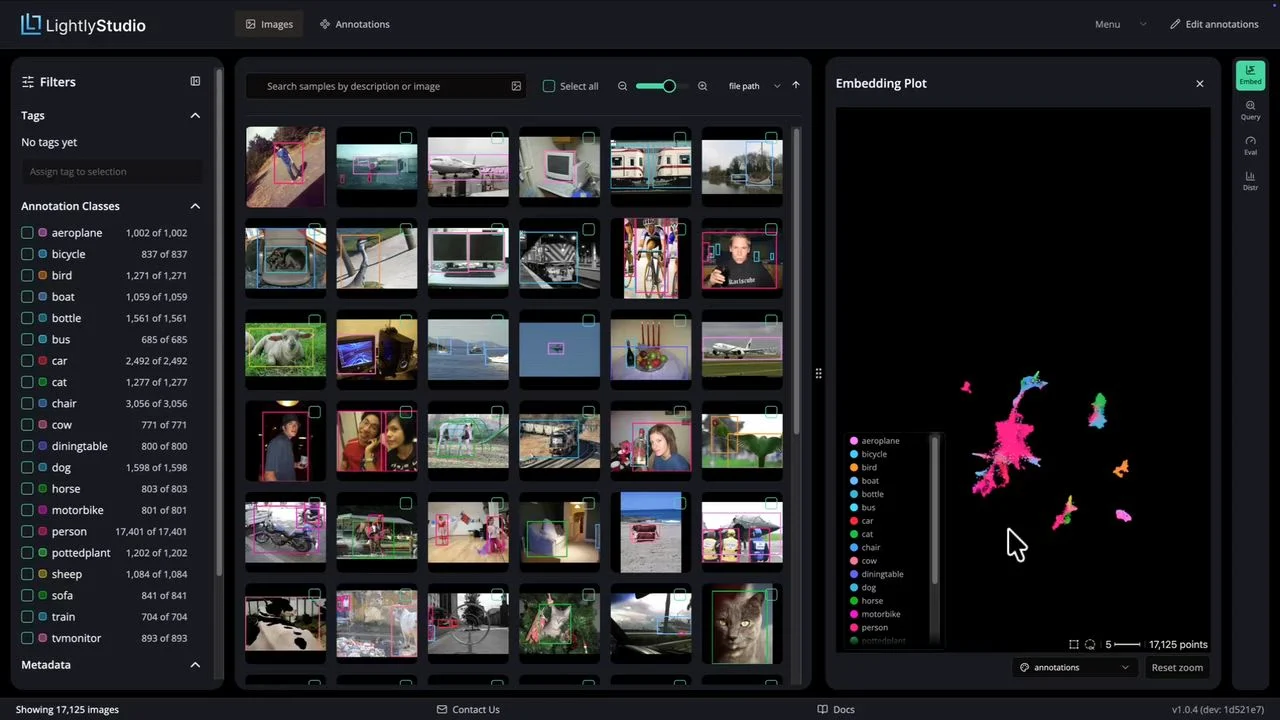
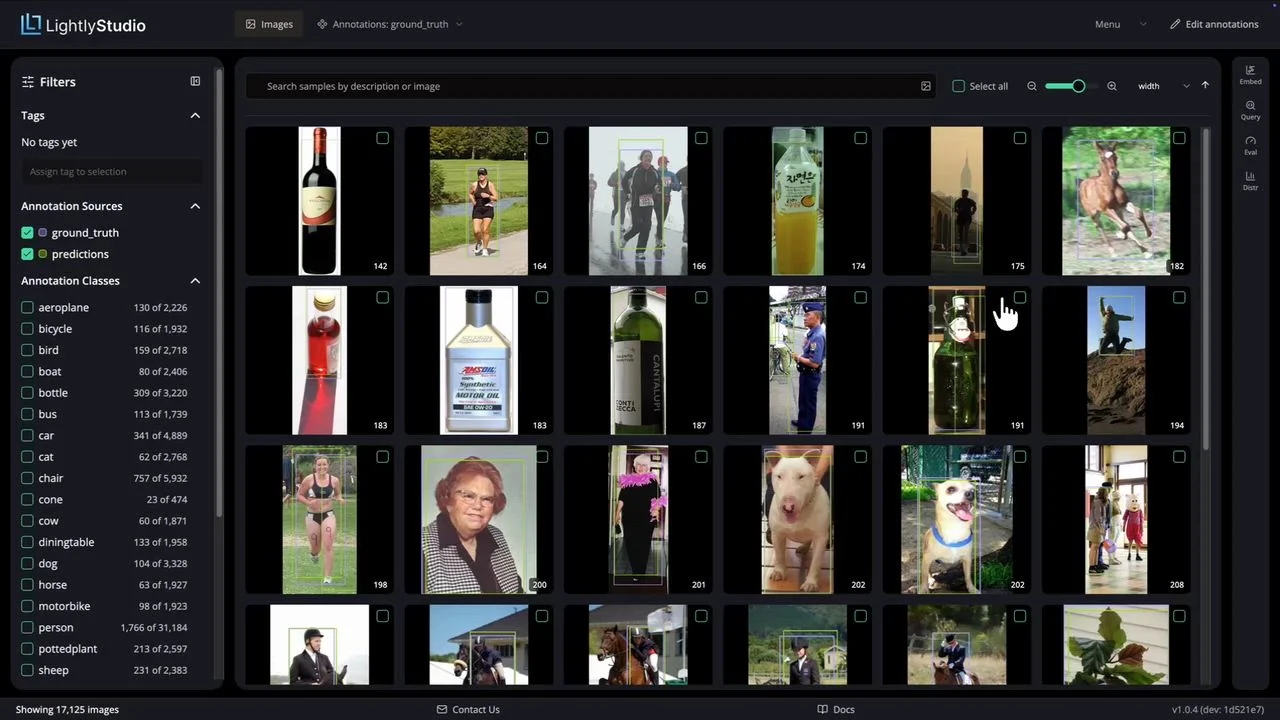
- Embedding-based image and video exploration
- Text and visual similarity search
- Sampling strategies, including diversity, deduplication, outlier detection, and class balancing
Annotation and evaluation
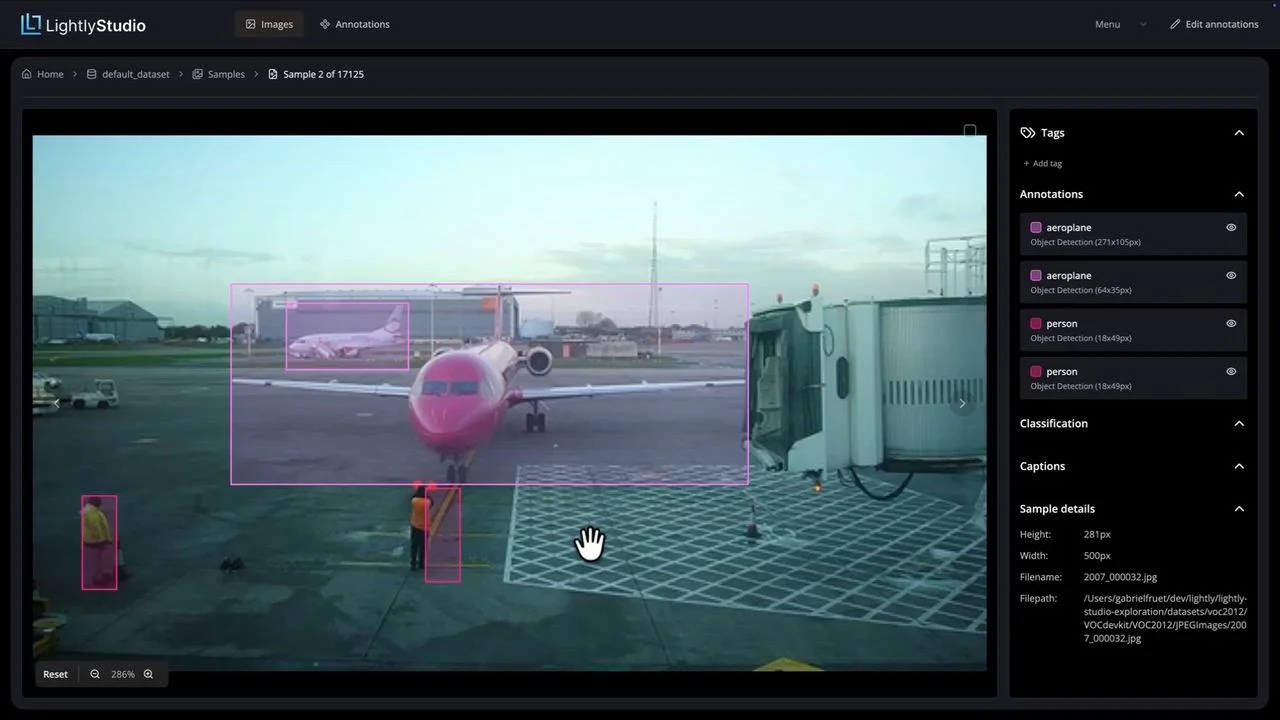
- Image and video annotation
- Plugin-based model-assisted labeling
- Model evaluation with confusion matrices and per-sample metrics
Automation and collaboration
- Python API for dataset indexing, queries, annotations, and sampling
- Enterprise multi-user roles and dataset access controls
- Plugin framework for custom workflows
Import and export
- COCO, YOLO, Pascal VOC, YouTube-VIS, and CSV support
- Amazon S3, Google Cloud Storage, and Azure Blob Storage media support
Lightly Specifications
| Operating systems | Windows, Linux, macOS |
|---|
| Python versions | 3.10–3.14 |
|---|
| Deployment | Local open source, hosted Enterprise, on-premise Enterprise |
|---|
| API | Python API; enterprise connection supports JWT token or API key |
|---|
| Open-source license | Apache 2.0 for LightlyStudio |
|---|
| Cloud storage | Amazon S3, Google Cloud Storage, Azure Blob Storage |
|---|
| Hosted trial | 14 days, as advertised on the LightlyStudio product page |
|---|
Exit planningMigration & Lock-In
Documented portability, standards, export, or switching considerations. No switching-cost score is shown unless the evidence supports one.
Data portability
LightlyStudio supports import and export formats including COCO, YOLO, Pascal VOC, YouTube-VIS, and CSV; the product page says migration assistance is available from several other ML tools.
Evidence source ↗Our evidence-based assessmentTechZella Score
A proprietary editorial score based on product capabilities, usability, value, performance, support and user sentiment evidence.
7.9/10Moderate confidence
The documented toolkit spans dataset curation, annotation, evaluation, exports, Python automation, and training. Local and hosted deployment options are documented, but public pricing and support details for paid Studio editions are limited.
Methodology v1.0. The assessment weighs feature coverage (25%), ease of use (15%), value for money (20%), performance (15%), support (10%) and user sentiment (15%), using researched product evidence and verified review evidence where available. It is a TechZella editorial assessment, not a direct user-review average.
Editorial transparency
Our Review Methodology
Key claims are linked to the sources used to verify them. This evidence record is separate from third-party user ratings.
TechZella evaluates software using documented product capabilities, pricing information, usability and value considerations, independent user evidence where available, and competitive context. The assessment is an editorial review, not a hands-on test unless one is explicitly identified. Our editorial assessment is based on 4 documented sources.
What TechZella adds- LightlyStudio combines curation, annotation, evaluation, and dataset management behind a Python API and browser interface.
- The open-source LightlyStudio version stores its database locally and can run offline; media can remain in local or customer-controlled cloud storage.
- LightlyTrain offers separately licensed model training and edge deployment, with published annual commercial tiers.
Important limitations- The hosted enterprise edition reads media from cloud storage; local folders are supported by the open-source edition instead.
- Public pricing for LightlyStudio Enterprise is not listed; buyers are directed to contact Lightly.
- Cloud-storage support has importer-specific limitations, and some importers require local files.
Evidence-backed claimsLightly was founded in 2019.The company About page states it was founded in 2019.
View source ↗Verified 2026-11-12LightlyStudio is an open-source tool for computer-vision datasets.The official FAQ identifies LightlyStudio as free, open source under Apache 2.0, with a separate paid Enterprise edition.
View source ↗Verified 2026-11-12LightlyStudio supports Windows, Linux, and macOS.The official FAQ lists all three operating systems and Python 3.10 to 3.14.
View source ↗Verified 2026-11-12LightlyStudio can read media from Amazon S3, Google Cloud Storage, and Azure Blob Storage.The official documentation lists all three cloud storage providers and notes importer-specific limitations.
View source ↗Verified 2026-11-12LightlyTrain publishes three commercial pricing levels.Its documentation lists Startup at $5,000 per year, Growth at $10,000 per year, and custom Enterprise pricing.
View source ↗Verified 2026-11-12 Independent review sources
Lightly Ratings & Reviews
Ratings are published by the respective review platforms and may change over time.
Common questionsLightly FAQs
Answers begin with the clearest available response, followed by the context that helps you act on it.
Is LightlyStudio free?
Yes. Its open-source edition is free under Apache 2.0; Enterprise is a separate paid product.
Does LightlyStudio support a free trial?
Yes. The product page advertises a 14-day free trial for its hosted offering. The open-source edition can be installed and used without a paid trial.
Which operating systems does LightlyStudio support?
Windows, Linux, and macOS, with Python 3.10 to 3.14.
Can LightlyStudio read data from S3, Google Cloud Storage, or Azure?
Yes. The documentation lists all three, while noting limitations for some importers.
Where are image and video files stored?
With the open-source edition, they remain in their original local or cloud storage. Hosted Enterprise reads media from cloud storage and stores dataset metadata in its service.
Community feedback
Reviews
No reviews yet. Be the first to share your experience.
Write a Review
Please log in to submit a review.
Recently added Artificial Intelligence Software