Editorial overview
Aggregated Overview
Official documentation describes broad multimodal annotation, data management, APIs, SDKs, and workflow tools. G2 lists 89 reviews and a 4.4 out of 5 rating. Pricing is not public, and independent review evidence includes reports of a learning curve and occasional slowdowns.
This profile combines documented product information and independent evidence where available. It is not a hands-on test unless TechZella explicitly identifies one.
Overview
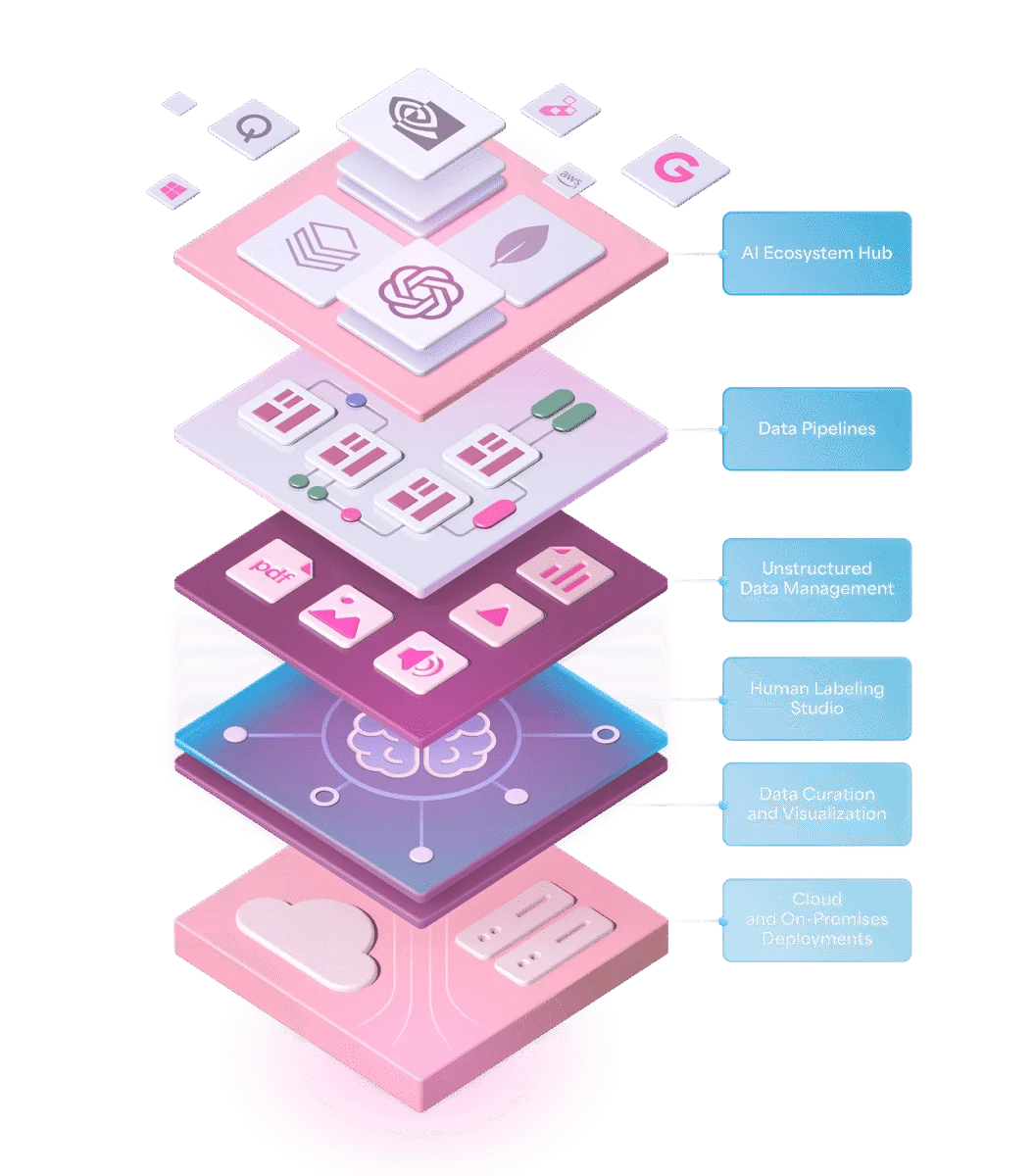
Dataloop is an AI development platform for preparing and managing data used in machine-learning workflows. Its tools cover dataset curation, annotation, automation, model-related pipelines, and human feedback.
It supports multiple data types, including images, video, audio, text, PDFs, GIS data, and LiDAR. Teams can work through the web interface or use the REST API and Python SDK for programmatic workflows.
Dell acquired Dataloop in December 2025. Dell’s March 2026 announcement describes Dataloop technology as part of its Data Orchestration Engine, while Dataloop’s product site and documentation remain available.
Dataloop Decision Snapshot
A quick way to understand who this product may suit, where its limits matter, and which facts are most relevant before you compare alternatives.
Best suited toAI and engineering teams preparing, labeling, curating, and routing image, video, audio, text, PDF, GIS, or LiDAR datasets through automated workflows.
Look elsewhere ifBuyers seeking a simple, publicly priced annotation tool may find the sales-led pricing process and subscription usage accounting difficult to evaluate before contacting Dataloop, and should evaluate alternatives such as Labelbox or SuperAnnotate instead.
PlatformsCloud, On-premises, Python, REST API, Web
TechZella assessment8.0/10
Dataloop — What Sets It Apart?
These are the product-specific differences that may matter when deciding whether the software fits your workflow. They are based on documented evidence rather than a universal ranking.
- Combines multimodal annotation studios with dataset versioning, querying, and workflow pipelines.
- Offers REST API and Python SDK access for building and automating data and model workflows.
- Supports storage connections to AWS, Azure, Google Cloud, and on-premises systems, avoiding the need to manually upload or duplicate source data.
- Includes specialized workflows for human feedback and GenAI evaluation in addition to conventional data labeling.
Editorial assessmentDataloop Pros & Cons
Pros
- Supports annotation across a broad set of media and document types.
- Combines annotation with dataset management and workflow automation.
- Provides REST API and Python SDK access.
- Can connect to cloud and on-premises storage.
Cons
- Public subscription pricing was not found.
- Public pages reviewed do not confirm a self-service free trial.
- Usage tracking includes several measures, including datapoints, UI hours, compute, storage, and API calls.
- Documented constraints include a 2 GB maximum download size and dataset query limits.
Dataloop Gotchas & Operational Limits
These are documented constraints or practical friction points that may matter before you adopt the product.
Subscription use is measured through UI hours and managed datapoints, and usage reporting also lists compute, storage, and API calls.
Buyers should ask how their anticipated annotation volume, workload, and infrastructure map to the quoted subscription and resource limits.
Evidence source ↗After a subscription expires, uploading data, annotating items, and running executions with Dataloop compute are restricted.
Renewal timing can affect active labeling and processing work, so teams should clarify terms and continuity procedures.
Evidence source ↗The documented maximum download file size from the platform is 2 GB.
Teams moving large source files or exports should confirm whether their workflow needs a different transfer path.
Evidence source ↗Pricing
Dataloop does not publish subscription prices on the public pages reviewed. Its billing documentation directs prospective customers to schedule a demo for pricing. The public site offers a demo request; it does not confirm a self-service free trial.
Before purchase, ask for the subscription’s included usage, compute and storage rates, onboarding terms, and any support or renewal charges. Dataloop’s billing documentation identifies usage measures such as UI hours, datapoints, compute, API calls, and storage.
Total Cost & Hidden Costs
Additional costs or implementation requirements that are documented in the available evidence.
Subscription
Public prices were not found. The billing documentation directs buyers to schedule a demo for pricing information.
Evidence source ↗Usage and compute
Billing usage records UI hours, managed datapoints, serverless automation, CPU and GPU hours, external compute hours, API calls, and storage. The source does not publish rates.
Evidence source ↗Infrastructure
Dataloop supports external cloud and on-premises storage, as well as compute clusters. The documentation does not establish which infrastructure costs are included in a particular subscription.
Evidence source ↗Onboarding and other charges
The public pages checked do not state onboarding fees, implementation duration, premium-support fees, or renewal uplifts. Buyers should request these terms with a quote.
Evidence source ↗Dataloop Competitors & Alternatives
Compare similar products directly, then see which alternatives may make more sense when your requirements differ.
Direct competitors
These products address broadly similar requirements. The descriptions focus on documented reasons a buyer might compare them with Dataloop.
CapabilitiesDataloop Features
Data management
- Dataset curation, querying, and metadata search
- Dataset versioning
- Unstructured data visualization and exploration
Annotation
- Image, video, audio, text, PDF, LiDAR, and GIS studios
- Model-assisted annotation and active-learning features
- Review and consensus workflow nodes
Automation and development
- Visual data and AI workflow pipelines
- REST API
- Python SDK
Integrations
- AWS storage
- Azure storage
- Google Cloud storage
- On-premises storage systems
- Kubernetes-connected compute clusters
Dataloop Specifications
| Supported data formats | Images, video, audio, LiDAR PCD, text, JSON, PDF, and GIS formats, subject to documented constraints. |
|---|
| Storage integrations | AWS, Azure, Google Cloud, and on-premises storage. |
|---|
| Developer interface | REST API and Python SDK. |
|---|
| Dataset item limit | Documentation specifies a maximum of 25,000,000 items per dataset. |
|---|
| Maximum platform download | 2 GB per file. |
|---|
| Pricing transparency | Public prices not listed; request pricing through a demo or sales contact. |
|---|
Our evidence-based assessmentTechZella Score
A proprietary editorial score based on product capabilities, usability, value, performance, support and user sentiment evidence.
8.0/10Moderate confidence
Official documentation describes broad multimodal annotation, data management, APIs, SDKs, and workflow tools. G2 lists 89 reviews and a 4.4 out of 5 rating. Pricing is not public, and independent review evidence includes reports of a learning curve and occasional slowdowns.
Methodology v1.0. The assessment weighs feature coverage (25%), ease of use (15%), value for money (20%), performance (15%), support (10%) and user sentiment (15%), using researched product evidence and verified review evidence where available. It is a TechZella editorial assessment, not a direct user-review average.
Editorial transparency
Our Review Methodology
Key claims are linked to the sources used to verify them. This evidence record is separate from third-party user ratings.
TechZella evaluates software using documented product capabilities, pricing information, usability and value considerations, independent user evidence where available, and competitive context. The assessment is an editorial review, not a hands-on test unless one is explicitly identified. Our editorial assessment is based on 6 documented sources.
What TechZella adds- Combines multimodal annotation studios with dataset versioning, querying, and workflow pipelines.
- Offers REST API and Python SDK access for building and automating data and model workflows.
- Supports storage connections to AWS, Azure, Google Cloud, and on-premises systems, avoiding the need to manually upload or duplicate source data.
- Includes specialized workflows for human feedback and GenAI evaluation in addition to conventional data labeling.
Important limitations- Public pricing is not listed; Dataloop directs prospective customers to schedule a demo or speak with a specialist.
- Subscription usage tracks UI hours and managed datapoints, while compute and storage usage can also affect cost planning.
- Documentation specifies operational constraints, including a 2 GB maximum download file size and limits on some dataset queries.
Evidence-backed claimsDataloop supports annotation workflows for image, video, audio, text, PDF, LiDAR, GIS, and GenAI feedback data.Official documentation lists specialized annotation studios for these modalities and use cases.
View source ↗Verified 2026-11-12Dataloop provides a REST API and Python SDK for programmatic integration and pipeline development.The official data management page describes a public REST API and Python SDK.
View source ↗Verified 2026-11-12Dataloop storage integrations include AWS, Azure, Google Cloud, and on-premises storage.The integration documentation lists these providers and storage types, including NFS and S3-compatible storage.
View source ↗Verified 2026-11-12The Dataloop billing interface tracks subscription usage and resource consumption.The billing documentation lists UI hours, managed datapoints, compute, API calls, and storage among usage metrics.
View source ↗Verified 2026-11-12Dell acquired Dataloop and uses its technology in the Dell Data Orchestration Engine.Dell’s March 2026 announcement identifies the engine as powered by technology from its Dataloop acquisition.
View source ↗Verified 2026-11-12Dataloop’s listed registered office is in Herzliya, Israel.The company privacy notice identifies its registered office as 2 Sapir St., Herzliya, Israel.
View source ↗Verified 2026-11-12 Independent review sources
Dataloop Ratings & Reviews
Ratings are published by the respective review platforms and may change over time.
Common questionsDataloop FAQs
Answers begin with the clearest available response, followed by the context that helps you act on it.
Does Dataloop offer a free trial?
The public product pages reviewed direct new users to speak with an expert or book a demo; they do not confirm a self-service free trial.
SourceDoes Dataloop publish its pricing?
No public price list was found. Dataloop’s billing documentation directs prospective customers to schedule a demo for pricing information.
SourceWhich cloud storage systems can Dataloop connect to?
Its documentation lists AWS, Azure, Google Cloud, and on-premises storage options.
SourceCan developers use Dataloop through an API?
Yes. Dataloop documents a public REST API and a Python SDK.
SourceWhat data types can teams annotate?
Documentation describes studios for image, video, audio, text, PDF, LiDAR, GIS, and GenAI evaluation workflows.
SourceCommunity feedback
Reviews
No reviews yet. Be the first to share your experience.
Write a Review
Please log in to submit a review.
Recently added Artificial Intelligence Software