
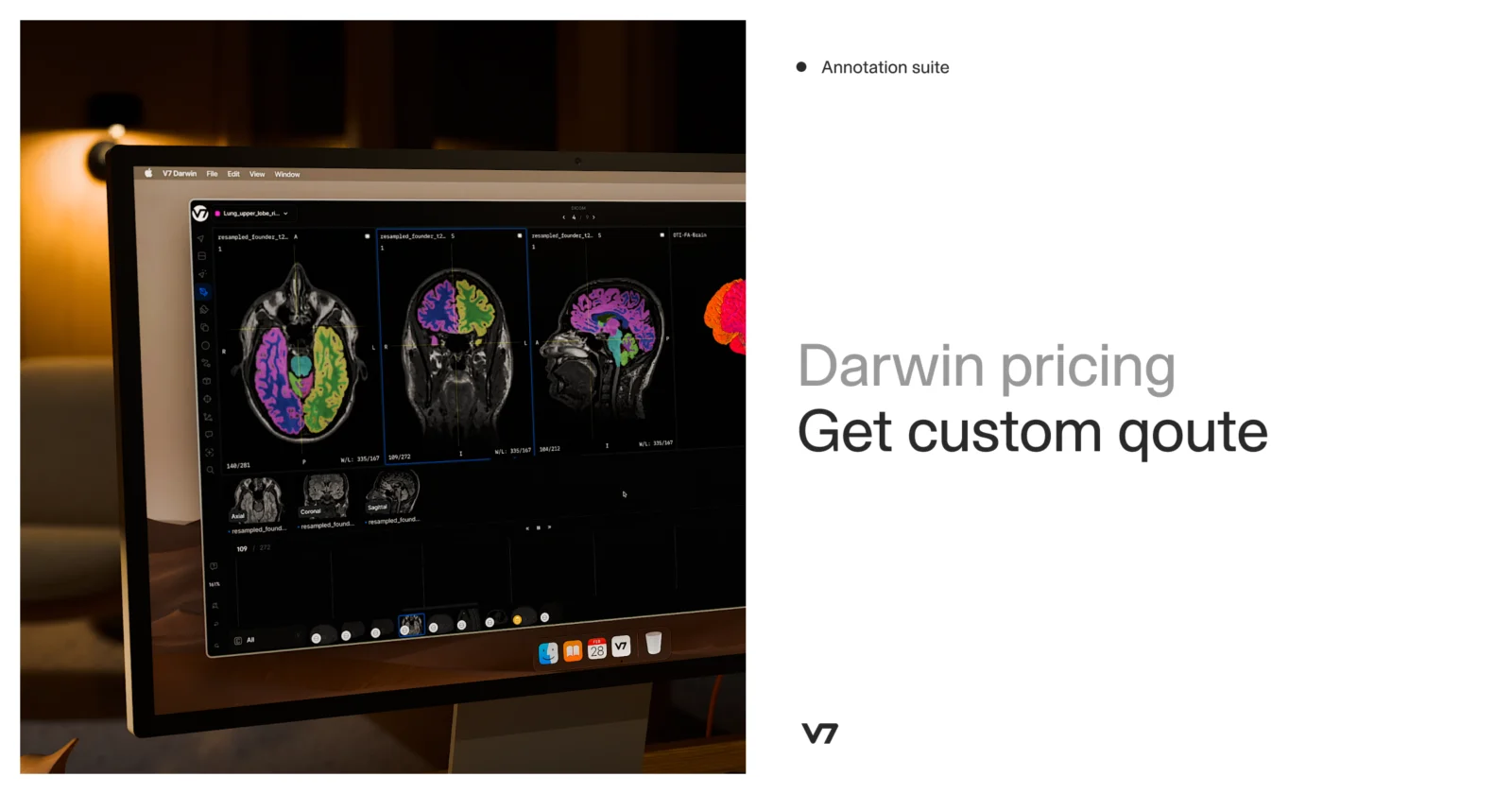
V7's current pricing page describes custom pricing based on platform access, user licenses, and data processing.
Buyers need a vendor quote to compare total cost; the page does not provide a public paid-plan price.
Evidence source ↗
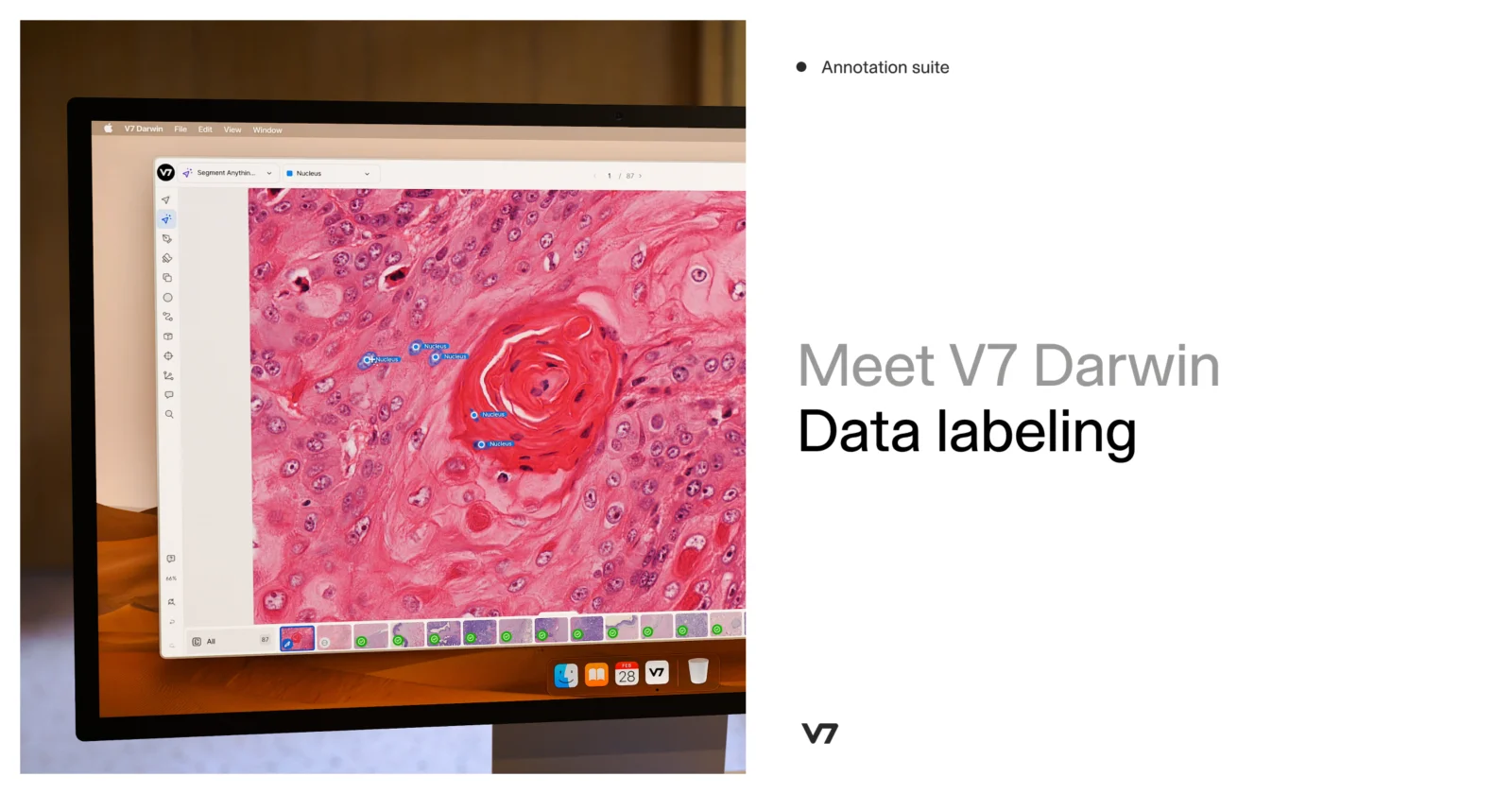
V7 Darwin is a visual data-labeling platform for AI teams. It supports AI-assisted annotation, review workflows, and integrations with cloud storage and ML pipelines.
Official materials document broad visual-data labeling, API and SDK tooling, cloud-storage connections, and configurable review workflows. Public G2 and GetApp ratings are positive, but review counts are limited and pricing is not published.
This profile combines documented product information and independent evidence where available. It is not a hands-on test unless TechZella explicitly identifies one.
V7 Darwin is a visual data-labeling platform for teams preparing machine-learning datasets. Its tools cover AI-assisted annotation, dataset management, collaboration, and review workflows.
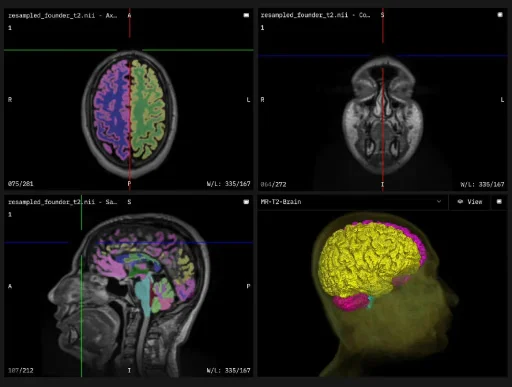
V7’s documentation describes support for image, video, medical-imaging, and document data. Teams can connect cloud storage and use API, Python SDK, and CLI tools to move data through existing workflows.
A quick way to understand who this product may suit, where its limits matter, and which facts are most relevant before you compare alternatives.
AI and machine-learning teams labeling image, video, or medical-imaging datasets that need model-assisted annotation, structured review stages, and links to existing cloud storage or pipelines.
Teams that need publicly listed paid-plan prices or a clearly documented self-serve trial may find the quote-led sales process less convenient. The product's visual-data focus may also exceed simple labeling needs, and should evaluate alternatives such as SuperAnnotate or Label Studio instead.
API, AWS, Google Cloud, Microsoft Azure, Web
7.8/10
These are the product-specific differences that may matter when deciding whether the software fits your workflow. They are based on documented evidence rather than a universal ranking.
These are documented constraints or practical friction points that may matter before you adopt the product.
Buyers need a vendor quote to compare total cost; the page does not provide a public paid-plan price.
Evidence source ↗Teams automating large imports should build retry and back-off behavior into their integration.
Evidence source ↗V7 says pricing depends on platform access, user licenses, and data-processing volume. Buyers can request a tailored quote; demo access is offered by booking a consultation.
Check current pricing →Pricing may change. Verify current plans on the vendor's website.
Compare similar products directly, then see which alternatives may make more sense when your requirements differ.
| Decision factor | V7 Darwin | SuperAnnotate | Label Studio |
|---|---|---|---|
| Pricing model | Custom package based on platform access, user licenses, and data processing; request a quote. | Lists Starter, Pro, and Enterprise options, but directs buyers to start, request a demo, or contact sales rather than publishing prices. Source ↗ | Offers an open-source Community Edition plus paid Starter Cloud and Enterprise editions; the reviewed edition-comparison page does not give prices. Source ↗ |
| Documented data modalities | V7's pricing page lists images, medical imaging, videos, and documents as supported data types. | SuperAnnotate's pricing page lists image, video, text, and audio editors. Source ↗ | Label Studio says it supports text, images, audio, video, time series, and multimodal labeling. Source ↗ |
| Programmatic access | Darwin provides a REST API and a Python SDK/CLI package for programmatic work with datasets and annotations. | SuperAnnotate documents a Python SDK for managing projects, people, data, annotations, and quality-control workflows. Source ↗ | Label Studio's edition comparison lists APIs, SDKs, and webhooks for all three editions. Source ↗ |
Only factors supported by the available research are shown. The comparison is descriptive, not a ranking.
These products address broadly similar requirements. The descriptions focus on documented reasons a buyer might compare them with V7 Darwin.



| Product type | Visual data-labeling software |
|---|---|
| Access | Web |
| API | REST API; API keys; documented limit of 1,000 requests per minute |
| Developer tools | Python SDK and CLI via darwin-py |
| External storage | AWS, Azure, Google Cloud |
| Pricing model | Custom quote based on platform, user licenses, and data-processing volume |
| Company headquarters | London, United Kingdom |
Verified installation, hosting, administration, or environment details that can affect implementation.
| Product access | V7 presents Darwin as a web-based platform and describes connections to private cloud storage providers. A self-hosted Darwin deployment option was not verified in the reviewed product pages. Source ↗ |
|---|
Documented portability, standards, export, or switching considerations. No switching-cost score is shown unless the evidence supports one.
Darwin documentation describes API, Python SDK, and CLI workflows for managing data and annotations. Confirm supported formats and migration steps against the team's existing dataset structure.
Evidence source ↗A proprietary editorial score based on product capabilities, usability, value, performance, support and user sentiment evidence.
Official materials document broad visual-data labeling, API and SDK tooling, cloud-storage connections, and configurable review workflows. Public G2 and GetApp ratings are positive, but review counts are limited and pricing is not published.
Methodology v1.0. The assessment weighs feature coverage (25%), ease of use (15%), value for money (20%), performance (15%), support (10%) and user sentiment (15%), using researched product evidence and verified review evidence where available. It is a TechZella editorial assessment, not a direct user-review average.
Key claims are linked to the sources used to verify them. This evidence record is separate from third-party user ratings.
TechZella evaluates software using documented product capabilities, pricing information, usability and value considerations, independent user evidence where available, and competitive context. The assessment is an editorial review, not a hands-on test unless one is explicitly identified. Our editorial assessment is based on 6 documented sources.
V7's company history gives its founding month and year and records the Darwin launch.
View source ↗Verified 2026-11-12The pricing page says packages are based on platform, users, and data processing and asks visitors to request pricing.
View source ↗Verified 2026-11-12The API reference describes API-key generation, authorization, and the stated rate limit.
View source ↗Verified 2026-11-12V7 documentation describes darwin-py as a Python package that includes both tools.
View source ↗Verified 2026-11-12V7 documentation describes external-storage setup and registration for these providers.
View source ↗Verified 2026-11-12V7's pricing FAQ makes these stated compliance claims; this profile does not treat them as independently audited.
View source ↗Verified 2026-11-12G2's SuperAnnotate versus V7 Darwin comparison displays the rating and review count.
View source ↗Verified 2026-11-12Answers begin with the clearest available response, followed by the context that helps you act on it.
No reviews yet. Be the first to share your experience.
Please log in to submit a review.