Editorial overview
Aggregated Overview
Official documentation verifies event-triggered YAML workflows, reusable actions, APIs, and hosted or self-managed runners. Pricing and usage depend on plan, runner type, and storage. No independent review rating was verified, so user sentiment is not scored.
This profile combines documented product information and independent evidence where available. It is not a hands-on test unless TechZella explicitly identifies one.
Overview
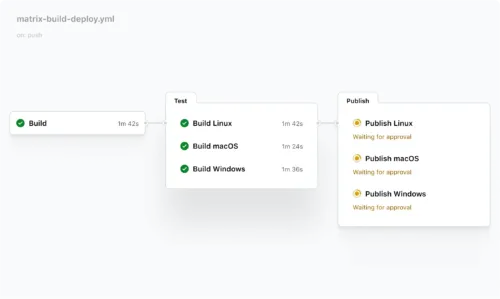
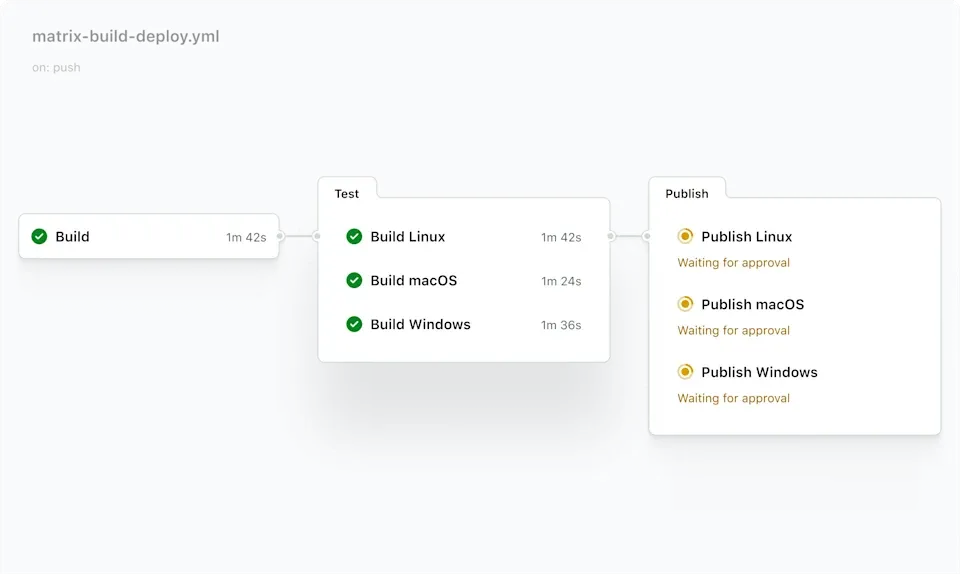
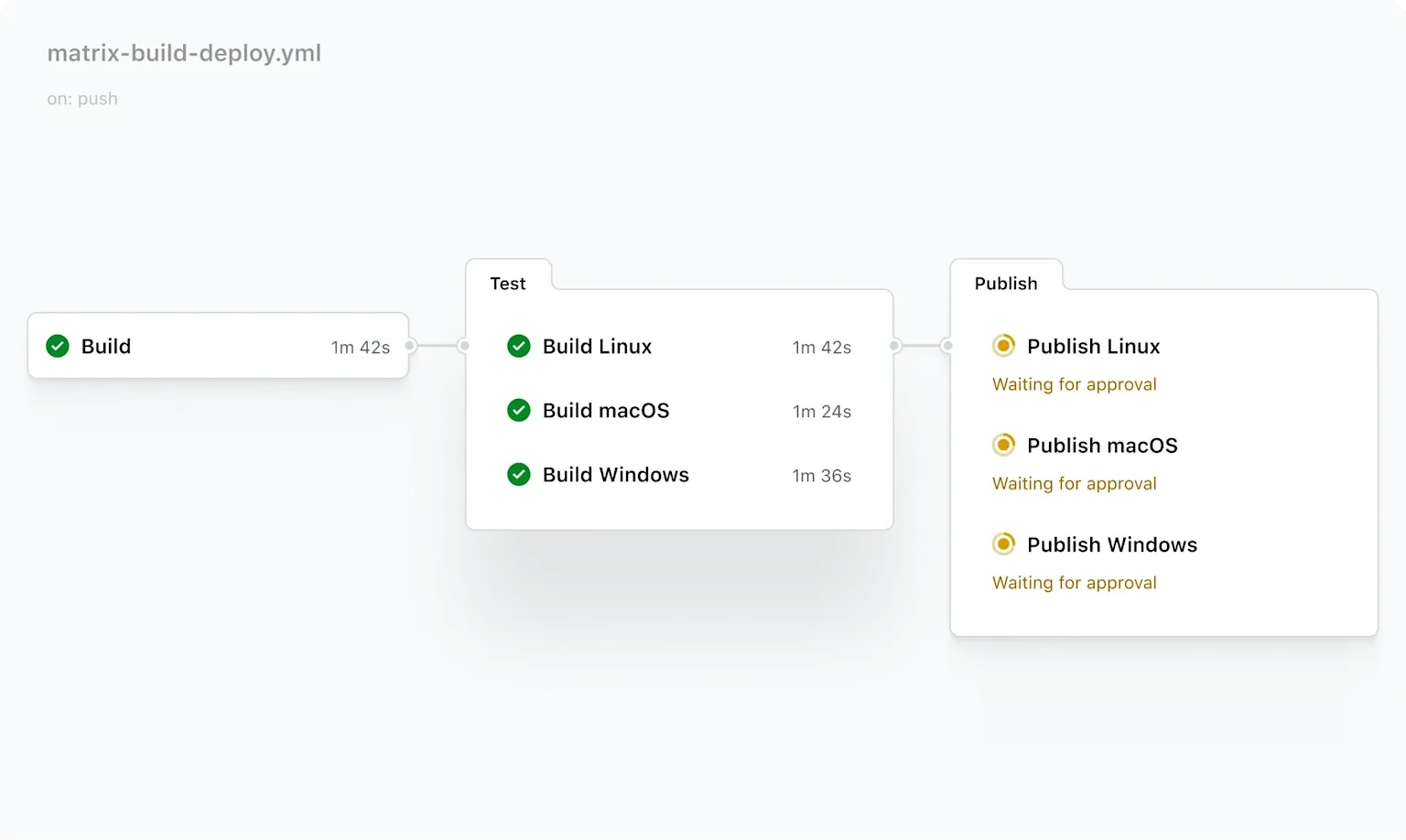
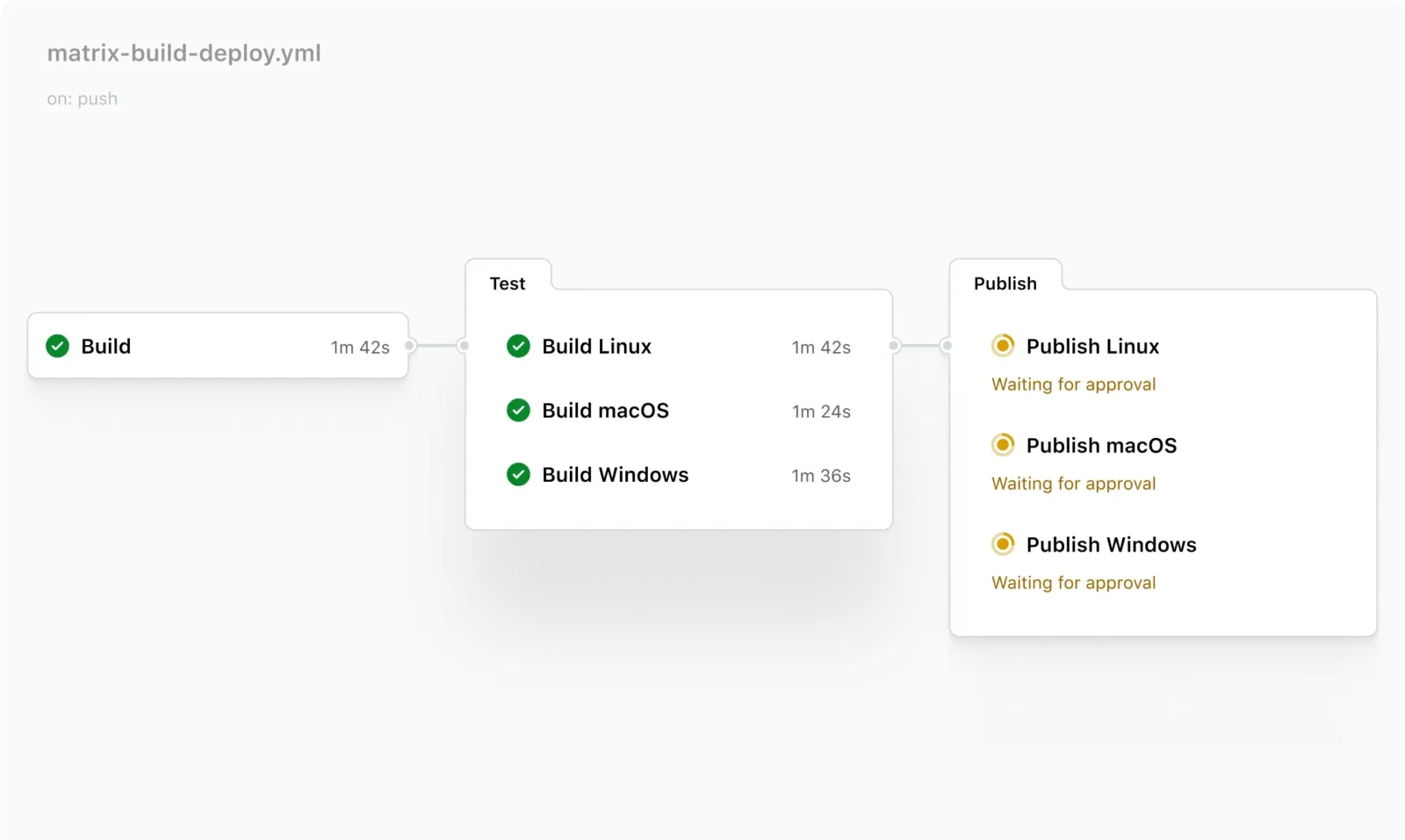
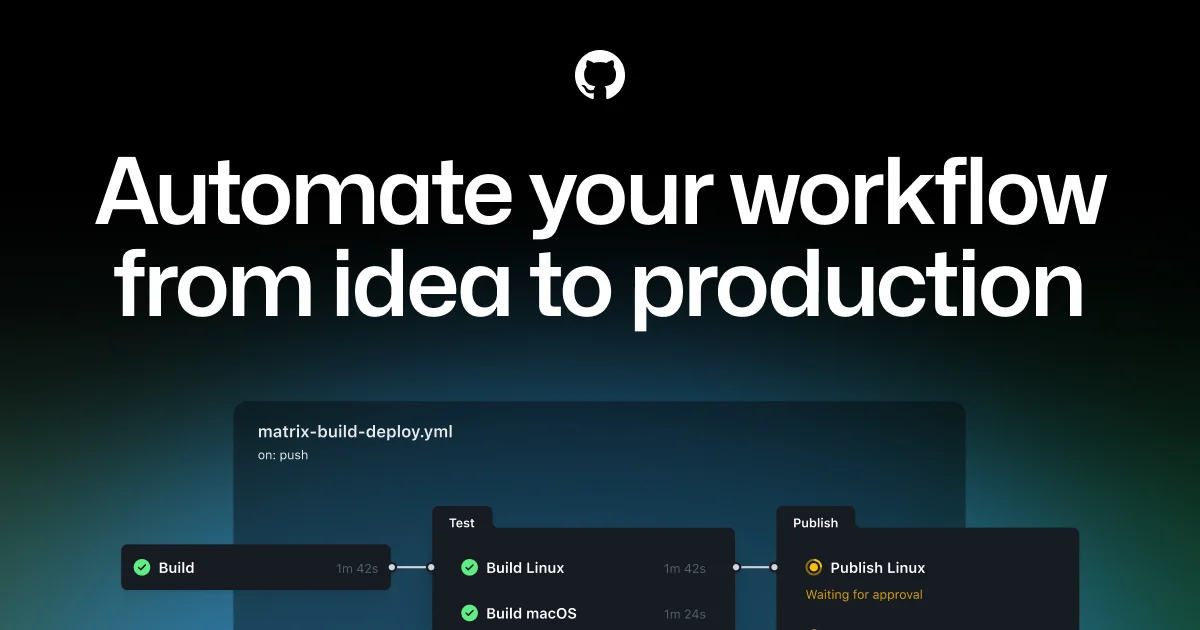
GitHub Actions automates tasks associated with software repositories. Users define workflows in YAML files stored in a repository, then configure jobs to run scripts or reusable actions on selected events, schedules, or manual triggers.
It can build and test code, publish releases, deploy applications, and automate repository tasks. Execution can use GitHub-hosted virtual machines or self-hosted runners managed by the customer.
Its main fit is teams that already host source code on GitHub and want automation connected to repository activity. Teams should weigh included minutes, runner rates, storage costs, and any maintenance required for self-hosted machines.
GitHub Actions Decision Snapshot
A quick way to understand who this product may suit, where its limits matter, and which facts are most relevant before you compare alternatives.
Best suited toTeams already managing source repositories on GitHub that want repository-triggered builds, tests, release automation, or deployments without maintaining a separate CI service.
Look elsewhere ifOrganizations requiring a CI system independent of GitHub, or teams unwilling to maintain runner machines, manage workflow permissions, and monitor usage-based compute and storage costs, and should evaluate alternatives such as GitLab CI/CD or CircleCI instead.
PlatformsAPI, Cloud, Linux, Web, Windows
TechZella assessment6.9/10
GitHub Actions — What Sets It Apart?
These are the product-specific differences that may matter when deciding whether the software fits your workflow. They are based on documented evidence rather than a universal ranking.
- Workflow definitions live as YAML files in a repository and can react to code, pull request, release, schedule, manual, and selected external events.
- Workflows can combine custom scripts with reusable actions from the same repository, public repositories, container images, and GitHub Marketplace.
- Teams can choose GitHub-hosted runners or run jobs on self-hosted machines, including on-premises and cloud infrastructure.
Editorial assessmentGitHub Actions Pros & Cons
Pros
- Workflow definitions and source code can remain in the same GitHub repository.
- Supports hosted and customer-managed runners across documented operating systems.
- Provides a REST API for managing workflows, runs, jobs, artifacts, and caches.
- Reusable actions and workflows can reduce repeated configuration across projects.
Cons
- Private-repository compute allowances vary by GitHub plan, and usage beyond allowances can incur charges.
- Self-hosted runners require customer management of the machine, operating system, and installed software.
- Scheduled workflows can be delayed during high-load periods.
- Artifact, cache, and custom-image storage can add cost beyond included allowances.
GitHub Actions Gotchas & Operational Limits
These are documented constraints or practical friction points that may matter before you adopt the product.
Self-hosted runner operators need to keep runner software current and maintain the underlying machine and installed tools.
A self-hosted setup can give teams more control, but adds infrastructure and operational work beyond authoring workflow files.
Evidence source ↗Scheduled workflows may be delayed during high-load periods, and some schedule triggers require workflow files on the default branch.
Time-sensitive jobs should account for documented scheduling behavior and test the trigger configuration.
Evidence source ↗GitHub-hosted runner minutes and storage are billed separately according to eligible plan allowances and usage categories.
Build frequency, runner operating system, and retained artifacts or caches can affect total cost.
Evidence source ↗GitHub Actions Pricing & Plans
GitHub Free
$0
month
GitHub Free includes 2,000 Actions minutes per month for private repositories. Standard hosted runner use in public repositories is free.
Check current pricing →GitHub Team
$4 per user
month
GitHub Team includes 3,000 Actions minutes per month; additional usage is billed according to the runner and storage rate tables.
Check current pricing →GitHub Enterprise
month
The pricing page lists 50,000 Actions minutes per month for Enterprise. The plan price is not stated in this Actions-specific listing.
Check current pricing →Pricing may change. Verify current plans on the vendor's website.
Cost contextTotal Cost & Hidden Costs
Additional costs or implementation requirements that are documented in the available evidence.
Setup and maintenance
GitHub-hosted runners remove machine maintenance from the customer. Self-hosted runners require the customer to provision, maintain, and update the host and its software; no standard onboarding fee is publicly listed.
Evidence source ↗Hosting and infrastructure
GitHub-hosted execution is billed by runner type after applicable plan allowances. For self-hosted runners, customers are responsible for their machine costs.
Evidence source ↗Storage and overages
Additional shared artifact and Packages storage, Actions cache, and custom-image storage have separate published rates. Check current allowances and rates before estimating artifact retention costs.
Evidence source ↗GitHub Actions Competitors & Alternatives
Compare similar products directly, then see which alternatives may make more sense when your requirements differ.
At a glance
DevOps PlatformOnly factors supported by the available research are shown. The comparison is descriptive, not a ranking.
Direct competitors
These products address broadly similar requirements. The descriptions focus on documented reasons a buyer might compare them with GitHub Actions.
CapabilitiesGitHub Actions Features
Workflow automation
- YAML-defined workflows stored in repository files
- Repository event, schedule, manual, and selected external-event triggers
- Jobs composed of scripts and reusable actions
- Reusable workflow configurations
Execution
- GitHub-hosted Linux, Windows, and macOS runners
- Self-hosted runners on customer-managed infrastructure
- Larger hosted runners with different machine sizes and rates
Integrations and APIs
- GitHub Marketplace actions
- Actions from public repositories and published container images
- REST API for workflows, runs, jobs, artifacts, logs, and caches
- Repository dispatch for selected external event triggers
Workflow operations
- Manually run, cancel, rerun, enable, or disable workflows
- Upload, download, and delete workflow artifacts
- Manage dependency caches
GitHub Actions Specifications
| Workflow definition | YAML files in the repository's .github/workflows directory |
|---|
| Hosted runner operating systems | Linux, Windows, macOS |
|---|
| Self-hosted runner deployment | Physical, virtual, container, on-premises, or cloud machines |
|---|
| API | GitHub Actions REST API |
|---|
| Free plan included compute | 2,000 minutes per month for private repositories |
|---|
| Public repository usage | Standard GitHub-hosted runner usage is free |
|---|
| Storage billing | Separate rates may apply to shared storage, Actions cache, and custom images |
|---|
| Workflow actions ecosystem | GitHub Marketplace, public repositories, and published container images |
|---|
Exit planningMigration & Lock-In
Documented portability, standards, export, or switching considerations. No switching-cost score is shown unless the evidence supports one.
Workflow portability
Workflows are stored as YAML in the repository. GitHub documents REST API endpoints for listing, disabling, enabling, dispatching, and inspecting workflows and runs.
Evidence source ↗Artifacts
Workflow artifacts can be listed, downloaded, and deleted through the Actions REST API; artifacts can share data between jobs and persist after a run.
Evidence source ↗Our evidence-based assessmentTechZella Score
A proprietary editorial score based on product capabilities, usability, value, performance, support and user sentiment evidence.
6.9/10Moderate confidence
Official documentation verifies event-triggered YAML workflows, reusable actions, APIs, and hosted or self-managed runners. Pricing and usage depend on plan, runner type, and storage. No independent review rating was verified, so user sentiment is not scored.
Methodology v1.0. The assessment weighs feature coverage (25%), ease of use (15%), value for money (20%), performance (15%), support (10%) and user sentiment (15%), using researched product evidence and verified review evidence where available. It is a TechZella editorial assessment, not a direct user-review average.
Editorial transparency
Our Review Methodology
Key claims are linked to the sources used to verify them. This evidence record is separate from third-party user ratings.
TechZella evaluates software using documented product capabilities, pricing information, usability and value considerations, independent user evidence where available, and competitive context. The assessment is an editorial review, not a hands-on test unless one is explicitly identified. Our editorial assessment is based on 6 documented sources.
What TechZella adds- Workflow definitions live as YAML files in a repository and can react to code, pull request, release, schedule, manual, and selected external events.
- Workflows can combine custom scripts with reusable actions from the same repository, public repositories, container images, and GitHub Marketplace.
- Teams can choose GitHub-hosted runners or run jobs on self-hosted machines, including on-premises and cloud infrastructure.
Important limitations- Private-repository usage is subject to plan-specific included compute and storage, with additional usage billed by runner type and storage category.
- Self-hosted runners require customer-managed machine maintenance and software updates; jobs may remain queued when no matching runner is online.
- GitHub documents that scheduled workflows can be delayed during periods of high load, and some scheduled jobs can stop running if the associated actor account is deprovisioned.
Evidence-backed claimsGitHub Actions entered beta in 2018.GitHub's changelog dates the limited public beta announcement to October 16, 2018.
View source ↗Verified 2026-11-08Workflows are YAML files in a repository and can be triggered by repository events, schedules, manual dispatch, or selected external events.GitHub's workflow overview describes workflow file location, constituent jobs and steps, and trigger types.
View source ↗Verified 2026-11-08GitHub Free includes 2,000 Actions minutes per month, while public-repository standard hosted runner usage is free.The current GitHub pricing page lists 2,000 Actions minutes for Free and says public repositories are free.
View source ↗Verified 2026-11-08GitHub-hosted runner rates vary by operating system, architecture, and machine size.The runner pricing reference lists different per-minute rates for standard and larger runner types.
View source ↗Verified 2026-11-08GitHub Actions exposes a REST API for workflows, runs, jobs, artifacts, and caches.GitHub's REST API documentation lists endpoints for those resources and operations.
View source ↗Verified 2026-11-08Self-hosted runners can be deployed on customer-managed infrastructure.GitHub documents self-hosted runner deployment on physical, virtual, container, on-premises, or cloud machines.
View source ↗Verified 2026-11-08 Common questionsGitHub Actions FAQs
Answers begin with the clearest available response, followed by the context that helps you act on it.
Is GitHub Actions free for public repositories?
Yes. Standard GitHub-hosted runner use in public repositories is free; larger runners are not free for public repositories.
Does GitHub Actions have a free plan?
Yes. GitHub Free includes 2,000 Actions minutes per month for private repositories, while standard hosted runner use for public repositories is free.
Can GitHub Actions use self-hosted runners?
Yes. You can run jobs on customer-managed physical machines, virtual machines, containers, on-premises infrastructure, or cloud machines. The customer maintains the runner environment.
Which operating systems can GitHub Actions runners use?
GitHub-hosted runners are available for Linux, Windows, and macOS. Self-hosted runner documentation lists supported Linux, Windows, and macOS systems.
Does GitHub Actions have an API?
Yes. GitHub documents REST endpoints for workflows, workflow runs, jobs, artifacts, caches, logs, and related Actions operations.
Is there a separate free trial for GitHub Actions?
Yes. GitHub documents a 30-day GitHub Enterprise Cloud trial that includes up to 3,000 minutes of standard hosted runners. It does not list a separate Actions-only trial.
Community feedback
Reviews
No reviews yet. Be the first to share your experience.
Write a Review
Please log in to submit a review.
Recently added DevOps Platform