
The free academic Maestro Viewer does not run molecular simulations or property predictions.
Users needing calculation workflows must obtain access beyond the Viewer.
Evidence source ↗
Maestro is Schrödinger’s graphical environment for molecular modeling, simulation, and machine-learning workflows used in molecular discovery.
Official materials document a broad graphical molecular-modeling environment, Python scripting, LiveDesign exchange, and desktop or cloud access. Commercial pricing is quote-based, and no accessible review evidence supported a user-sentiment score.
This profile combines documented product information and independent evidence where available. It is not a hands-on test unless TechZella explicitly identifies one.
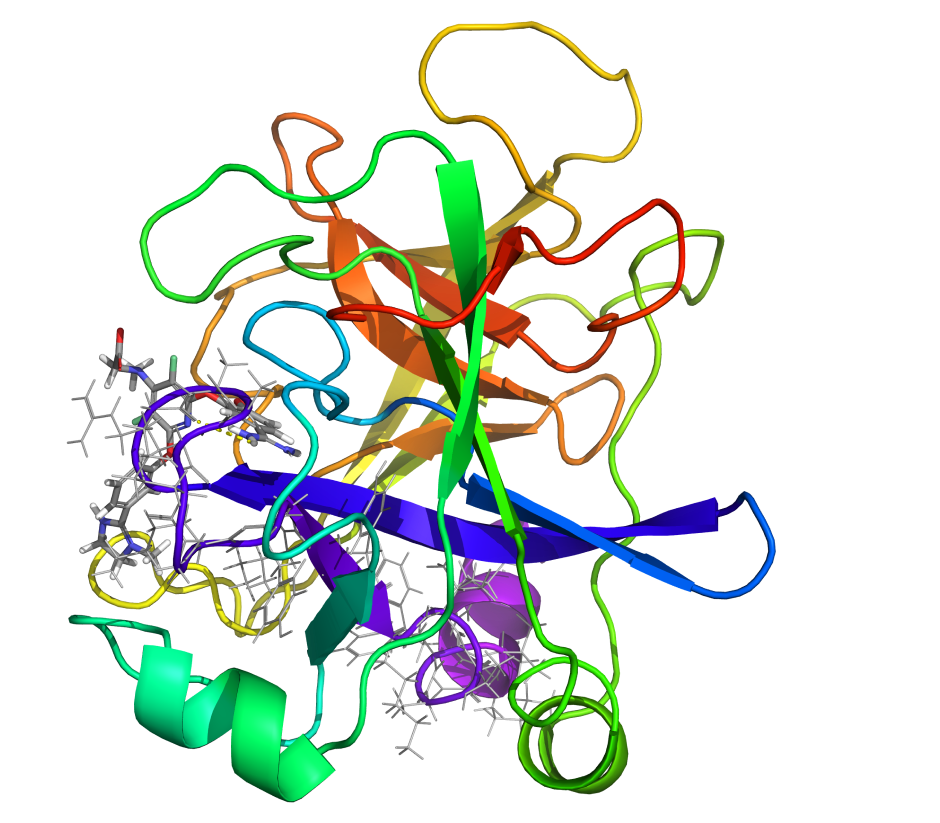
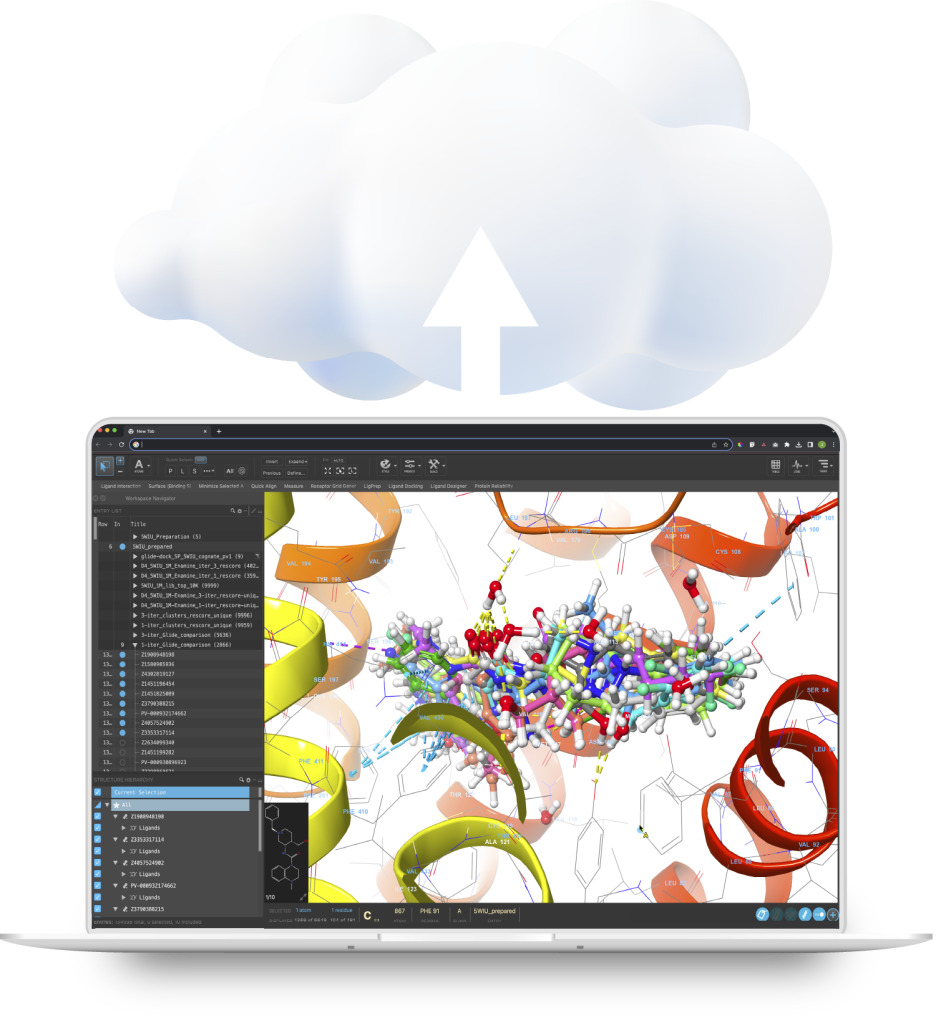
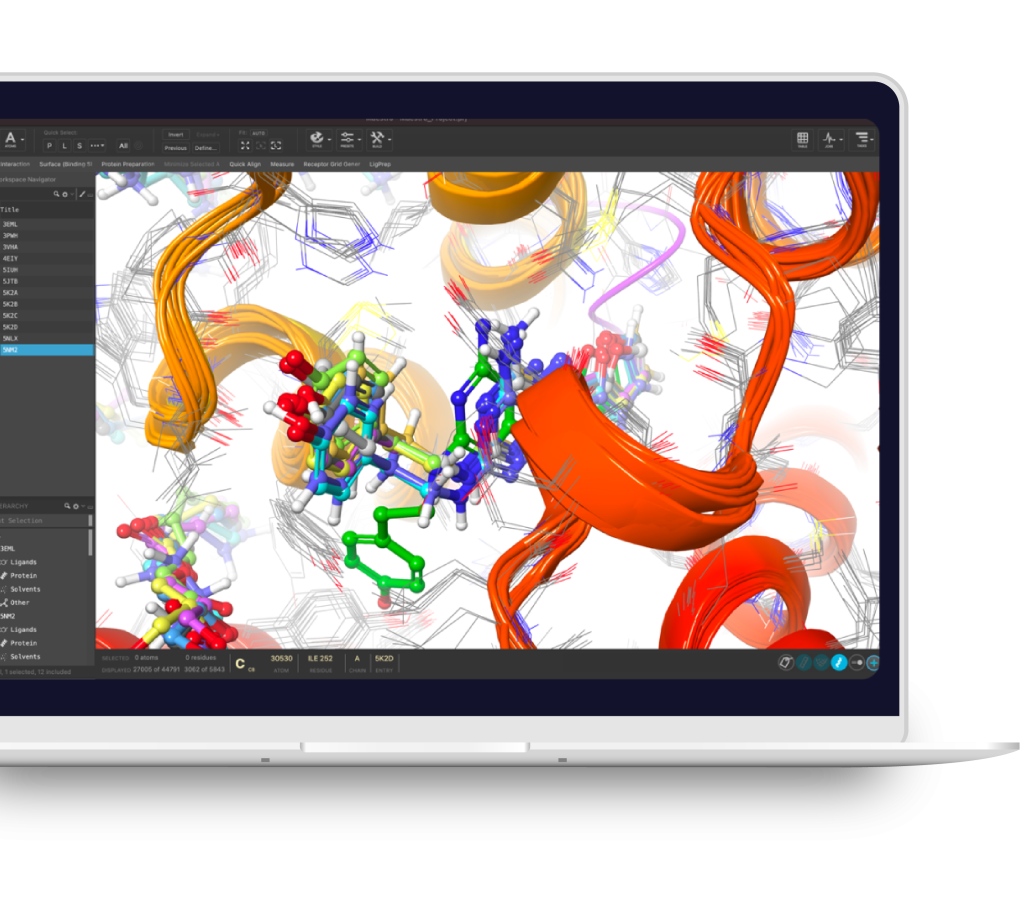
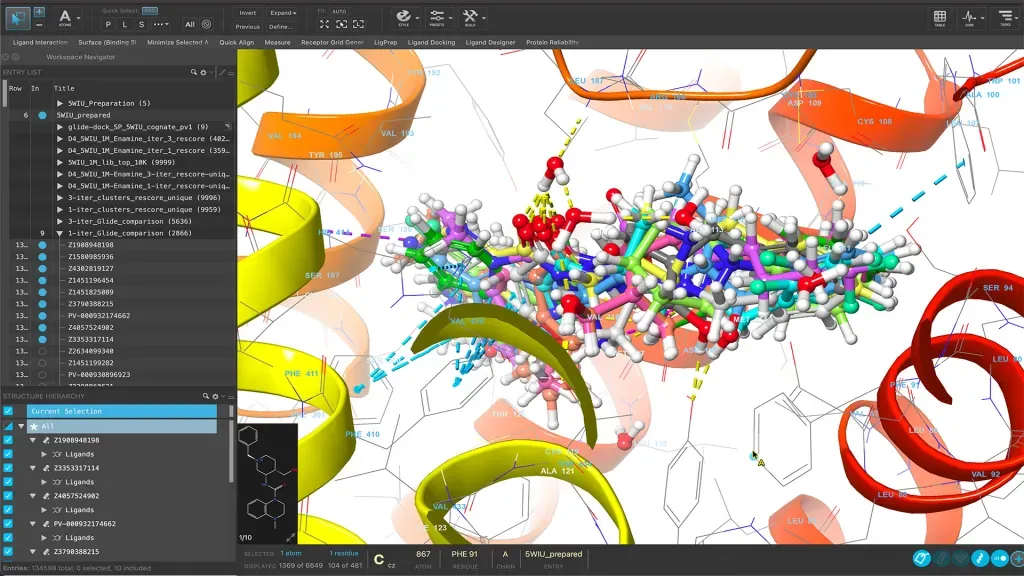
Schrödinger Maestro is a graphical workspace for molecular discovery. It provides access to computational modeling and machine-learning workflows, with linked workspace and analysis panels for inspecting molecular structures and interactions.
Maestro also connects with other Schrödinger tools. Schrödinger documents structure and model exchange with LiveDesign, alongside a Python API for scripting. The product page describes virtual-cloud access, while system requirements document desktop support and workflow-specific platform limits.
A quick way to understand who this product may suit, where its limits matter, and which facts are most relevant before you compare alternatives.
Drug-discovery and research teams that need a graphical workspace for Schrödinger modeling workflows, structure analysis, and related computational tasks.
Individuals seeking a publicly priced, standalone modeling tool may find the commercial purchase path difficult to assess; the free academic Viewer excludes molecular predictions and simulations, and should evaluate alternatives such as Molecular Operating Environment (MOE) or BIOVIA Discovery Studio Simulation instead.
API, Cloud, Linux, macOS, Windows
7.0/10
These are the product-specific differences that may matter when deciding whether the software fits your workflow. They are based on documented evidence rather than a universal ranking.
These are documented constraints or practical friction points that may matter before you adopt the product.
Users needing calculation workflows must obtain access beyond the Viewer.
Evidence source ↗Teams using Windows or macOS workstations may need Linux compute infrastructure for these calculations.
Evidence source ↗Schrödinger does not publish a commercial list price on the product page; contact the vendor for pricing.
Check current pricing →Free academic visualization tool; excludes molecular property predictions and molecular simulations.
Check current pricing →Pricing may change. Verify current plans on the vendor's website.
Compare similar products directly, then see which alternatives may make more sense when your requirements differ.
| Decision factor | Schrödinger Maestro | Molecular Operating Environment (MOE) | BIOVIA Discovery Studio Simulation |
|---|---|---|---|
| Core scope | Graphical portal to Schrödinger molecular-modeling and machine-learning workflows. | Integrated molecular modeling, visualization, simulation, and methodology-development environment. Source ↗ | A cloud-based drug-discovery environment combining AI models with physics-based modeling. Source ↗ |
| Platform or deployment model | Documented for Windows, Mac, and Linux, with a virtual-cloud access option; some workflows require Linux. | CCG describes MOE as a platform-independent software offering; specific deployment terms were not verified in the reviewed official material. Source ↗ | BIOVIA describes Discovery Studio Simulation as a SaaS application on the 3DEXPERIENCE platform. Source ↗ |
| Pricing model | Commercial pricing is quote-based; academic Viewer access is free but excludes simulations and predictions. | CCG provides academic discounts and invites prospective customers to request information; public list prices were not found. Source ↗ | The reviewed official product page describes SaaS delivery but does not publish a price. Source ↗ |
Only factors supported by the available research are shown. The comparison is descriptive, not a ranking.
These products address broadly similar requirements. The descriptions focus on documented reasons a buyer might compare them with Schrödinger Maestro.


| Vendor | Schrödinger, Inc. |
|---|---|
| Software type | Molecular modeling environment |
| Supported operating systems | Windows, Mac, Linux; workflow support varies |
| API | Schrödinger Python API |
| Integration | Schrödinger LiveDesign |
| Cloud access | Virtual-cloud access described by vendor |
| Pricing | Commercial pricing by quotation; academic Viewer available free with limited capabilities |
Verified installation, hosting, administration, or environment details that can affect implementation.
| Installation or hosting | Desktop support is documented for Windows, Mac, and Linux; Schrödinger also offers Maestro access through a secure virtual cloud environment. Source ↗ |
|---|---|
| Cloud access | Schrödinger describes virtual-cloud access for teams and scalable compute resources; public product materials do not specify the hosting region or service-level terms. Source ↗ |
Documented portability, standards, export, or switching considerations. No switching-cost score is shown unless the evidence supports one.
The product page documents importing and exporting structures and models between Maestro and LiveDesign. Broader migration guarantees or conversion coverage were not established from the reviewed public materials.
Evidence source ↗A proprietary editorial score based on product capabilities, usability, value, performance, support and user sentiment evidence.
Official materials document a broad graphical molecular-modeling environment, Python scripting, LiveDesign exchange, and desktop or cloud access. Commercial pricing is quote-based, and no accessible review evidence supported a user-sentiment score.
Methodology v1.0. The assessment weighs feature coverage (25%), ease of use (15%), value for money (20%), performance (15%), support (10%) and user sentiment (15%), using researched product evidence and verified review evidence where available. It is a TechZella editorial assessment, not a direct user-review average.
Key claims are linked to the sources used to verify them. This evidence record is separate from third-party user ratings.
TechZella evaluates software using documented product capabilities, pricing information, usability and value considerations, independent user evidence where available, and competitive context. The assessment is an editorial review, not a hands-on test unless one is explicitly identified. Our editorial assessment is based on 5 documented sources.
Schrödinger describes Maestro as a graphical environment and portal for molecular-discovery modeling and machine-learning workflows.
View source ↗Verified 2026-11-10The product page documents importing and exporting structures and models between Maestro and LiveDesign.
View source ↗Verified 2026-11-10Schrödinger’s system-requirements page lists the supported systems and identifies Desmond-dependent workflows that are not supported on Windows or Mac.
View source ↗Verified 2026-11-10The current API documentation describes functions for controlling Maestro from Python scripts running in its embedded interpreter.
View source ↗Verified 2026-11-10The official Viewer page says it is offered free to academia and lists visualization functions while excluding molecular predictions and simulations.
View source ↗Verified 2026-11-10The company history identifies its founding year and co-founders.
View source ↗Verified 2026-11-10Answers begin with the clearest available response, followed by the context that helps you act on it.
No reviews yet. Be the first to share your experience.
Please log in to submit a review.