
Strapi Cloud hosting and paid CMS features use separate plans.
Teams needing Growth or Enterprise capabilities on Strapi Cloud must budget for both hosting and the CMS feature license.
Evidence source ↗
Strapi is an open-source, API-first headless CMS for structuring and managing content, then delivering it through REST or GraphQL APIs.
Strapi offers a configurable content model, APIs, localization, roles, and self-hosting, with optional paid editorial and enterprise controls. G2 shows a 4.5/5 average, while public review examples mention flexibility alongside technical deployment work.
This profile combines documented product information and independent evidence where available. It is not a hands-on test unless TechZella explicitly identifies one.
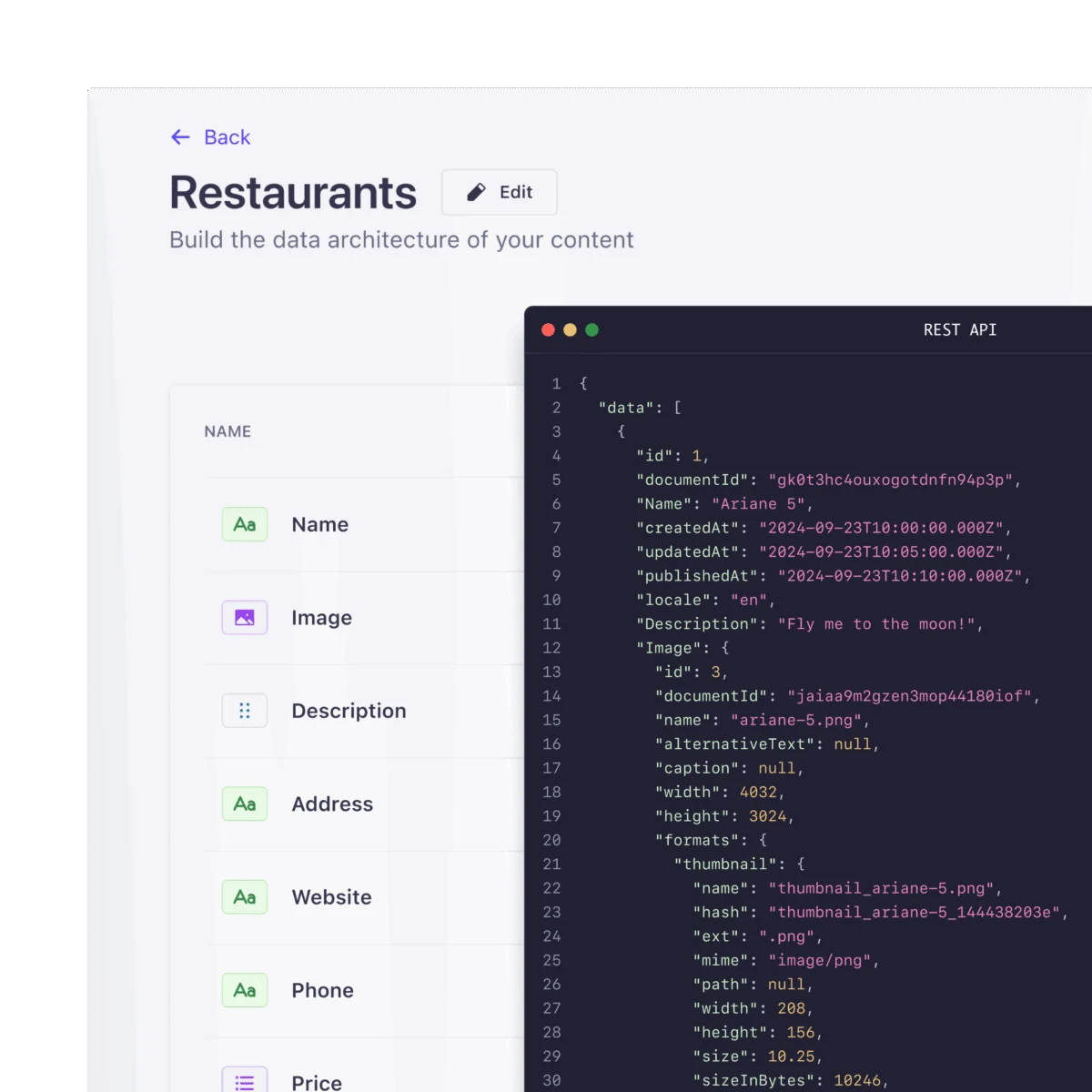
Strapi is an open-source, API-first content management system. Developers define content types and permissions, while editors manage content through an administrative interface.
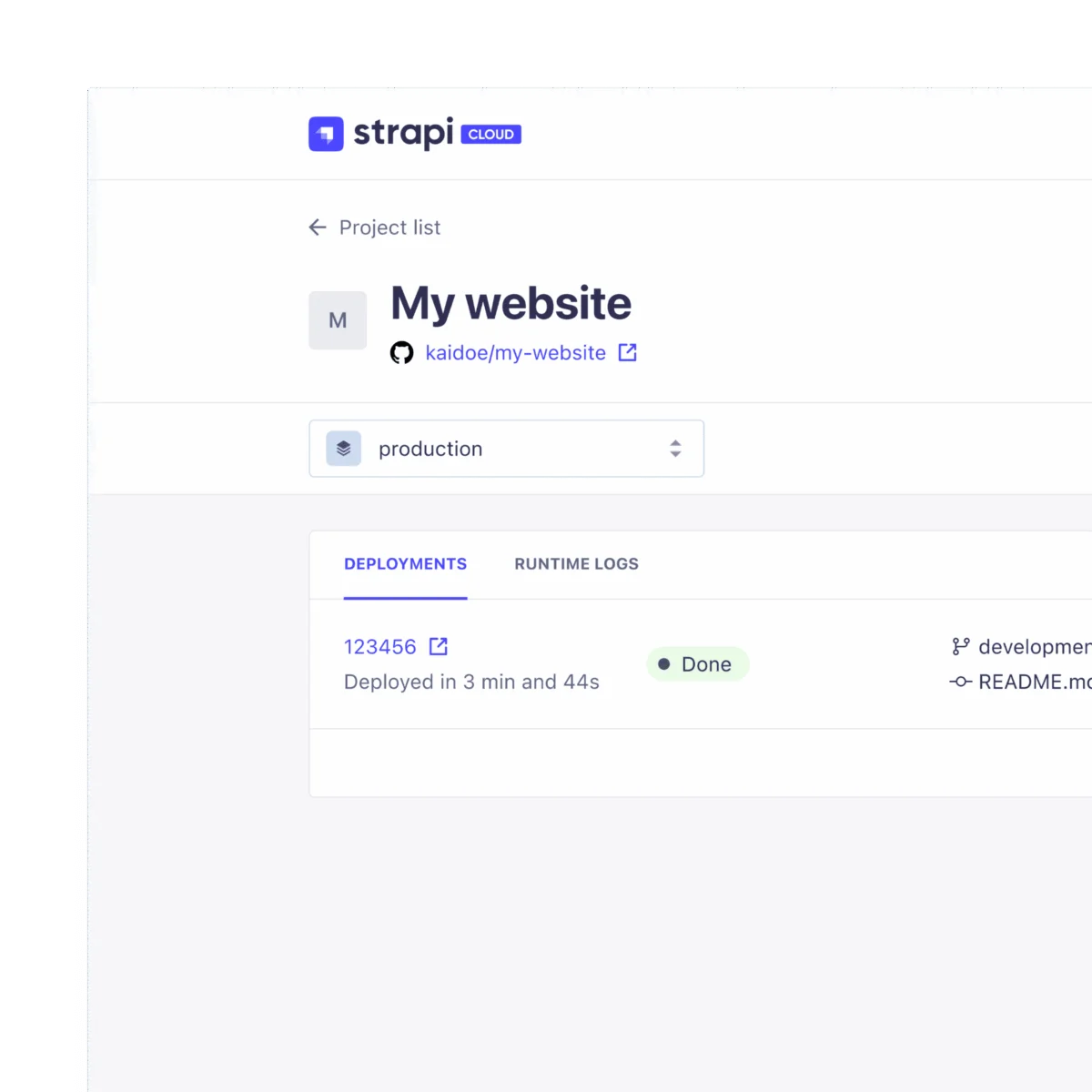
The system can be self-hosted or deployed on Strapi Cloud. Its API-oriented architecture suits teams delivering managed content to websites, applications, and other front ends. It is not a traditional site builder that supplies a complete front end.
A quick way to understand who this product may suit, where its limits matter, and which facts are most relevant before you compare alternatives.
Development teams building content-driven websites, applications, or other digital experiences that need a customizable CMS and API-based content delivery.
Teams seeking a turnkey traditional website builder, serverless-first runtime, or premium content workflows included without a separate CMS license, and should evaluate alternatives such as Sanity or Contentful instead.
API, Cloud, Self-hosted, Web
7.9/10
These are the product-specific differences that may matter when deciding whether the software fits your workflow. They are based on documented evidence rather than a universal ranking.
These are documented constraints or practical friction points that may matter before you adopt the product.
Teams needing Growth or Enterprise capabilities on Strapi Cloud must budget for both hosting and the CMS feature license.
Evidence source ↗Developers must request the relevant fields and permissions when building content-consuming applications.
Evidence source ↗Projects using GraphQL for content queries still need the REST upload endpoint for file uploads.
Evidence source ↗A buyer planning serverless deployment should assess runtime architecture before committing.
Evidence source ↗MIT-licensed CMS core with content management and API features; community support.
Check current pricing →CMS feature license; includes three seats. Additional seats are listed at $15 per seat monthly. A 30-day feature trial is advertised for self-hosted projects.
Check current pricing →Custom-priced CMS plan with enterprise features including SSO, review workflows, and audit logs.
Check current pricing →Hosting plan with 100,000 API requests, 50 GB asset storage, and 50 GB asset bandwidth listed.
Check current pricing →Hosting plan with 1 million API requests, 250 GB asset storage, and 500 GB asset bandwidth listed.
Check current pricing →Hosting plan with 10 million API requests, 1,000 GB asset storage, and 1,000 GB asset bandwidth listed.
Check current pricing →Pricing may change. Verify current plans on the vendor's website.
Compare similar products directly, then see which alternatives may make more sense when your requirements differ.
These products address broadly similar requirements. The descriptions focus on documented reasons a buyer might compare them with Strapi.



| License | Community edition is open-source under the MIT License |
|---|---|
| Deployment | Self-hosted or Strapi Cloud |
| API | REST API; GraphQL plugin |
| GraphQL media uploads | Not supported; use REST upload endpoint |
| Free trial | 30-day Growth feature trial for self-hosted projects |
| Serverless | Vendor documentation says Strapi is not well suited to serverless environments |
Verified installation, hosting, administration, or environment details that can affect implementation.
| Hosting choice | Community projects can be self-hosted or hosted on Strapi Cloud. Cloud hosting resources and CMS feature entitlements are separate. Source ↗ |
|---|---|
| Serverless | The Strapi FAQ describes Strapi as designed for an always-on service and not well suited to serverless environments. Source ↗ |
Documented portability, standards, export, or switching considerations. No switching-cost score is shown unless the evidence supports one.
The vendor documents breaking changes and transition guidance for migrating projects from Strapi 4 to Strapi 5.
Evidence source ↗A proprietary editorial score based on product capabilities, usability, value, performance, support and user sentiment evidence.
Strapi offers a configurable content model, APIs, localization, roles, and self-hosting, with optional paid editorial and enterprise controls. G2 shows a 4.5/5 average, while public review examples mention flexibility alongside technical deployment work.
Methodology v1.0. The assessment weighs feature coverage (25%), ease of use (15%), value for money (20%), performance (15%), support (10%) and user sentiment (15%), using researched product evidence and verified review evidence where available. It is a TechZella editorial assessment, not a direct user-review average.
Key claims are linked to the sources used to verify them. This evidence record is separate from third-party user ratings.
TechZella evaluates software using documented product capabilities, pricing information, usability and value considerations, independent user evidence where available, and competitive context. The assessment is an editorial review, not a hands-on test unless one is explicitly identified. Our editorial assessment is based on 6 documented sources.
The company identifies its origins as an open-source project started in France in 2015.
View source ↗Verified 2026-10-12The official CMS pricing page lists the Community edition as free and MIT-licensed.
View source ↗Verified 2026-10-12The official documentation states that content-type endpoints are generated for fetching and modifying documents.
View source ↗Verified 2026-10-12The official documentation requires installation of the GraphQL plugin and describes its query and mutation capabilities.
View source ↗Verified 2026-10-12Strapi support explains that Cloud plans cover hosting, while paid CMS features require a separate CMS license.
View source ↗Verified 2026-10-12The current CMS pricing page advertises a 30-day trial for Growth features on self-hosted projects.
View source ↗Verified 2026-10-12The public G2 product review page displayed that average and review count when accessed.
View source ↗Verified 2026-10-12Answers begin with the clearest available response, followed by the context that helps you act on it.
No reviews yet. Be the first to share your experience.
Please log in to submit a review.
This history records material data changes detected when TechZella re-researched the profile.