
Free projects have public datasets, with no overages allowed; the Free plan also has a 20-seat cap.
Teams handling private content or needing more included seats should check plan boundaries before committing.
Evidence source ↗
Sanity is a customizable, headless content management platform with a hosted content database, configurable editorial studio, and APIs for delivering structured content to websites and apps.
The assessment reflects documented schema customization, APIs, real-time editing, hosted and self-hosted Studio options, current plan terms, and G2's displayed rating. Ease-of-use and performance scores are cautious editorial judgments, not hands-on test results.
This profile combines documented product information and independent evidence where available. It is not a hands-on test unless TechZella explicitly identifies one.
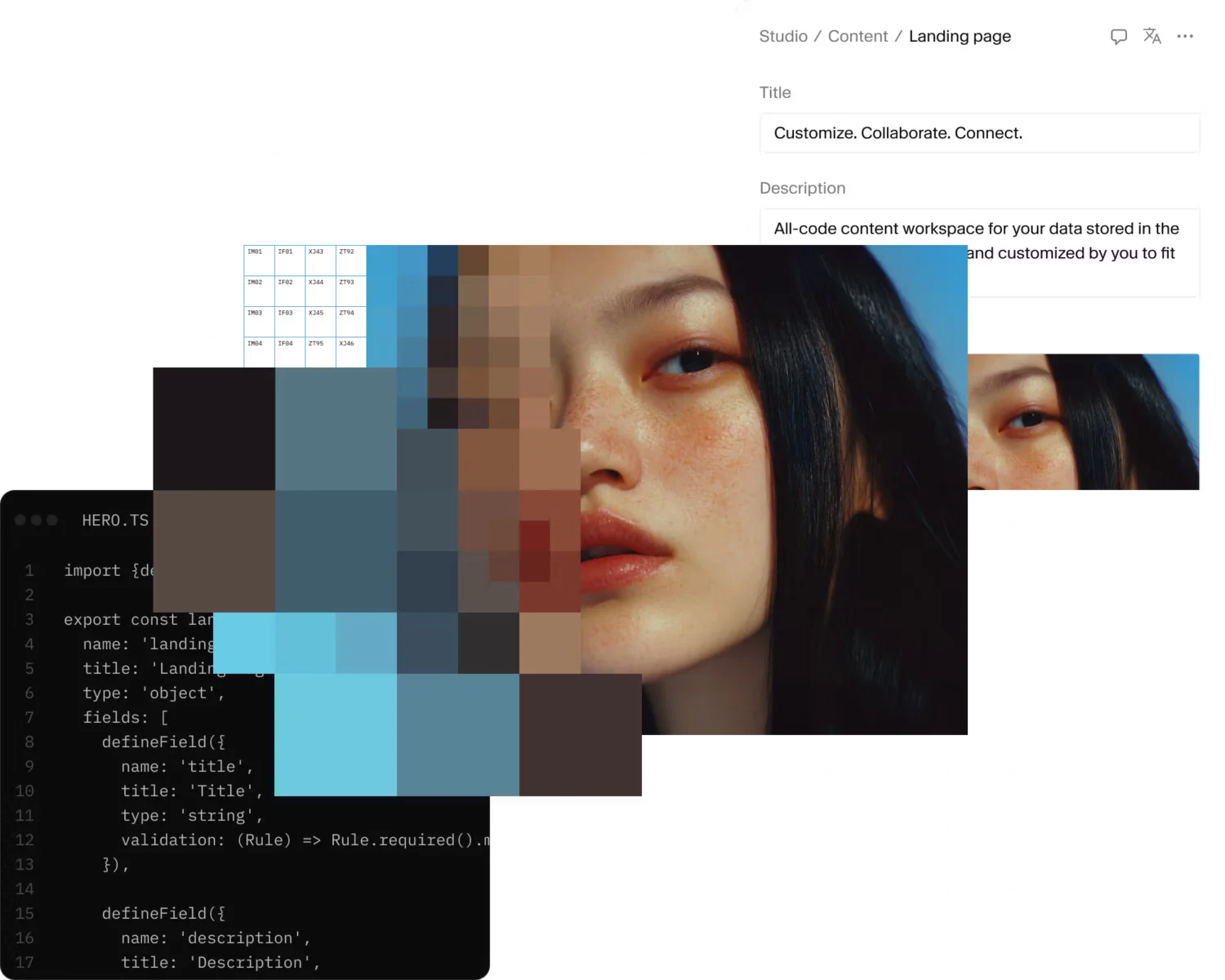
Sanity combines a hosted content database called Content Lake with Sanity Studio, a configurable editorial application. Teams model content in JavaScript or TypeScript and deliver it through APIs to separately built websites and applications.
The product suits teams that want structured, reusable content and control over editing workflows. Its headless approach also means buyers should account for frontend development and content-model design.
A quick way to understand who this product may suit, where its limits matter, and which facts are most relevant before you compare alternatives.
Teams building content-rich websites, apps, or commerce experiences that need structured content, custom editorial workflows, and developer-controlled delivery.
Teams seeking a ready-made, conventional website builder may not need a customizable Studio, a separately built frontend, or developer-led content modeling, and should evaluate alternatives such as Storyblok or Contentful instead.
API, JavaScript, SaaS, TypeScript, Web
8.2/10
These are the product-specific differences that may matter when deciding whether the software fits your workflow. They are based on documented evidence rather than a universal ranking.
These are documented constraints or practical friction points that may matter before you adopt the product.
Teams handling private content or needing more included seats should check plan boundaries before committing.
Evidence source ↗Usage limits and billing behavior differ by plan, so forecast content delivery and asset needs before launch.
Evidence source ↗Self-hosting the editor does not mean the content database is self-hosted.
Evidence source ↗Teams choosing GraphQL may need schema adjustments; Sanity also documents GROQ as its native query language.
Evidence source ↗Up to 20 seats, two public datasets, unlimited content types and locales, and hosted real-time content database. Free plan usage limits apply.
Check current pricing →Up to 50 seats, two private or public datasets, comments and tasks, scheduled drafts, AI Assist, and pay-as-you-go for higher usage.
Check current pricing →Custom seats, roles, datasets, usage quota, SAML single sign-on, dedicated support, uptime SLA, onboarding program, and custom historical retention.
Check current pricing →Pricing may change. Verify current plans on the vendor's website.
Compare similar products directly, then see which alternatives may make more sense when your requirements differ.
These products address broadly similar requirements. The descriptions focus on documented reasons a buyer might compare them with Sanity.



| Deployment | Sanity-hosted Content Lake; Studio hosting or self-hosting |
|---|---|
| Studio framework | React single-page application |
| Studio configuration | JavaScript or TypeScript |
| Query options | GROQ; generated GraphQL API |
| Free plan datasets | Two public datasets |
| Growth plan datasets | Two private or public datasets |
| Free trial | Limited-period Growth feature trial on new projects; Free-plan usage limits apply |
| Shopify integration | Sanity Connect synchronizes content with a Shopify store |
| Company address | Sanity AS, Trondheimsveien 2K, 0560 Oslo, Norway |
Verified installation, hosting, administration, or environment details that can affect implementation.
| Installation or hosting | Sanity Studio is an open-source React single-page application. Sanity offers Studio hosting, self-hosting on SPA-capable infrastructure, and embedding Studio in an application. Content Lake and APIs are hosted by Sanity. Source ↗ |
|---|
A proprietary editorial score based on product capabilities, usability, value, performance, support and user sentiment evidence.
The assessment reflects documented schema customization, APIs, real-time editing, hosted and self-hosted Studio options, current plan terms, and G2's displayed rating. Ease-of-use and performance scores are cautious editorial judgments, not hands-on test results.
Methodology v1.0. The assessment weighs feature coverage (25%), ease of use (15%), value for money (20%), performance (15%), support (10%) and user sentiment (15%), using researched product evidence and verified review evidence where available. It is a TechZella editorial assessment, not a direct user-review average.
Key claims are linked to the sources used to verify them. This evidence record is separate from third-party user ratings.
TechZella evaluates software using documented product capabilities, pricing information, usability and value considerations, independent user evidence where available, and competitive context. The assessment is an editorial review, not a hands-on test unless one is explicitly identified. Our editorial assessment is based on 6 documented sources.
The deployment documentation describes Sanity-hosted Studio and self-hosting on infrastructure that supports SPA routing.
View source ↗Verified 2026-10-12The official pricing page lists 20 seats and two public datasets for Free.
View source ↗Verified 2026-10-12The pricing page displays Growth at $15 per seat per month.
View source ↗Verified 2026-10-12Sanity's trial guide says new projects receive access to additional Growth features for a limited period, while retaining Free-plan usage limits.
View source ↗Verified 2026-10-12Sanity's API documentation describes GROQ querying and schema-based GraphQL API deployment.
View source ↗Verified 2026-10-12The official integration guide documents Sanity Connect for synchronizing Sanity and Shopify content.
View source ↗Verified 2026-10-12The G2 seller page showed an average rating of 4.7 and 926 reviews at retrieval.
View source ↗Verified 2026-10-12Answers begin with the clearest available response, followed by the context that helps you act on it.
No reviews yet. Be the first to share your experience.
Please log in to submit a review.
This history records material data changes detected when TechZella re-researched the profile.