Editorial overview
Aggregated Overview
Assessment reflects published product capabilities, pricing and documentation, plus G2's public rating and review excerpts. It is not based on hands-on testing.
This profile combines documented product information and independent evidence where available. It is not a hands-on test unless TechZella explicitly identifies one.
Overview
Raygun is a hosted software-monitoring service for teams investigating application errors and performance. Its product set comprises Crash Reporting, Real User Monitoring (RUM), and Application Performance Monitoring (APM).
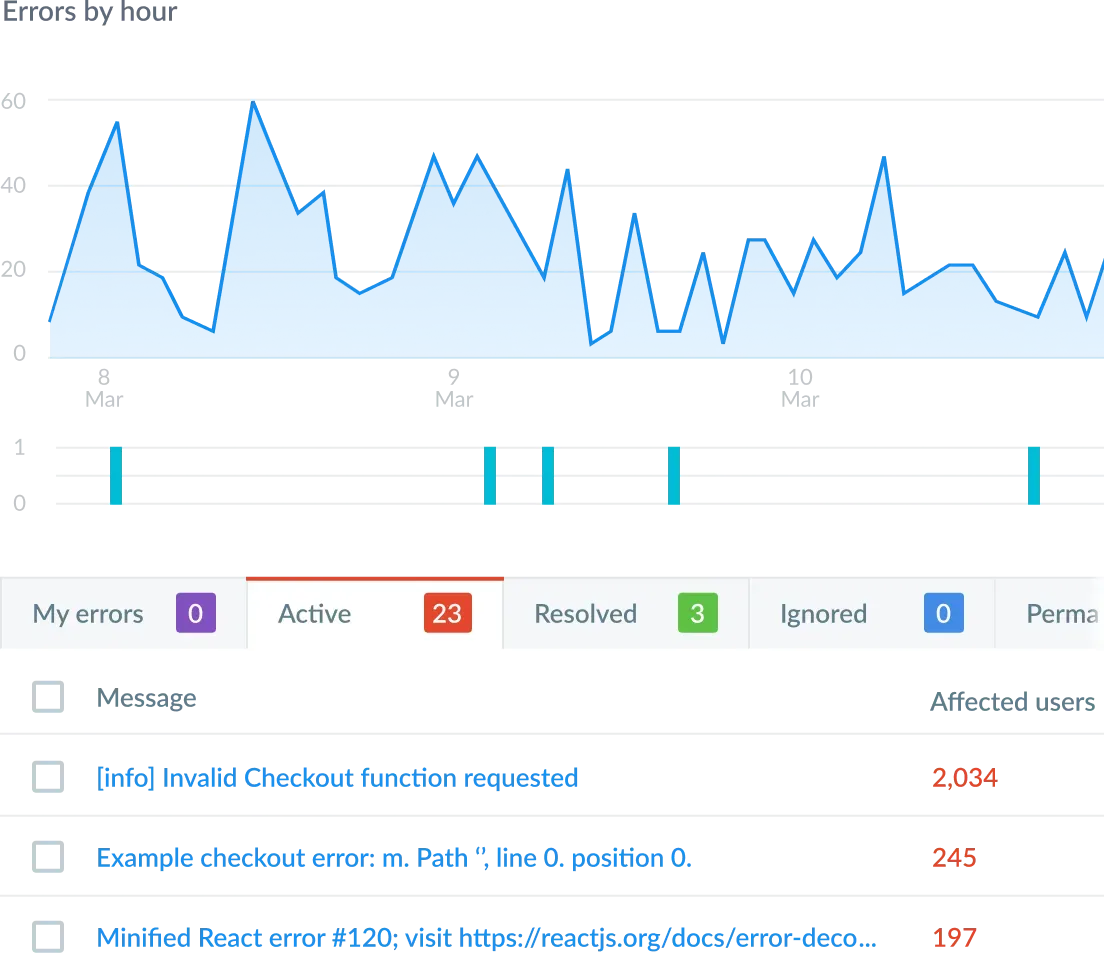
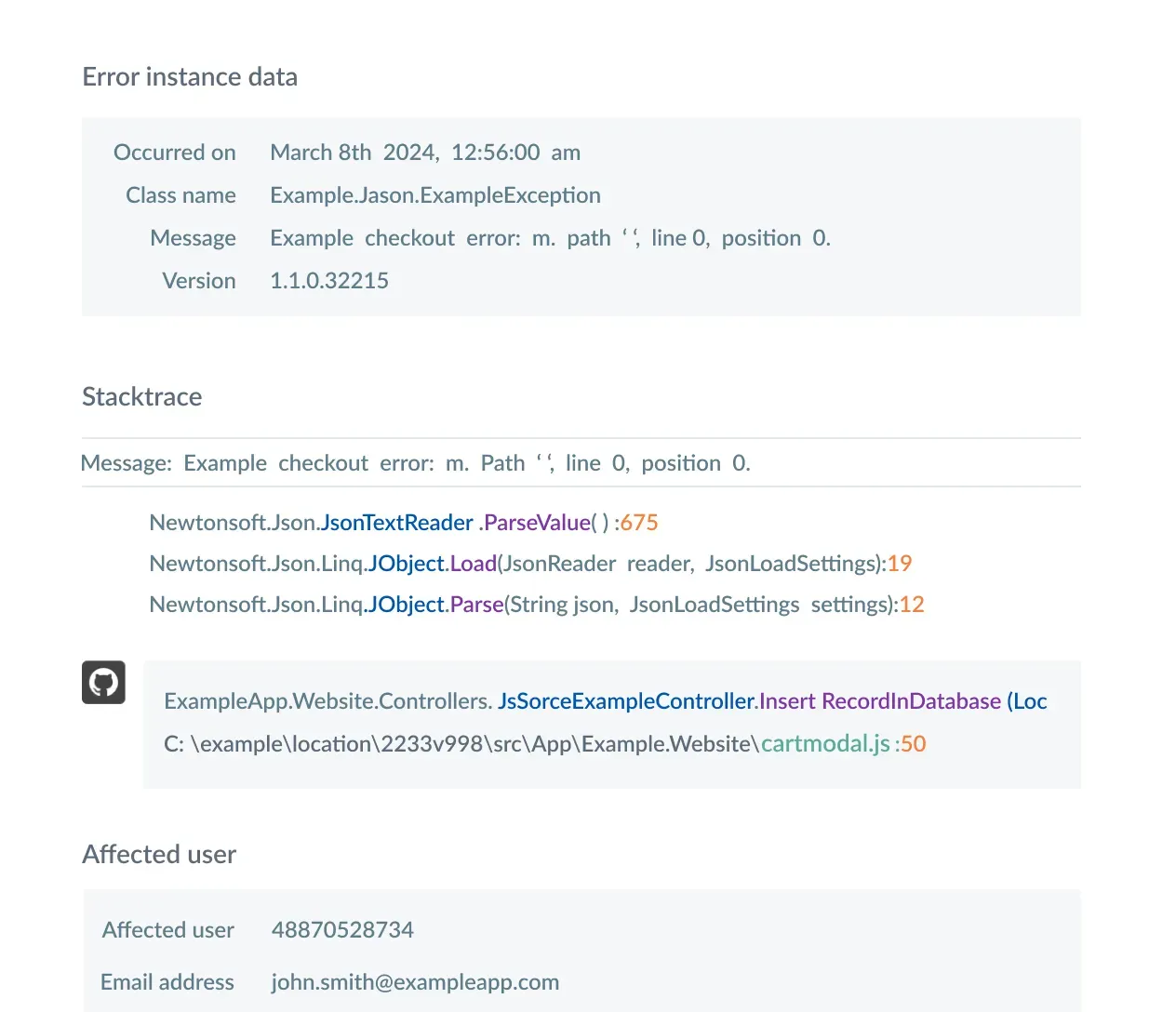
Crash Reporting groups and diagnoses application errors. RUM captures user-session and page-performance data, while APM records server-side request traces. Teams can connect monitoring records to releases and issue-management workflows.
Raygun is headquartered in Wellington, New Zealand. Its official pricing FAQ identifies AWS US-EAST-1 as the data-storage region, a relevant consideration for organizations with regional data requirements.
Raygun Decision Snapshot
A quick way to understand who this product may suit, where its limits matter, and which facts are most relevant before you compare alternatives.
Best suited toSoftware teams that want error reporting, real-user monitoring, and server-side performance monitoring in one hosted service, with integrations into development and incident-response workflows.
Look elsewhere ifTeams that require self-hosting, or need a single predictable charge across all monitoring modules without estimating separate event volumes, should verify fit and cost before adopting, and should evaluate alternatives such as Datadog or BugSnag instead.
PlatformsAndroid, Linux, SaaS, Web, Windows
TechZella assessment7.8/10
Raygun — What Sets It Apart?
These are the product-specific differences that may matter when deciding whether the software fits your workflow. They are based on documented evidence rather than a universal ranking.
- Combines crash and error reporting, real-user monitoring, and server-side APM within the same service.
- Connects error diagnostics with release and deployment context, helping teams investigate regressions.
- Offers language-specific SDKs and integrations with source-control, issue-tracking, and team-notification tools.
Editorial assessmentRaygun Pros & Cons
Pros
- Combines error reporting, real-user monitoring, and server-side APM in one hosted service.
- Provides integrations with source-control, issue-tracking, messaging, and incident-response tools.
- Documents an API for selected monitoring data and workflow operations.
- Offers a no-credit-card 14-day trial.
Cons
- Separate event types and usage allocations make total costs dependent on monitoring volume.
- On-demand usage can add charges beyond reserved quotas.
- Raygun's documented data-storage region is AWS US-EAST-1.
Raygun Gotchas & Operational Limits
These are documented constraints or practical friction points that may matter before you adopt the product.
Usage above a plan's reserved event allocation is billed as on-demand usage unless the account uses a cap or manages its quota.
Teams should estimate errors, sessions, and traces independently and review how spikes affect monthly spend.
Evidence source ↗Data sent between the end of the 14-day trial and paid-plan activation is not processed.
A team should plan its evaluation and subscription transition to avoid an unmonitored gap.
Evidence source ↗Raygun's pricing FAQ identifies AWS US-EAST-1 as its data-storage region.
Organizations with data-residency constraints should confirm the location is acceptable before sending production telemetry.
Evidence source ↗Raygun Pricing & Plans
Crash Reporting Basic
$40 per 100,000 errors
month, billed annually
Official pricing lists a Basic Crash Reporting plan with 100,000 errors per month. Monthly billing is listed at $60 per 100,000 errors.
Check current pricing →Crash Reporting Team
$80 per 200,000 errors
month, billed annually
Official pricing lists a Team Crash Reporting plan with 200,000 errors per month. Monthly billing is listed at $120 per 200,000 errors.
Check current pricing →Free trial
$0
14 days
Unlimited monitoring during the trial; no credit card required.
Check current pricing →Enterprise
Contact Raygun
Custom pricing and terms are available for Enterprise subscriptions.
Check current pricing →Pricing may change. Verify current plans on the vendor's website.
Cost contextTotal Cost & Hidden Costs
Additional costs or implementation requirements that are documented in the available evidence.
Implementation and onboarding
Raygun provides product and language-specific setup guides; the reviewed public pricing and documentation do not specify a standard paid onboarding fee or implementation duration.
Evidence source ↗Hosting and infrastructure
The product is hosted by Raygun, so customers do not need to deploy Raygun's monitoring service. The pricing FAQ identifies AWS US-EAST-1 as the data-storage region.
Evidence source ↗Usage and add-ons
On-demand usage is listed at $0.001 per Crash Reporting error, and $0.002 per Real User Monitoring session or APM trace. Pricing lists SAML SSO at $50 per month and Usage Capping at $40 per month as add-ons on eligible plans.
Evidence source ↗Raygun Competitors & Alternatives
Compare similar products directly, then see which alternatives may make more sense when your requirements differ.
At a glance
Developer ToolsOnly factors supported by the available research are shown. The comparison is descriptive, not a ranking.
Direct competitors
These products address broadly similar requirements. The descriptions focus on documented reasons a buyer might compare them with Raygun.
CapabilitiesRaygun Features
Crash Reporting
- Error grouping and diagnostic details
- Error filtering and search
- Alerts for new errors, spikes, and regressions
- Deployment tracking
- AI Error Resolution
Real User Monitoring
- Web, hybrid, and mobile session monitoring
- Page-speed and Core Web Vitals metrics
- Single-page application support
- Alerts for slow pages and requests
Application Performance Monitoring
- Server-side request tracing
- Performance issue views and reports
- Sampling and code-filtering controls
- Documented APM agents for Windows and Linux
Integrations and API
- GitHub, Jira, Slack, Microsoft Teams, Azure DevOps, and PagerDuty integrations
- Webhook notifications
- Public API with scoped personal access tokens
- API access to selected errors, sessions, metrics, and deployments
Raygun Specifications
| Deployment | Hosted SaaS |
|---|
| Data storage region | AWS US-EAST-1, according to Raygun's pricing FAQ |
|---|
| API | Public API v3; bearer authentication with personal access tokens and scoped permissions |
|---|
| API rate limits | 10 calls per second, 600 per minute, and 10,000 per day |
|---|
| Trial | 14 days, unlimited monitoring, no credit card required |
|---|
| Integrations | Includes GitHub, Jira, Slack, Microsoft Teams, Azure DevOps, PagerDuty, and webhooks |
|---|
| APM installation | Windows and Linux installers; Azure App Service extension documented |
|---|
| SDK language guides | .NET, Android, Apple, C++, Flutter, Go, Java, JavaScript, Node.js, PHP, Python, React Native, Ruby, Unity, and others |
|---|
Exit planningMigration & Lock-In
Documented portability, standards, export, or switching considerations. No switching-cost score is shown unless the evidence supports one.
Data portability
The public API provides endpoints to read error groups, sessions, page metrics, customers, applications, and deployment records. API access uses personal access tokens and scoped permissions.
Evidence source ↗Trial transition
Raygun says new data sent after the trial ends will not be processed until a paid account is activated.
Evidence source ↗Our evidence-based assessmentTechZella Score
A proprietary editorial score based on product capabilities, usability, value, performance, support and user sentiment evidence.
7.8/10Moderate confidence
Assessment reflects published product capabilities, pricing and documentation, plus G2's public rating and review excerpts. It is not based on hands-on testing.
Methodology v1.0. The assessment weighs feature coverage (25%), ease of use (15%), value for money (20%), performance (15%), support (10%) and user sentiment (15%), using researched product evidence and verified review evidence where available. It is a TechZella editorial assessment, not a direct user-review average.
Editorial transparency
Our Review Methodology
Key claims are linked to the sources used to verify them. This evidence record is separate from third-party user ratings.
TechZella evaluates software using documented product capabilities, pricing information, usability and value considerations, independent user evidence where available, and competitive context. The assessment is an editorial review, not a hands-on test unless one is explicitly identified. Our editorial assessment is based on 4 documented sources.
What TechZella adds- Combines crash and error reporting, real-user monitoring, and server-side APM within the same service.
- Connects error diagnostics with release and deployment context, helping teams investigate regressions.
- Offers language-specific SDKs and integrations with source-control, issue-tracking, and team-notification tools.
Important limitations- Billing is usage-sensitive: errors, sessions, and traces are separate event types, and usage beyond reserved quotas can incur per-event charges.
- The public FAQ says data sent after a trial ends is not processed until a paid account is activated.
- Raygun's published data-location answer places data in AWS US-EAST-1, which may not meet every organization's regional requirements.
Evidence-backed claimsRaygun offers Crash Reporting, Real User Monitoring, and Application Performance Monitoring.The official pricing page describes the three products and their respective errors, sessions, and traces.
View source ↗Verified 2026-11-08Raygun provides a 14-day free trial without requiring a credit card.The official pricing page states the trial duration and that a credit card is not required.
View source ↗Verified 2026-11-08Raygun's public API supports scoped access to application, deployment, error, session, and metric data.The API documentation lists endpoints and required scopes and describes personal access token authentication.
View source ↗Verified 2026-11-08Raygun's integration catalog includes GitHub, Jira, Slack, Azure DevOps, PagerDuty, and webhooks.Raygun's integrations page describes connections to issue trackers, source-control tools, alert channels, and webhooks.
View source ↗Verified 2026-11-08Raygun's pricing FAQ identifies AWS US-EAST-1 as its data-storage region.The official pricing FAQ answers where Raygun servers are based and names the AWS region.
View source ↗Verified 2026-11-08Raygun APM release 3.1 was listed as the latest stable release dated September 8, 2026.The APM downloads page identifies version 3.1 and gives its release date.
View source ↗Verified 2026-11-08 Independent review sources
Raygun Ratings & Reviews
Ratings are published by the respective review platforms and may change over time.
Common questionsRaygun FAQs
Answers begin with the clearest available response, followed by the context that helps you act on it.
Does Raygun have a free trial?
Yes. Raygun offers a 14-day trial with unlimited monitoring and no credit card required.
Does Raygun have a permanent free plan?
The reviewed official pricing page describes a 14-day trial and paid plans; it does not list a permanent free plan.
How does Raygun charge for usage above plan limits?
The billing documentation says usage above reserved events is charged per event: errors, RUM sessions, and APM traces have separate rates.
Where does Raygun store customer data?
Raygun's pricing FAQ says its data is stored in the AWS US-EAST-1 region.
Does Raygun provide an API?
Yes. Raygun documents a public API with personal access token authentication, scopes, and endpoints for selected application, error, session, metric, and deployment data.
Community feedback
Reviews
No reviews yet. Be the first to share your experience.
Write a Review
Please log in to submit a review.
Recently added Developer Tools