
GnuTLS requires Nettle and GMP; optional features may need p11-kit, trousers, libidn2, or libunbound.
Build planning and package maintenance depend on selected features and the libraries available in the target environment.
Evidence source ↗GnuTLS is a C library for TLS, DTLS, certificate handling, and related cryptographic functions, with command-line tools for connection testing and certificate tasks.
Scores are editorial assessments of documented functionality, licensing, dependencies, and implementation work, not hands-on test results or user ratings. No reliable public review data was verified.
This profile combines documented product information and independent evidence where available. It is not a hands-on test unless TechZella explicitly identifies one.
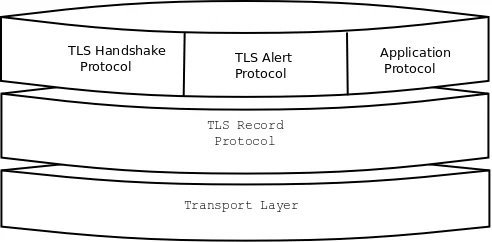
GnuTLS is a software library for applications that need secure communications. It implements TLS and DTLS and provides APIs for certificate processing and related cryptographic functions.
Developers use its C API to incorporate these functions into applications. Its distribution also includes command-line tools, including certtool for certificate and key operations. GnuTLS is self-installed rather than a hosted service.
A quick way to understand who this product may suit, where its limits matter, and which facts are most relevant before you compare alternatives.
Developers integrating TLS or DTLS communications and X.509 certificate handling into C applications, especially where PKCS #11 or TPM support is relevant.
Teams seeking a hosted security service, a turnkey certificate-management platform, or a low-level standalone cryptographic-primitives library should assess other tools; GnuTLS is a library requiring software integration, and should evaluate alternatives such as OpenSSL u2014 relevant when an application needs standalone general-purpose cryptographic functions alongside TLS. or Mbed TLS u2014 relevant when an embedded target makes the project's stated small-footprint focus important. instead.
Linux, macOS, UNIX, Windows
6.4/10
These are the product-specific differences that may matter when deciding whether the software fits your workflow. They are based on documented evidence rather than a universal ranking.
These are documented constraints or practical friction points that may matter before you adopt the product.
Build planning and package maintenance depend on selected features and the libraries available in the target environment.
Evidence source ↗Windows users should evaluate provenance and verification before relying on those binaries in production.
Evidence source ↗Applications needing standalone low-level crypto operations may need a separate library, which the manual identifies as Nettle.
Evidence source ↗The GnuTLS core library is licensed under LGPLv2.1 or later. No paid subscription or trial is listed on the official pages checked.
Check current pricing →Pricing may change. Verify current plans on the vendor's website.
Compare the product with documented alternatives across the factors that can change a buying decision. Each row is evidence-backed rather than a generic feature checklist.
| Decision factor | GnuTLS | OpenSSL |
|---|---|---|
| Core scope | TLS/DTLS, certificate and PKI functions, and selected cryptographic APIs; the manual says it is not a low-level primitives library. | TLS/DTLS plus a general-purpose cryptographic library usable independently of TLS. Source ↗ |
| Primary interface | Portable ANSI C library with a documented C API and separate command-line tools. | Includes libssl, libcrypto, and the openssl command-line toolkit. Source ↗ |
| Best-fit use case | Applications seeking the GnuTLS TLS/DTLS and certificate API, including its documented PKCS #11 and TPM support. | Applications needing standalone general-purpose cryptographic functions alongside TLS. Source ↗ |
| Decision factor | GnuTLS | Mbed TLS |
|---|---|---|
| Core scope | TLS/DTLS and certificate functions with a cryptographic backend based on Nettle and GMP. | C library for TLS, DTLS, X.509, and the PSA Cryptography API. Source ↗ |
| Target environment | The project describes broad Unix and Windows support; Homebrew provides macOS and Linux packages. | Its project README identifies a small code footprint and embedded systems as a target. Source ↗ |
| License model | Core library under LGPLv2.1 or later, according to the GnuTLS project site. | Project README states Apache-2.0 OR GPL-2.0-or-later for files unless otherwise indicated. Source ↗ |
Only factors supported by the available research are shown. The comparison is descriptive, not a ranking.

| Software type | C library and command-line utilities |
|---|---|
| Core license | LGPLv2.1 or later |
| API | C API |
| Protocol support | TLS and DTLS |
| Certificate formats and standards | X.509 and PKCS #12 functions documented |
| Required build dependencies | Nettle and GMP |
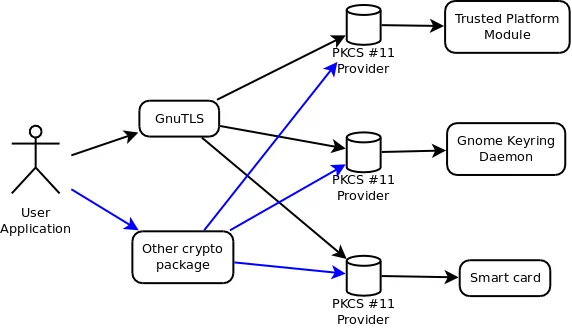
| Optional integration support | PKCS #11, TPM, internationalized domain names, and DNSSEC/DANE capabilities, subject to dependencies |
| Deployment | Self-installed; source builds and platform packages |
| Platforms | Most Unix platforms and Windows; macOS and Linux packages listed by Homebrew |
Verified installation, hosting, administration, or environment details that can affect implementation.
| Installation or hosting | Self-installed library built from source or installed through a platform package manager; no hosted service is described. Source ↗ |
|---|---|
| Supported environments | The project says it runs on most Unix platforms and Windows; Homebrew provides packages for macOS and Linux. Source ↗ |
OpenSSL is a relevant comparison for projects that need standalone general-purpose cryptographic functions in addition to TLS. GnuTLS may suit teams seeking its TLS/DTLS and certificate APIs or its documented token support.
Mbed TLS is another C-library option; its project describes a small code footprint for embedded systems. That emphasis may better match constrained targets, while GnuTLS documents broad Unix and Windows support and a different dependency model.
Documented portability, standards, export, or switching considerations. No switching-cost score is shown unless the evidence supports one.
Not applicable as a hosted data service. GnuTLS exposes C APIs and supports certificate and key formats including X.509 and PKCS #12; application migration requires engineering work.
Evidence source ↗A proprietary editorial score based on product capabilities, usability, value, performance, support and user sentiment evidence.
Scores are editorial assessments of documented functionality, licensing, dependencies, and implementation work, not hands-on test results or user ratings. No reliable public review data was verified.
Methodology v1.0. The assessment weighs feature coverage (25%), ease of use (15%), value for money (20%), performance (15%), support (10%) and user sentiment (15%), using researched product evidence and verified review evidence where available. It is a TechZella editorial assessment, not a direct user-review average.
Key claims are linked to the sources used to verify them. This evidence record is separate from third-party user ratings.
TechZella evaluates software using documented product capabilities, pricing information, usability and value considerations, independent user evidence where available, and competitive context. The assessment is an editorial review, not a hands-on test unless one is explicitly identified. Our editorial assessment is based on 4 documented sources.
The project describes it as a secure communications library and lists TLS, DTLS, and X.509/PKCS #12 functions.
View source ↗Verified 2026-11-25The project overview describes the C API and states that the software runs on most Unix platforms and Windows.
View source ↗Verified 2026-11-25The official project overview identifies the core library's license as GNU LGPL version 2.1 or later.
View source ↗Verified 2026-11-25The official download page lists required libraries and names optional dependencies for PKCS #11, TPM, internationalized domain names, and DNSSEC/DANE.
View source ↗Verified 2026-11-25The manual documents certtool operations including parsing and generating X.509 certificates, requests, and private keys.
View source ↗Verified 2026-11-25The project news page records that release date and describes the release as a bug-fix, security, and enhancement release.
View source ↗Verified 2026-11-25Answers begin with the clearest available response, followed by the context that helps you act on it.
No reviews yet. Be the first to share your experience.
Please log in to submit a review.