Editorial overview
Aggregated Overview
The assessment reflects documented content modeling, localization, preview, GraphQL, plugin, and licensing capabilities, plus public review-page ratings. It is not based on hands-on testing.
This profile combines documented product information and independent evidence where available. It is not a hands-on test unless TechZella explicitly identifies one.
Overview
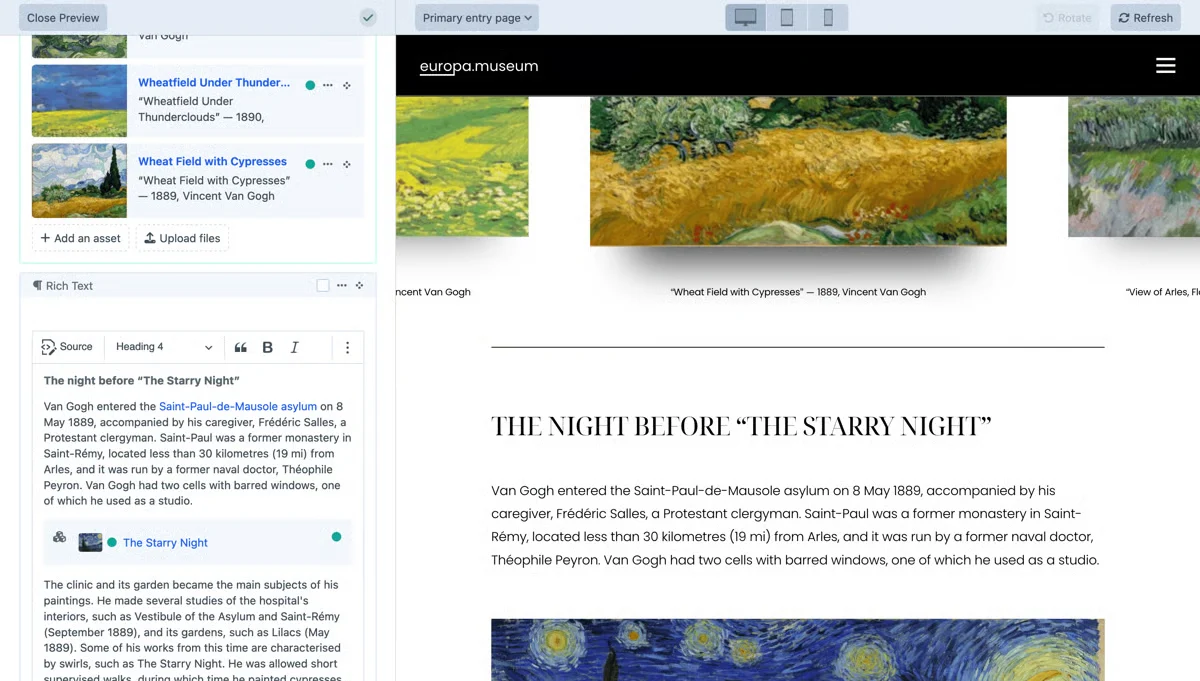
Craft CMS is a PHP-based content management system built around custom content modeling and developer-defined front ends. Teams can render pages with Twig or use GraphQL to provide content to separate applications.
Its multi-site tools support related websites and localization from one installation. The vendor cautions that multi-site is intended for sites with shared publishing teams, rather than unrelated projects. ([craftcms.com](https://craftcms.com/docs/5.x/system/sites?utm_source=openai))
Craft CMS Decision Snapshot
A quick way to understand who this product may suit, where its limits matter, and which facts are most relevant before you compare alternatives.
Best suited toWeb teams and agencies that want structured, custom content models, editorial preview, localization, and the option to deliver content through Twig or GraphQL.
Look elsewhere ifTeams seeking a managed, no-code site builder may find Craft’s PHP requirements, hosting decisions, and developer-oriented setup a poor match, and should evaluate alternatives such as WordPress or Contentful instead.
PlatformsCloud, PHP, Self-hosted, Web
TechZella assessment8.1/10
Craft CMS — What Sets It Apart?
These are the product-specific differences that may matter when deciding whether the software fits your workflow. They are based on documented evidence rather than a universal ranking.
- A single installation can serve multiple related sites, with localization and site-specific content behavior.
- Craft combines server-rendered Twig templates with GraphQL for decoupled front ends.
- Paid editions can be tried on private domains without a fixed trial period.
Editorial assessmentCraft CMS Pros & Cons
Pros
- Supports custom content models and developer-defined front ends.
- Offers both Twig rendering and GraphQL-based headless delivery.
- Supports localization and related multi-site publishing.
- Allows paid-edition trials on private domains.
Cons
- Self-hosted installations require compatible PHP, database, and Composer infrastructure.
- GraphQL access for external applications requires configuration of schemas and permissions.
- Update renewals and commercial plugins may add ongoing costs.
Craft CMS Gotchas & Operational Limits
These are documented constraints or practical friction points that may matter before you adopt the product.
Craft Team and Pro trials are permitted on private, non-public hostnames, but a valid license is required on a public domain.
Teams can assess paid features during development, but should include licensing in production launch planning.
Evidence source ↗GraphQL content is not publicly available by default, and tokens are stored per environment.
A headless deployment needs explicit schema permissions and environment-specific token setup.
Evidence source ↗Craft 5 requires a compatible PHP and database stack, and some shared hosting configurations can disable required PHP functionality.
Infrastructure compatibility should be checked before selecting a host or planning an upgrade.
Evidence source ↗Craft CMS Pricing & Plans
Solo
$0
forever
Self-hosted edition with one user account and core content modeling, multi-site, localization, preview, Twig, and GraphQL features.
Check current pricing →Team
$279
per project
Self-hosted Craft 5 edition for up to five user accounts, with one user group and developer support. Includes one year of updates; renewals are $99 per year. Free when hosted on Craft Cloud.
Check current pricing →Pro
$399
per project
Self-hosted edition with unlimited user accounts and groups, branded control panel, and branded communication. Includes one year of updates; renewals are $99 per year. Free when hosted on Craft Cloud.
Check current pricing →Enterprise
For projects with specific licensing requirements; includes first-party SAML SSO and dedicated premium support. Contact the vendor for terms.
Check current pricing →Pricing may change. Verify current plans on the vendor's website.
Cost contextTotal Cost & Hidden Costs
Additional costs or implementation requirements that are documented in the available evidence.
License renewals
Team and Pro include one year of updates; continued updates are listed at $99 per year after that period.
Evidence source ↗Extensions
The Plugin Store includes free and commercial plugins, so required extension licenses may add project costs.
Evidence source ↗Craft CMS Competitors & Alternatives
Compare similar products directly, then see which alternatives may make more sense when your requirements differ.
Direct competitors
These products address broadly similar requirements. The descriptions focus on documented reasons a buyer might compare them with Craft CMS.
WordPressWordPress is free, open-source software for publishing and managing websites. It combines a block editor, themes, plugins, and a per-site REST API.
ContentfulContentful is a cloud-based, API-first content management platform for structuring, editing, and delivering content across websites, apps, and other digital channels.
StatamicStatamic is a Laravel-based CMS for building and managing websites, with flat-file content storage, optional database support, and headless APIs in Pro.
CapabilitiesCraft CMS Features
Content authoring
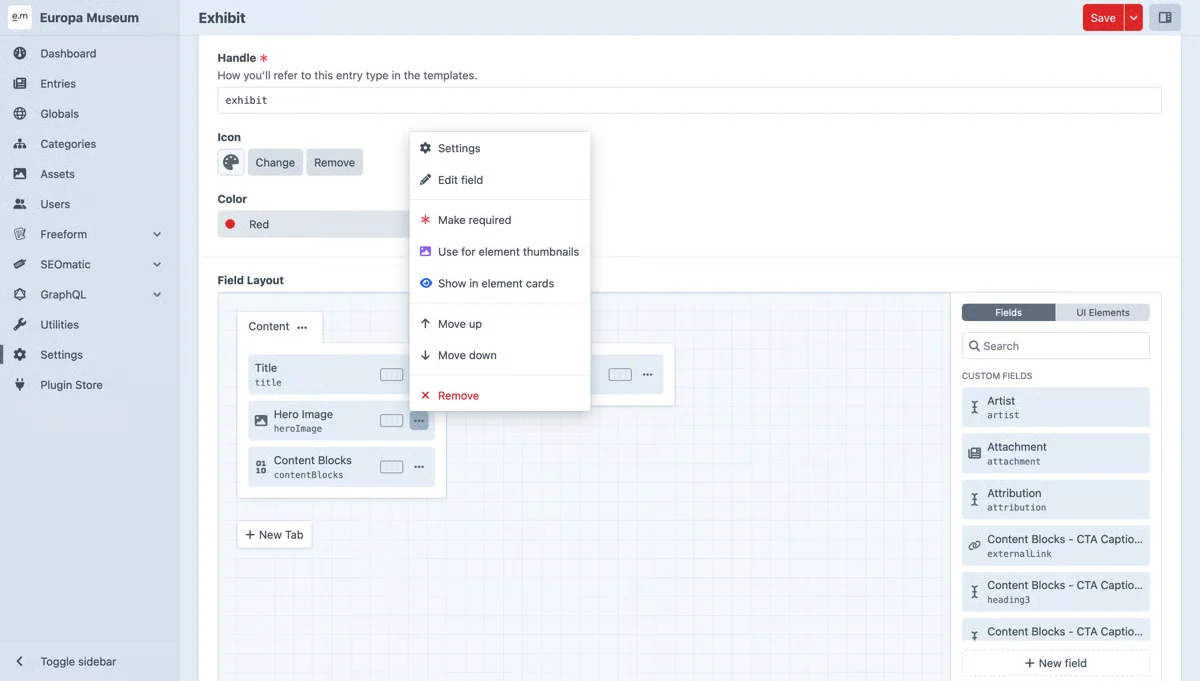
- Custom content types and fields
- Drafts and revisions
- Live preview
- Content scheduling
- Asset management
Sites and localization
- Multi-site publishing
- Localized content
Developer tools and delivery
- Twig templating
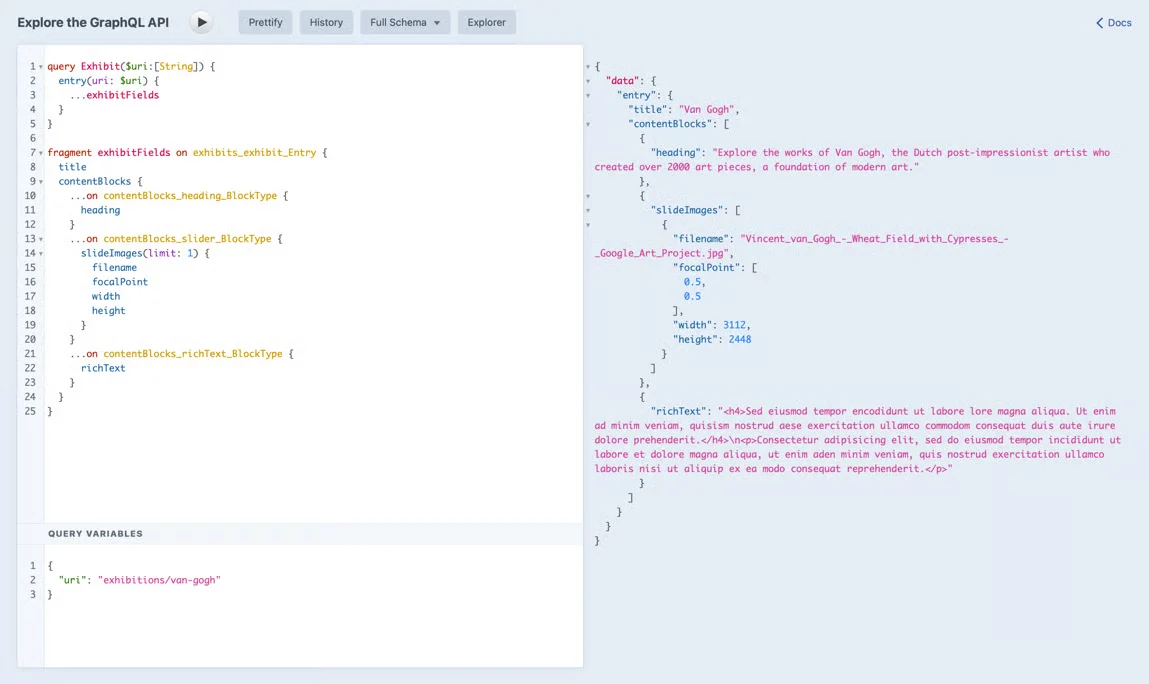
- GraphQL API with configurable schemas
- GraphiQL interface
- Plugin Store
Craft CMS Specifications
| Current stable major edition | Craft CMS 5 |
|---|
| Application runtime | PHP 8.2 or later for Craft 5 |
|---|
| Supported databases | MySQL 8.0.17+, MariaDB 10.4.6+, or PostgreSQL 13+ |
|---|
| Package manager | Composer 2.0+ |
|---|
| API | GraphQL |
|---|
| Hosting | Self-hosted or Craft Cloud |
|---|
| Paid edition trial | Available on non-public domains |
|---|
Exit planningMigration & Lock-In
Documented portability, standards, export, or switching considerations. No switching-cost score is shown unless the evidence supports one.
Craft 4 to Craft 5
The upgrade documentation notes that Craft 5 introduces a new content storage architecture; teams should review upgrade steps and plugin compatibility before migrating.
Evidence source ↗Our evidence-based assessmentTechZella Score
A proprietary editorial score based on product capabilities, usability, value, performance, support and user sentiment evidence.
8.1/10Moderate confidence
The assessment reflects documented content modeling, localization, preview, GraphQL, plugin, and licensing capabilities, plus public review-page ratings. It is not based on hands-on testing.
Methodology v1.0. The assessment weighs feature coverage (25%), ease of use (15%), value for money (20%), performance (15%), support (10%) and user sentiment (15%), using researched product evidence and verified review evidence where available. It is a TechZella editorial assessment, not a direct user-review average.
Editorial transparency
Our Review Methodology
Key claims are linked to the sources used to verify them. This evidence record is separate from third-party user ratings.
TechZella evaluates software using documented product capabilities, pricing information, usability and value considerations, independent user evidence where available, and competitive context. The assessment is an editorial review, not a hands-on test unless one is explicitly identified. Our editorial assessment is based on 6 documented sources.
What TechZella adds- A single installation can serve multiple related sites, with localization and site-specific content behavior.
- Craft combines server-rendered Twig templates with GraphQL for decoupled front ends.
- Paid editions can be tried on private domains without a fixed trial period.
Important limitations- Self-hosted deployments require a compatible PHP runtime, database, Composer, and server configuration.
- Craft’s multi-site capability is intended for sites with shared publishing teams, not unrelated projects.
- GraphQL access to external clients requires deliberate schema and token configuration; the public schema is disabled by default.
Evidence-backed claimsCraft CMS provides a GraphQL API for applications such as single-page apps and static-site generators.The Craft 5 documentation describes its GraphQL API, GraphiQL interface, endpoints, schemas, and tokens.
View source ↗Verified 2026-10-12Craft 5 self-hosted Team is listed at $279 per project and Pro at $399 per project.The official pricing page lists these project license prices and $99 annual update renewals after the included first year.
View source ↗Verified 2026-10-12Craft Team and Pro can be trialed on private domains before purchase.The vendor’s trial guidance permits testing paid editions on private domains and says there is no fixed trial duration while the site remains on a non-public hostname.
View source ↗Verified 2026-10-12A Craft installation can power multiple websites and support localization.The documentation describes multi-site publishing and localization, while noting that sites should share a publishing team.
View source ↗Verified 2026-10-12Craft 5.10 introduced an element-deletion blocker workflow.The release announcement describes prompts identifying related elements and allowing relations to be replaced or removed before deletion.
View source ↗Verified 2026-10-12Craft 6 entered alpha after its codebase was ported to Laravel.The Craft 6 announcement dates the alpha release to May 6, 2026, and describes the Laravel port and alpha status.
View source ↗Verified 2026-10-12 Independent review sources
Craft CMS Ratings & Reviews
Ratings are published by the respective review platforms and may change over time.
Common questionsCraft CMS FAQs
Answers begin with the clearest available response, followed by the context that helps you act on it.
Does Craft CMS have a free version?
Yes. Craft Solo is listed as free, with one user account. ([craftcms.com](https://craftcms.com/pricing?utm_source=openai))
Does Craft CMS offer a free trial?
Yes. Team and Pro can be trialed on private, non-public domains. A public deployment requires a valid paid license. ([craftcms.com](https://craftcms.com/knowledge-base/how-to-trial-craft-cms-and-plugin-editions?utm_source=openai))
Does Craft CMS have an API?
Yes. Craft 5 includes a GraphQL API. External access requires a configured endpoint and authorized schema; public access is disabled by default. ([craftcms.com](https://craftcms.com/docs/5.x/development/graphql?utm_source=openai))
Can Craft CMS run headlessly?
Yes. Its GraphQL API can serve content to separate applications, including single-page apps and static-site generators. ([craftcms.com](https://craftcms.com/docs/5.x/development/graphql.html?utm_source=openai))
Community feedback
Reviews
No reviews yet. Be the first to share your experience.
Write a Review
Please log in to submit a review.
What Has Changed
This history records material data changes detected when TechZella re-researched the profile.
2026-10-12Research update changed: Pricing, Features, Specifications, Alternatives, Competitors, Trusted ratings, Description.
Recently added Content Management System