
The Secure Access API is documented as early access and actively developed.
Teams relying on API-driven administration should confirm endpoint stability and support expectations before making it operationally critical.
Evidence source ↗
Beyond Identity provides passwordless authentication, secure SSO, and device-aware access controls for workforce and customer identity workflows.
The vendor documents passkeys, device posture controls, SSO, integrations, and APIs. Public pricing is quote-based, and available G2 evidence consists of only two reviews.
This profile combines documented product information and independent evidence where available. It is not a hands-on test unless TechZella explicitly identifies one.
A quick way to understand who this product may suit, where its limits matter, and which facts are most relevant before you compare alternatives.
Organizations seeking phishing-resistant workforce authentication, device-aware access policies, and SSO, or developers building passwordless customer authentication.
Individuals or teams looking for a consumer password vault; the product focuses on authentication and access controls rather than storing and autofilling website passwords, and should evaluate alternatives such as Okta or Microsoft Entra ID instead.
Android, Cloud, macOS, SaaS, Windows
7.4/10
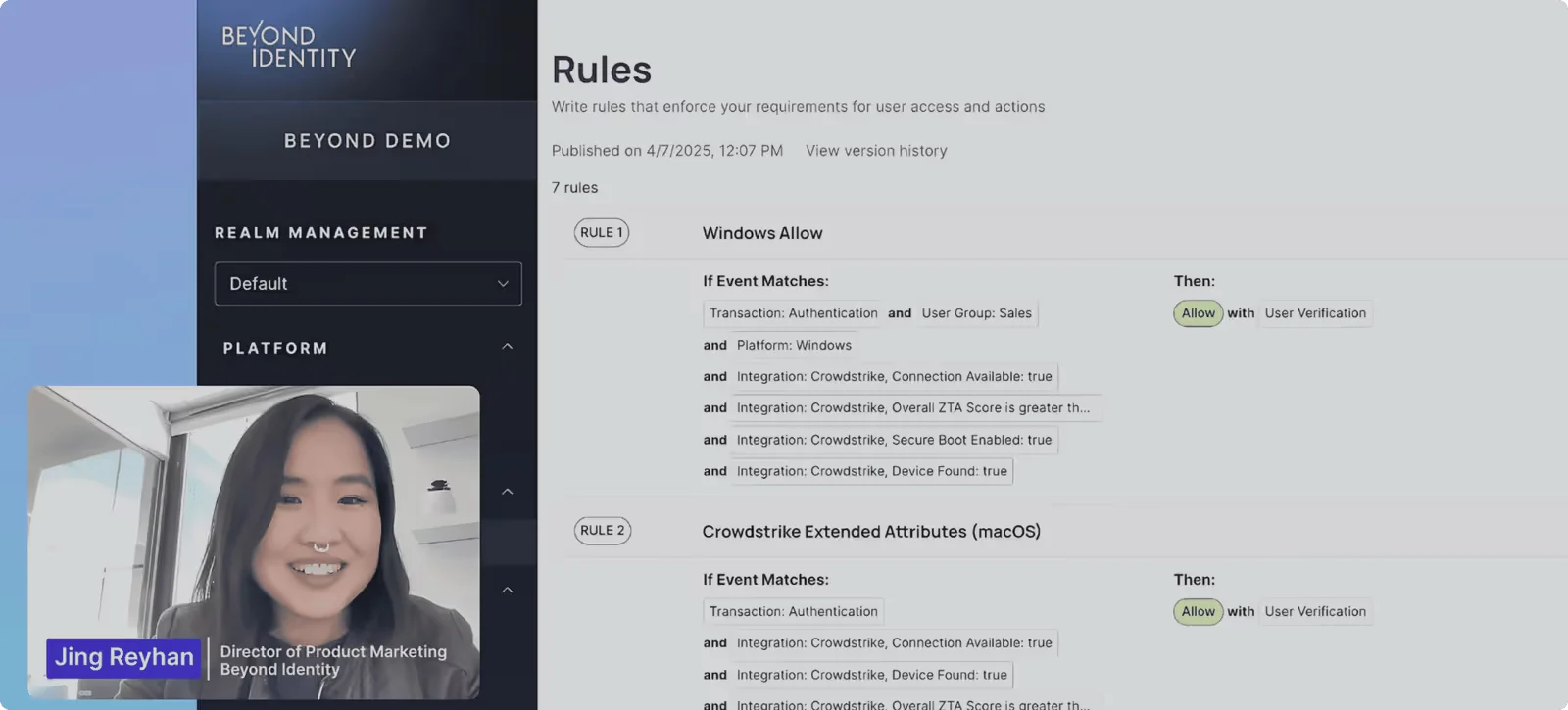
Beyond Identity is an identity and access management product for passwordless authentication, secure single sign-on, and device-aware access policies. Its workforce platform uses device-bound credentials and can evaluate device posture during access decisions.
The company also publishes developer resources for passwordless customer authentication. This is not a conventional password manager: the documented products focus on authenticating users and controlling access, not keeping a vault of reusable passwords.
These are the product-specific differences that may matter when deciding whether the software fits your workflow. They are based on documented evidence rather than a universal ranking.
These are documented constraints or practical friction points that may matter before you adopt the product.
Teams relying on API-driven administration should confirm endpoint stability and support expectations before making it operationally critical.
Evidence source ↗Hardware readiness can affect deployment scope, device eligibility, and rollout planning.
Evidence source ↗Buyers needing this feature should verify availability and enablement with the vendor instead of assuming it is enabled by default.
Evidence source ↗License package listed on the current official pricing page. Public price and detailed contractual terms are not disclosed.
Check current pricing →License package listed on the current official pricing page. Public price and detailed contractual terms are not disclosed.
Check current pricing →License package listed on the current official pricing page. Public price and detailed contractual terms are not disclosed.
Check current pricing →Pricing may change. Verify current plans on the vendor's website.
Compare similar products directly, then see which alternatives may make more sense when your requirements differ.
These products address broadly similar requirements. The descriptions focus on documented reasons a buyer might compare them with Beyond Identity.

| Deployment | Cloud service with endpoint authenticator |
|---|---|
| Pricing model | Custom quote; three license packages listed |
| API | REST API; Secure Access API documented as early access |
| Protocols and provisioning | SAML, WS-Federation, OIDC, and SCIM configuration types documented |
| Operating systems | Windows, macOS, iOS/iPadOS, Android, Linux; ChromeOS listed on pricing page |
| Windows TPM requirement | TPM 1.2 for basic authentication; TPM 2.0 for Windows Desktop Login |
| Free trial | Workforce free trial not verified; developer try-it-out resources are available |
Verified installation, hosting, administration, or environment details that can affect implementation.
| Installation or hosting | The workforce product uses a cloud service with an authenticator installed on supported user devices; official pricing describes cloud-based licensing packages. Source ↗ |
|---|---|
| Endpoint deployment | Official deployment guidance covers Windows, macOS, iOS/iPadOS, Android, and Linux. It includes deployment prerequisites for endpoint security tools and device management workflows. Source ↗ |
A proprietary editorial score based on product capabilities, usability, value, performance, support and user sentiment evidence.
The vendor documents passkeys, device posture controls, SSO, integrations, and APIs. Public pricing is quote-based, and available G2 evidence consists of only two reviews.
Methodology v1.0. The assessment weighs feature coverage (25%), ease of use (15%), value for money (20%), performance (15%), support (10%) and user sentiment (15%), using researched product evidence and verified review evidence where available. It is a TechZella editorial assessment, not a direct user-review average.
Key claims are linked to the sources used to verify them. This evidence record is separate from third-party user ratings.
TechZella evaluates software using documented product capabilities, pricing information, usability and value considerations, independent user evidence where available, and competitive context. The assessment is an editorial review, not a hands-on test unless one is explicitly identified. Our editorial assessment is based on 6 documented sources.
The company announcement dated April 14, 2020 states its launch date, founders, and New York City headquarters.
View source ↗Verified 2026-10-08The official pricing page requests contact for pricing and names Authentication Essentials, Zero Trust Identity & Device, and Secure Access Complete.
View source ↗Verified 2026-10-08The official platform page describes these product areas and names supported operating systems.
View source ↗Verified 2026-10-08The API reference describes resource management, integration configuration types, and its early-access status.
View source ↗Verified 2026-10-08The operating-system requirements page gives supported OS versions and deployment prerequisites.
View source ↗Verified 2026-10-08The public G2 product review page displays the rating and review count.
View source ↗Verified 2026-10-08No reviews yet. Be the first to share your experience.
Please log in to submit a review.
No. Its documented focus is passwordless authentication, identity access, SSO, and device trust rather than a personal or team password vault.
The current official pricing page uses custom quotes and lists three license packages. Public package prices are not shown.
Yes. The vendor publishes REST API documentation. The Secure Access API reference currently describes the API as early access and under active development.
The official requirements page documents Windows, macOS, iOS/iPadOS, Android, and Linux authenticator support. The pricing page also lists ChromeOS.
A workforce free trial was not verified in current official pricing material. Developer documentation provides a developer-account and try-it-out path, which is distinct from a confirmed workforce trial.
The vendor publishes integration guides and API documentation that references SAML, WS-Federation, OIDC, and SCIM configuration types. Buyers should validate their required applications and provisioning workflows against the current integration catalog.