
Authentication is disabled by default in Phoenix deployments.
Operators exposing an instance beyond a trusted environment need to enable and configure authentication and API keys before sending protected data.
Evidence source ↗
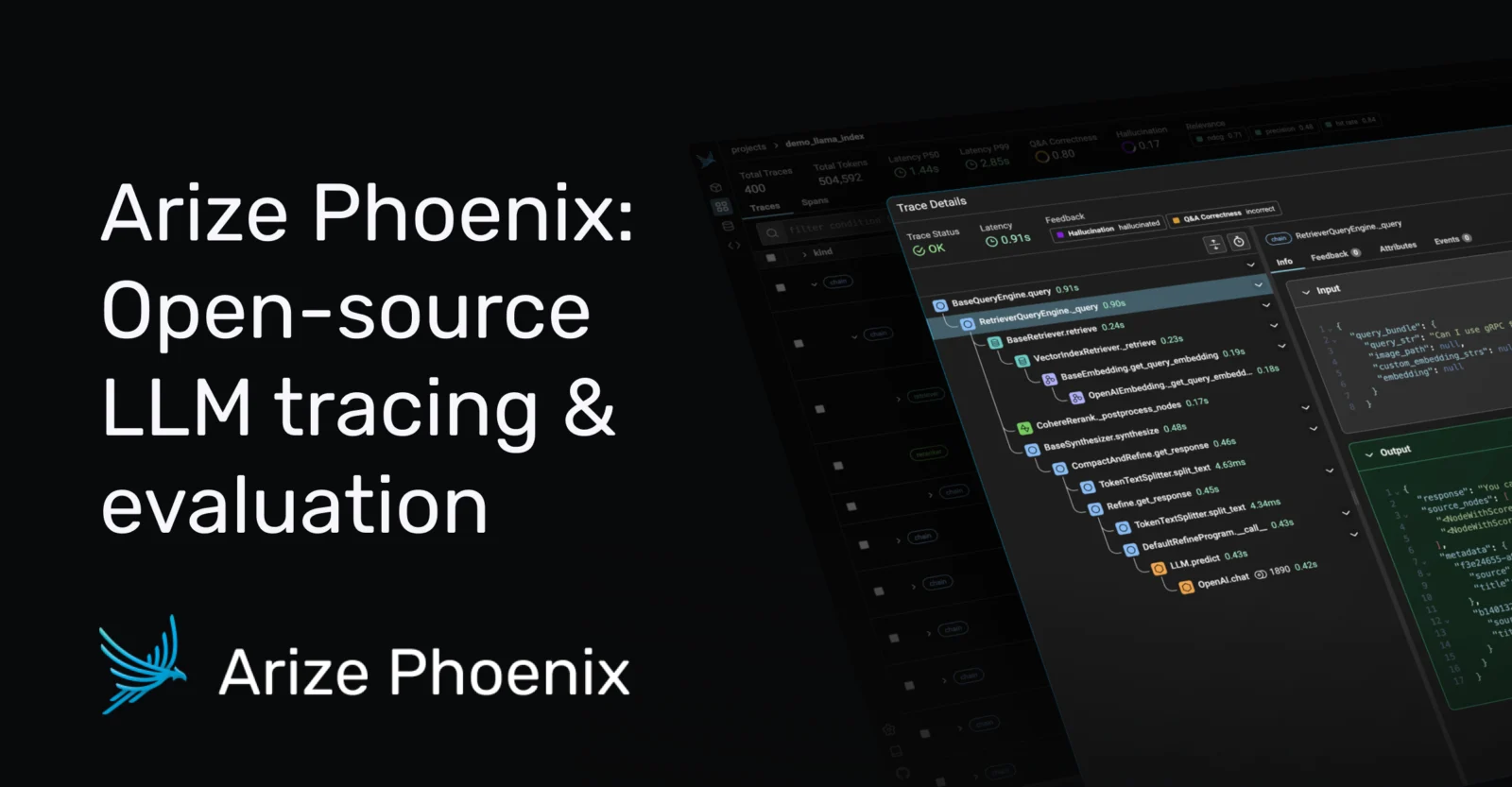
Arize Phoenix is a self-hosted platform for tracing, evaluating, and troubleshooting AI and LLM applications, with tools for datasets, experiments, and prompt iteration.
Phoenix combines tracing, evaluations, datasets, experiments, and prompt tools in a self-hosted product without a platform usage fee. Deployment, infrastructure, and authentication configuration are the operatoru2019s responsibility. Public G2 materials identify 35 Phoenix reviews, but the accessed page did not provide a product-specific aggregate rating or enough review text for a reliable sentiment assessment.
This profile combines documented product information and independent evidence where available. It is not a hands-on test unless TechZella explicitly identifies one.
Arize Phoenix is a self-hosted platform for observing and improving AI and LLM applications. It collects instrumented traces and provides tools for evaluation, dataset creation, experiments, and prompt iteration.
Phoenix is built around OpenTelemetry and OpenInference. Teams can run it locally or deploy it with containers or Kubernetes. Arize positions its separate Arize AX product for managed production workflows.
A quick way to understand who this product may suit, where its limits matter, and which facts are most relevant before you compare alternatives.
AI engineering and software teams that want to inspect LLM application traces, evaluate changes against datasets, and operate the observability service on their own infrastructure.
Teams seeking a turnkey managed production observability service should compare Arize AX or another hosted product; Phoenix requires teams to manage deployment and its infrastructure, and should evaluate alternatives such as Langfuse or LangSmith instead.
Cloud, Docker, Kubernetes, Python, Web
8.2/10
These are the product-specific differences that may matter when deciding whether the software fits your workflow. They are based on documented evidence rather than a universal ranking.
These are documented constraints or practical friction points that may matter before you adopt the product.
Operators exposing an instance beyond a trusted environment need to enable and configure authentication and API keys before sending protected data.
Evidence source ↗Plan the authentication change and update instrumented applications together to avoid interrupting telemetry.
Evidence source ↗Teams expecting Phoenix itself to include managed production operations should verify requirements against AX rather than assume feature parity.
Evidence source ↗Free to self-host under Elastic License 2.0. Users manage hosting, ingestion volume, projects, and retention. Dedicated support is listed as an add-on; its price is not published on the pricing page.
Check current pricing →Pricing may change. Verify current plans on the vendor's website.
Compare similar products directly, then see which alternatives may make more sense when your requirements differ.
| Decision factor | Arize Phoenix | Langfuse | LangSmith |
|---|---|---|---|
| Deployment model | Phoenix is self-hosted; Arize positions AX as its separate managed platform. | Langfuse documents both cloud and self-hosted options. Source ↗ | LangSmith lists self-hosted and hybrid deployment options on Enterprise. Source ↗ |
| License and self-hosting | Phoenix uses the Elastic License 2.0 and is free to self-host under its published terms. | Langfuse describes its core as MIT-licensed and available for self-hosting. Source ↗ | Not documented |
| Pricing model | Phoenix self-hosting is free; infrastructure and operations are user-managed. | Langfuse lists free and paid cloud plans, and a self-hosted option. Source ↗ | LangSmith lists a free Developer plan, a $39 per-seat monthly Plus plan, and custom Enterprise pricing, with usage-based charges. Source ↗ |
| Core scope | Phoenix focuses on self-managed tracing, evaluation, datasets, experiments, and prompt workflows. | Not documented | LangSmith offers tracing and evaluation as well as agent deployment and related services. Source ↗ |
Only factors supported by the available research are shown. The comparison is descriptive, not a ranking.
These products address broadly similar requirements. The descriptions focus on documented reasons a buyer might compare them with Arize Phoenix.


| License | Elastic License 2.0 |
|---|---|
| Hosting | Self-hosted; local, container, and Kubernetes deployment options |
| Trace protocol | OTLP over HTTP |
| Authentication | Disabled by default; optional authentication, API keys, and OAuth2/OIDC configuration |
| Integrations | OpenTelemetry and OpenInference instrumentation; integrations include frameworks and model providers |
| Free trial | No time-limited trial identified; Phoenix is free to self-host |
Verified installation, hosting, administration, or environment details that can affect implementation.
| Hosting | Self-hosted; can run locally, in containers, or on Kubernetes. Arize AX is the separate managed platform. Source ↗ |
|---|---|
| Authentication | Optional authentication can be enabled with environment variables; API keys and OAuth2/OIDC configuration are documented. Source ↗ |
| Trace ingestion | Phoenix receives traces through OTLP; documentation describes OTLP over HTTP. Source ↗ |
Documented portability, standards, export, or switching considerations. No switching-cost score is shown unless the evidence supports one.
Phoenix uses OpenTelemetry and OpenInference. Arize states the same instrumentation works with Arize AX, which may reduce instrumentation changes when moving between those products.
Evidence source ↗Phoenix documentation and product materials describe APIs and export capabilities, but a complete migration procedure or guarantees for every data type were not verified.
Evidence source ↗A proprietary editorial score based on product capabilities, usability, value, performance, support and user sentiment evidence.
Phoenix combines tracing, evaluations, datasets, experiments, and prompt tools in a self-hosted product without a platform usage fee. Deployment, infrastructure, and authentication configuration are the operatoru2019s responsibility. Public G2 materials identify 35 Phoenix reviews, but the accessed page did not provide a product-specific aggregate rating or enough review text for a reliable sentiment assessment.
Methodology v1.0. The assessment weighs feature coverage (25%), ease of use (15%), value for money (20%), performance (15%), support (10%) and user sentiment (15%), using researched product evidence and verified review evidence where available. It is a TechZella editorial assessment, not a direct user-review average.
Key claims are linked to the sources used to verify them. This evidence record is separate from third-party user ratings.
TechZella evaluates software using documented product capabilities, pricing information, usability and value considerations, independent user evidence where available, and competitive context. The assessment is an editorial review, not a hands-on test unless one is explicitly identified. Our editorial assessment is based on 6 documented sources.
The license documentation identifies Elastic License 2.0 and says self-hosting on the user's infrastructure or cloud account is free.
View source ↗Verified 2026-11-12The project repository describes these core product capabilities.
View source ↗Verified 2026-11-12The repository and documentation describe Phoenix's instrumentation approach and supported integrations.
View source ↗Verified 2026-11-12The official self-hosting documentation lists these deployment methods.
View source ↗Verified 2026-11-12The authentication guide says it is disabled by default and documents how to enable it.
View source ↗Verified 2026-11-12Arize's November 2026 post describes background catalog checks and how to disable automatic updates.
View source ↗Verified 2026-11-12Answers begin with the clearest available response, followed by the context that helps you act on it.
No reviews yet. Be the first to share your experience.
Please log in to submit a review.