
Professional and Enterprise Octopus Cloud pricing includes a separate annual platform fee tied to the selected task cap.
The per-project, tenant, and machine license prices do not represent the full Cloud subscription total.
Evidence source ↗
Octopus Deploy automates software releases, deployments, and operational runbooks across cloud, Kubernetes, and server infrastructure.
Official documentation verifies release orchestration, deployment automation, runbooks, API access, and broad target support. G2 reports 4.4/5 from 58 reviews; pricing includes per-project licenses and, for paid Cloud tiers, a separate task-cap platform fee.
This profile combines documented product information and independent evidence where available. It is not a hands-on test unless TechZella explicitly identifies one.
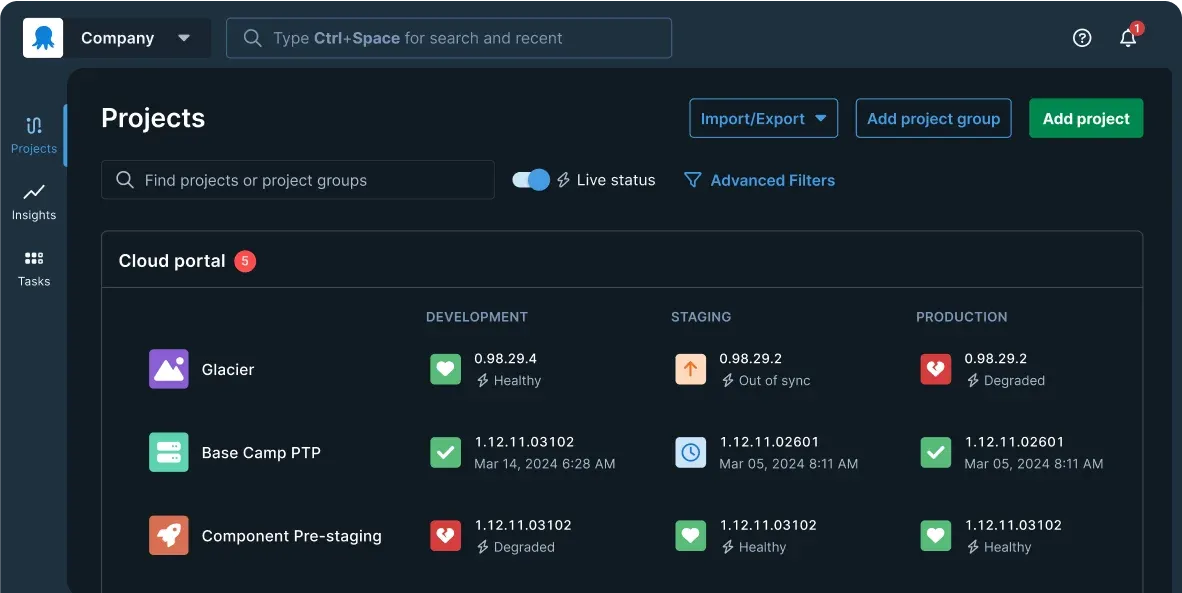
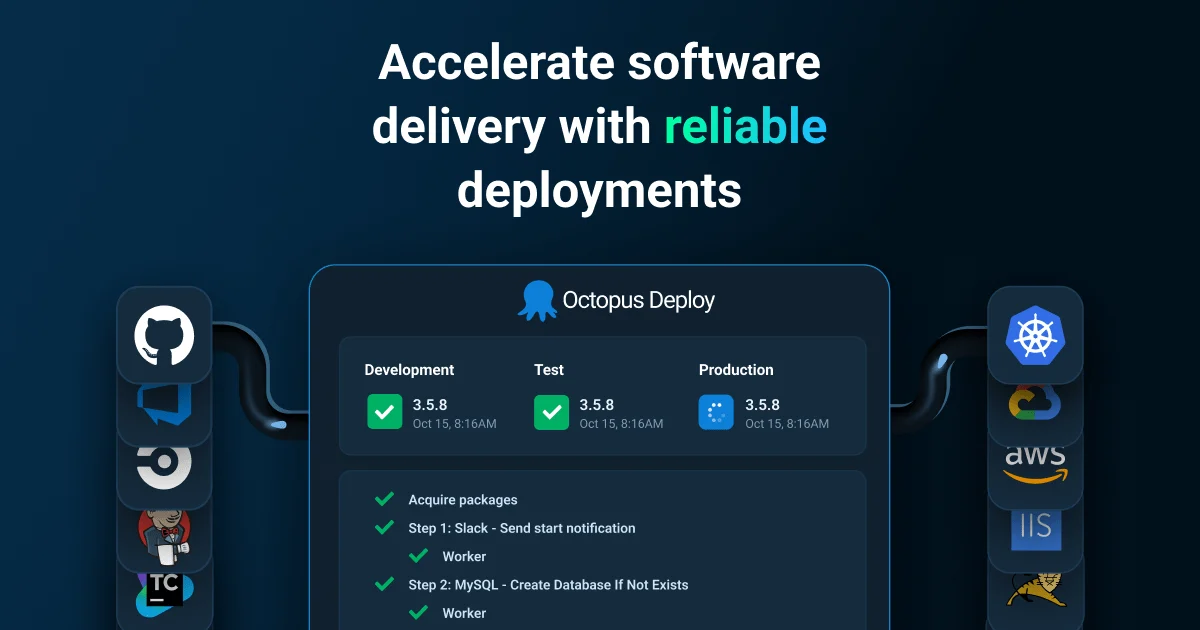
Octopus Deploy is a continuous delivery platform for release orchestration, deployments, and operational runbooks. It commonly works alongside a CI or build server, taking packaged artifacts through deployment environments.
Teams define deployment steps, variables, releases, and target environments. Octopus snapshots key process assets when a release is created, helping preserve the same release configuration as it moves between stages.
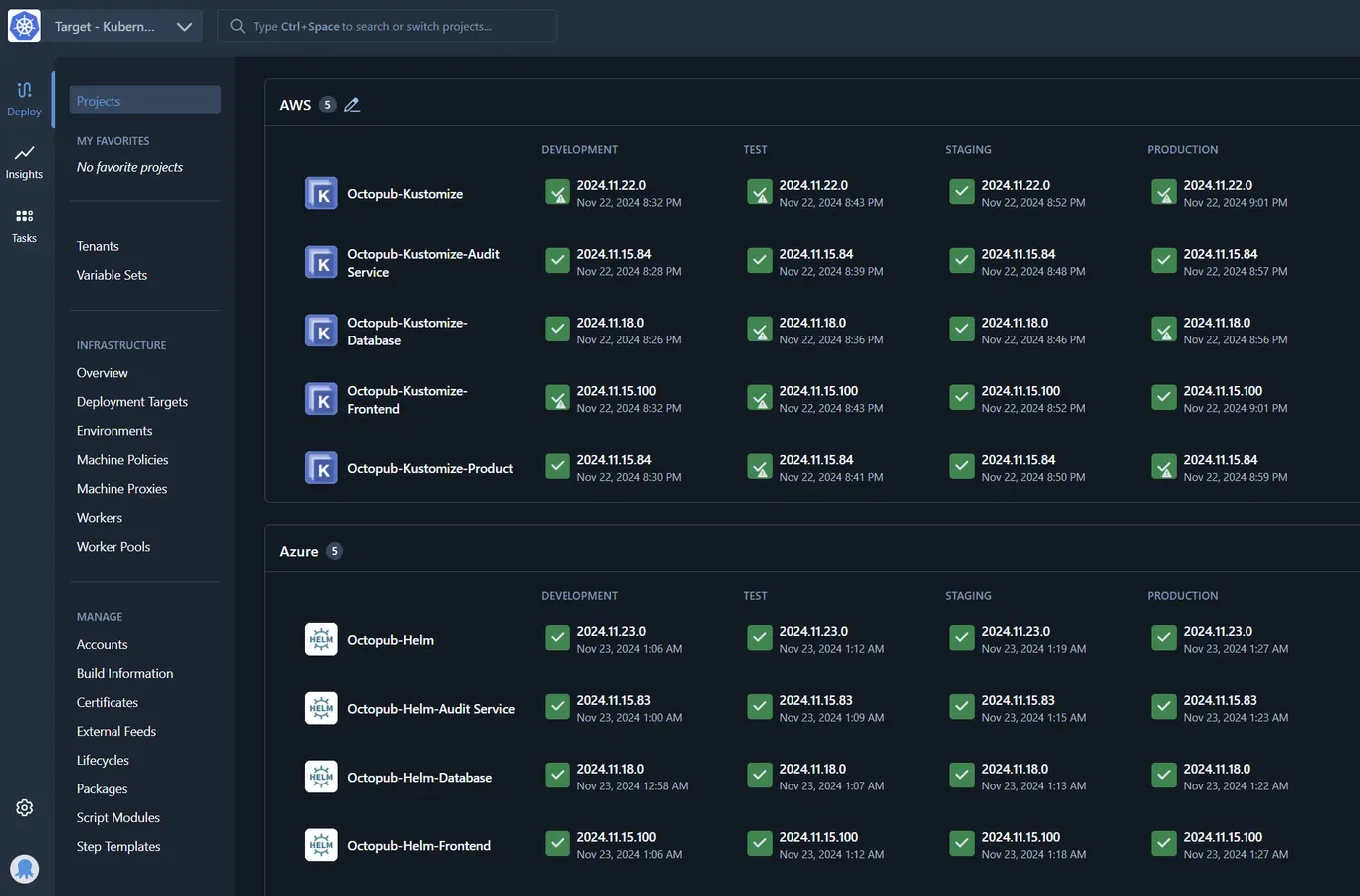
Buyers can choose vendor-hosted Octopus Cloud or self-hosted Octopus Server. The product supports deployments to infrastructure including Kubernetes clusters, Windows and Linux servers, and cloud services.
A quick way to understand who this product may suit, where its limits matter, and which facts are most relevant before you compare alternatives.
Software teams that already build artifacts with CI tools and need a separate system to coordinate releases, environment promotion, deployments, and repeatable operational tasks.
Teams seeking a single basic CI-and-deployment service may find Octopus adds a separate product and license model; self-hosted users also need to operate its server and SQL Server database, and should evaluate alternatives such as Azure Pipelines or GitHub Actions instead.
Kubernetes, Linux, On-premises, SaaS, Windows
8.1/10
These are the product-specific differences that may matter when deciding whether the software fits your workflow. They are based on documented evidence rather than a universal ranking.
These are documented constraints or practical friction points that may matter before you adopt the product.
The per-project, tenant, and machine license prices do not represent the full Cloud subscription total.
Evidence source ↗Teams that exceed any of these limits must consider a paid tier.
Evidence source ↗Self-hosting shifts database, server operations, upgrades, and capacity planning to the adopting organization.
Evidence source ↗Includes 10 projects, 10 tenants, 10 machines, and 10 users on Octopus Cloud.
Check current pricing →Annual license; tenants and machines are add-ons. Paid Octopus Cloud subscriptions also have an annual task-cap platform fee.
Check current pricing →Annual license; tenants and machines are add-ons. Paid Octopus Cloud subscriptions also have an annual task-cap platform fee.
Check current pricing →Annual add-on unit price listed by the vendor.
Check current pricing →Annual add-on unit price listed by the vendor.
Check current pricing →Pricing may change. Verify current plans on the vendor's website.
Compare similar products directly, then see which alternatives may make more sense when your requirements differ.
| Decision factor | Octopus Deploy | Azure Pipelines | GitHub Actions |
|---|---|---|---|
| Core scope | Dedicated release orchestration, deployment automation, and runbook automation that can work with external build servers. | Azure Pipelines is part of Azure DevOps Services and provides pipeline-based continuous integration and delivery. Source ↗ | GitHub Actions automates software development workflows, including build, test, and deployment jobs. Source ↗ |
| Deployment management | Models releases and environment promotion as a distinct deployment process, with tenant-specific configuration and runbooks. | Uses pipeline stages, environments, and resource-based approvals and checks to govern deployment progression. Source ↗ | Uses workflow jobs and environments; environments can apply approvals, branch restrictions, and secret access rules. Source ↗ |
| Pricing model | Free tier plus annual per-project licensing; paid Cloud tiers also pay a task-cap platform fee, with tenant and machine add-ons. | Azure DevOps pricing includes five free Basic users and a free Microsoft-hosted parallel job with 1,800 minutes monthly; additional user and pipeline capacity can incur charges. Source ↗ | GitHub plans include monthly Actions-minute allowances; public-repository minutes are free, with paid usage depending on plan and execution. Source ↗ |
Only factors supported by the available research are shown. The comparison is descriptive, not a ranking.
These products address broadly similar requirements. The descriptions focus on documented reasons a buyer might compare them with Octopus Deploy.
| Product type | Continuous delivery and deployment orchestration software |
|---|---|
| Hosting | Vendor-hosted Octopus Cloud or self-hosted Octopus Server |
| Server runtime | Windows Server or Linux container |
| Database requirement | SQL Server for self-hosted Octopus Server |
| API | Octopus REST API |
| Free trial | 30-day trial with Enterprise features |
| Cloud billing | Annual |
| Free tier limits | 10 projects, 10 tenants, 10 machines, and 10 users |
| Deployment targets | Kubernetes, Windows, Linux, cloud services, virtual machines, serverless functions, and SSH targets |
| Build integrations | Azure DevOps, GitHub Actions, Jenkins, TeamCity, Bamboo, Bitbucket Pipelines, and others |
Verified installation, hosting, administration, or environment details that can affect implementation.
| Hosting options | Octopus Cloud is vendor-hosted; Octopus Server is self-hosted. The vendor says both have the same functionality, with some Cloud-specific administrative and diagnostic settings differing. Source ↗ |
|---|---|
| Self-hosted server runtime | Octopus Server supports Windows Server or a Linux container and requires access to a SQL Server database. Source ↗ |
| Deployment targets | Documented targets include Kubernetes, Windows and Linux servers, cloud services, serverless functions, virtual machines, and SSH-connected systems. Source ↗ |
Documented portability, standards, export, or switching considerations. No switching-cost score is shown unless the evidence supports one.
The vendor documents migration from self-hosted Octopus Server to Octopus Cloud, including projects, variables, history, and configuration.
Evidence source ↗Octopus recommends Export/Import Projects for moving data between instances. Its data-migration tools have constraints, including matching source and destination versions for some scenarios and generally overwriting rather than merging target data.
Evidence source ↗A proprietary editorial score based on product capabilities, usability, value, performance, support and user sentiment evidence.
Official documentation verifies release orchestration, deployment automation, runbooks, API access, and broad target support. G2 reports 4.4/5 from 58 reviews; pricing includes per-project licenses and, for paid Cloud tiers, a separate task-cap platform fee.
Methodology v1.0. The assessment weighs feature coverage (25%), ease of use (15%), value for money (20%), performance (15%), support (10%) and user sentiment (15%), using researched product evidence and verified review evidence where available. It is a TechZella editorial assessment, not a direct user-review average.
Key claims are linked to the sources used to verify them. This evidence record is separate from third-party user ratings.
TechZella evaluates software using documented product capabilities, pricing information, usability and value considerations, independent user evidence where available, and competitive context. The assessment is an editorial review, not a hands-on test unless one is explicitly identified. Our editorial assessment is based on 6 documented sources.
The company history identifies Paul and Sonia Stovell as founders and gives 2012 as the founding year.
View source ↗Verified 2026-11-08The licensing FAQ describes Cloud as the same software as Server, hosted by Octopus, while noting some service-specific differences.
View source ↗Verified 2026-11-08The Cloud FAQ lists 10 projects, 10 tenants, 10 machines, and 10 users for the free tier.
View source ↗Verified 2026-11-08The API documentation says users can create releases, trigger deployments, run runbooks, and manage variables and infrastructure programmatically.
View source ↗Verified 2026-11-08The vendor documentation lists these and other build-server integrations.
View source ↗Verified 2026-11-08The installation documentation describes the server runtime options and SQL Server database requirement.
View source ↗Verified 2026-11-08The licensing FAQ lists Free, Professional, and Enterprise rates, add-on unit rates, and the Cloud platform fee schedule.
View source ↗Verified 2026-11-08Answers begin with the clearest available response, followed by the context that helps you act on it.
No reviews yet. Be the first to share your experience.
Please log in to submit a review.