
The minimum-requirements documentation says Fork CMS cannot be installed in a subdirectory.
The hosting layout and site URL need to be planned around a root-level installation.
Evidence source ↗
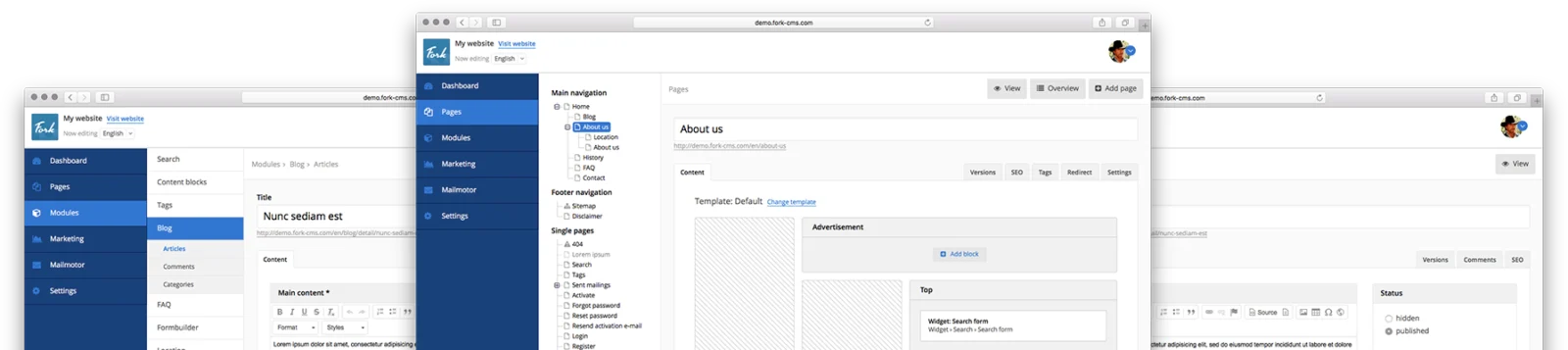
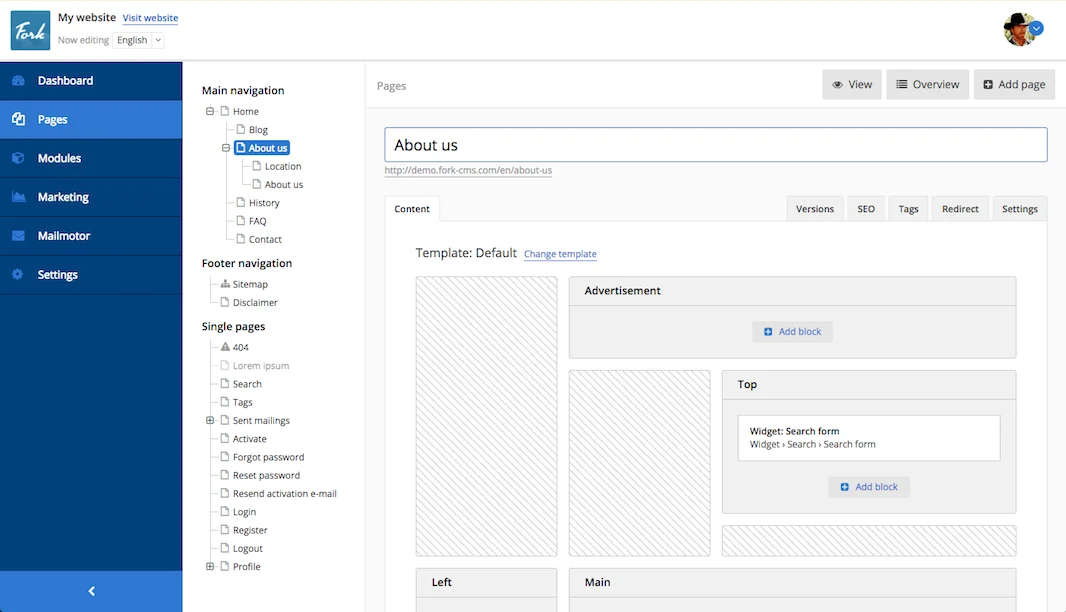
Fork CMS is an open-source, self-hosted content management system for building and managing websites, with multilingual support, extendable modules and themes, and a documented API application.
Assessment reflects documented CMS functions, open-source availability, hosting requirements, and the absence of accessible reliable review-platform evidence. Performance, support quality, and broader user sentiment are not established by the reviewed sources.
This profile combines documented product information and independent evidence where available. It is not a hands-on test unless TechZella explicitly identifies one.
A quick way to understand who this product may suit, where its limits matter, and which facts are most relevant before you compare alternatives.
Organizations and web development teams seeking an open-source CMS they can install on their own PHP and MySQL hosting, especially when multilingual publishing and custom modules matter.
Teams wanting a vendor-hosted SaaS CMS, a fully managed deployment, or a product with clearly published support and subscription plans may need another solution, and should evaluate alternatives such as Drupal or WordPress instead.
MySQL, PHP, Self-hosted, Web
6.5/10
Fork CMS is an open-source content management system for creating and maintaining websites. Its architecture includes separate backend, frontend, and API applications, and supports multilingual configuration.
Fork CMS is self-hosted rather than a vendor-managed SaaS product. Installation requires a compatible PHP server and MySQL database, so buyers should account for hosting, setup, upgrades, and maintenance.
These are the product-specific differences that may matter when deciding whether the software fits your workflow. They are based on documented evidence rather than a universal ranking.
These are documented constraints or practical friction points that may matter before you adopt the product.
The hosting layout and site URL need to be planned around a root-level installation.
Evidence source ↗Organizations evaluating the CMS should verify current maintenance activity and security support against their own deployment requirements.
Evidence source ↗Fork CMS is distributed under the MIT license. Hosting, setup, maintenance, and third-party service costs are separate.
Check current pricing →Pricing may change. Verify current plans on the vendor's website.
Compare similar products directly, then see which alternatives may make more sense when your requirements differ.
These products address broadly similar requirements. The descriptions focus on documented reasons a buyer might compare them with Fork CMS.
| License | MIT |
|---|---|
| Deployment | Self-hosted |
| Server-side language | PHP |
| Database | MySQL |
| Installation | Composer or downloadable release |
| Latest release listed | 5.12.0, dated August 1, 2023 |
| Free trial | A demo link is shown; trial terms were not verified |
| Subdirectory installation | Not supported according to minimum requirements |
Verified installation, hosting, administration, or environment details that can affect implementation.
| Installation or hosting | Self-hosted installation using Composer or a downloadable release, with a MySQL database and a compatible PHP web server. Source ↗ |
|---|
A proprietary editorial score based on product capabilities, usability, value, performance, support and user sentiment evidence.
Assessment reflects documented CMS functions, open-source availability, hosting requirements, and the absence of accessible reliable review-platform evidence. Performance, support quality, and broader user sentiment are not established by the reviewed sources.
Methodology v1.0. The assessment weighs feature coverage (25%), ease of use (15%), value for money (20%), performance (15%), support (10%) and user sentiment (15%), using researched product evidence and verified review evidence where available. It is a TechZella editorial assessment, not a direct user-review average.
Key claims are linked to the sources used to verify them. This evidence record is separate from third-party user ratings.
TechZella evaluates software using documented product capabilities, pricing information, usability and value considerations, independent user evidence where available, and competitive context. The assessment is an editorial review, not a hands-on test unless one is explicitly identified. Our editorial assessment is based on 6 documented sources.
The official GitHub repository identifies the project as open source and displays an MIT license.
View source ↗Verified 2026-10-12The download page labels version 5.12.0 and gives its release date as August 1, 2023.
View source ↗Verified 2026-10-12The installation documentation describes installing on a web server and creating a MySQL database; minimum requirements specify PHP and web-server prerequisites.
View source ↗Verified 2026-10-12The application guide describes these three applications and their distinct roles.
View source ↗Verified 2026-10-12The installation wizard documentation describes selecting languages for the front end and back end.
View source ↗Verified 2026-10-12The official feature page identifies those services as integrations.
View source ↗Verified 2026-10-12No reviews yet. Be the first to share your experience.
Please log in to submit a review.
Is Fork CMS free? The software is open source under the MIT license. Hosting and implementation costs are separate.
Can Fork CMS publish multilingual websites? Its installation documentation describes language selection for both the frontend and backend.
Does Fork CMS have an API? Documentation describes an API application for connecting a site with external websites and applications.
What does it require? The documented installation requires PHP, MySQL, relevant PHP extensions, and a configured web server.
Is a free trial available? The official website provides a demo link, but reviewed materials do not verify a trial period or its terms.