Editorial overview
Aggregated Overview
Saleor documents broad commerce APIs, multichannel configuration, extensions, and self-hosted or managed deployment. Its architecture requires a development team, while public review-platform evidence was not verified.
This profile combines documented product information and independent evidence where available. It is not a hands-on test unless TechZella explicitly identifies one.
Overview
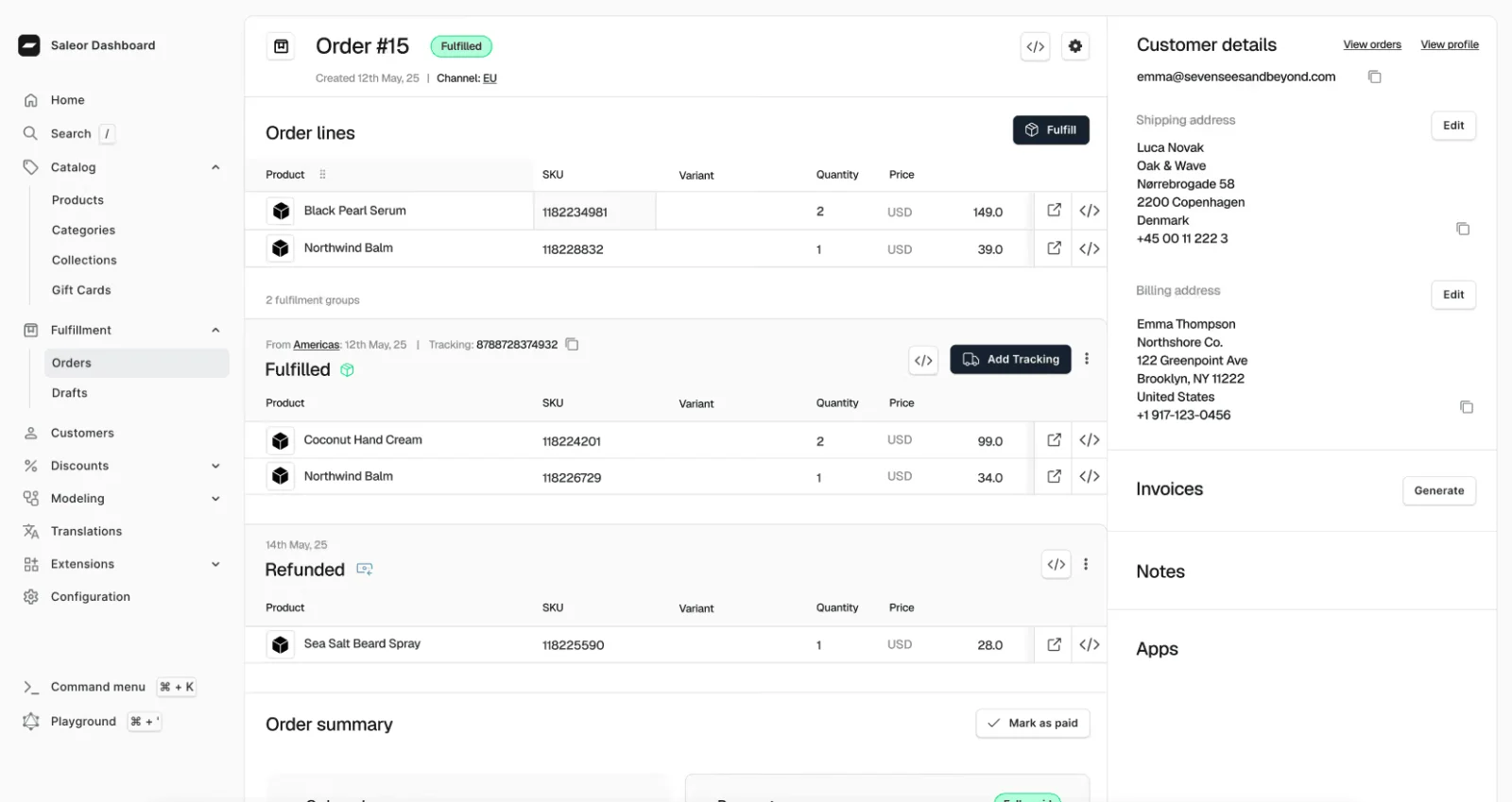
Saleor is an open-source commerce platform designed to serve as a headless backend. Storefronts, the dashboard, and extensions interact with commerce data through its GraphQL API.
Its channel model supports separate market, brand, and business configurations from a shared backend. Teams can set channel-specific currencies, product availability, stock, shipping, promotions, and permissions. Saleor is available as a managed cloud service or as software teams host themselves.
The architecture suits organizations that want to build their own commerce experience and connect external systems. It is less turnkey than a hosted online-store builder: buyers need to plan for storefront development and integration work.
Saleor Decision Snapshot
A quick way to understand who this product may suit, where its limits matter, and which facts are most relevant before you compare alternatives.
Best suited toRetail and B2B commerce teams with developers who need a customizable commerce backend, multiple sales channels, and control over storefront technology.
Look elsewhere ifTeams seeking a ready-to-launch hosted storefront with little engineering work may find the API-first architecture and implementation responsibilities poorly matched to their needs, and should evaluate alternatives such as Medusa or commercetools instead.
PlatformsAPI, Cloud, GraphQL API, Self-hosted, Web
TechZella assessment6.5/10
Saleor — What Sets It Apart?
These are the product-specific differences that may matter when deciding whether the software fits your workflow. They are based on documented evidence rather than a universal ranking.
- GraphQL is the primary API for commerce operations, rather than one API among multiple core interfaces.
- Channels let a business configure market-specific products, prices, currencies, shipping, stock, promotions, and permissions from a shared backend.
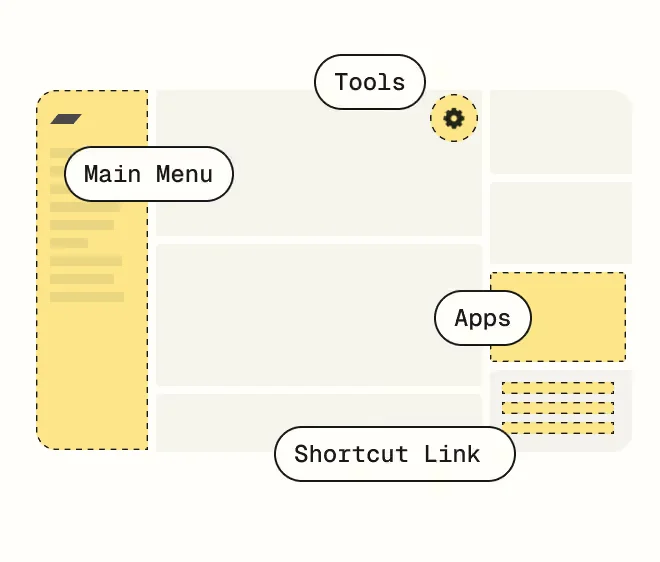
- Saleor Apps communicate through APIs and webhooks, allowing extensions to run separately from the core platform.
Editorial assessmentSaleor Pros & Cons
Pros
- GraphQL API covers major commerce operations through a documented interface.
- Channel settings support differentiated commerce for markets, brands, and business models.
- Apps and webhooks allow integrations to operate separately from the core codebase.
- Self-hosting is available alongside managed Cloud.
Cons
- An API-only approach requires a storefront or other consumer experience to be built or integrated.
- Self-hosted customers take on infrastructure and operational responsibilities.
- Cloud subscriptions have monthly GMV limits and percentage overage charges.
- Channels add configuration complexity and do not directly provide customer-specific or supplier-specific pricing.
Saleor Gotchas & Operational Limits
These are documented constraints or practical friction points that may matter before you adopt the product.
A checkout belongs to one channel, and each channel has one currency.
Businesses with customer-specific prices or supplier-specific prices may need additional logic; the documentation warns that channels add configuration complexity and are not a straightforward fit for those cases.
Evidence source ↗The Saleor App Store is available to Saleor Cloud users; self-hosted users install apps manually.
Self-hosting provides deployment control but requires separate work to locate, deploy, and maintain extensions.
Evidence source ↗The listed Cloud plans apply percentage charges to orders above the plan's included monthly GMV.
Buyers should model sales volume against both the subscription price and the relevant overage rate.
Evidence source ↗Saleor Pricing & Plans
Saleor OSS
$0
Open-source core repository under BSD 3-Clause. Self-hosting infrastructure and operations are separate responsibilities.
Check current pricing →Saleor Cloud Sandbox
$0
month
Forever-free sandbox for prototyping and testing; the pricing page marks sandbox use as non-commercial.
Check current pricing →Select
Starting at $1,599
month
Includes up to $200,000 monthly GMV; 0.8% on orders exceeding included GMV. Pricing page states fair API usage policy.
Check current pricing →Volume
Starting at $3,999
month
Includes up to $1,000,000 monthly GMV; 0.4% on orders exceeding included GMV. Pricing page states fair API usage policy.
Check current pricing →Enterprise
Negotiated
custom
Custom pricing; the pricing page describes rates as low as 0.2%.
Check current pricing →Pricing may change. Verify current plans on the vendor's website.
Cost contextTotal Cost & Hidden Costs
Additional costs or implementation requirements that are documented in the available evidence.
Saleor Cloud subscription and GMV overage
Select starts at $1,599 per month and includes up to $200,000 monthly GMV, then charges 0.8% on orders exceeding that amount. Volume starts at $3,999 per month and includes up to $1,000,000 monthly GMV, then charges 0.4% above it.
Evidence source ↗Optional implementation assistance
The pricing page lists a $6,000 one-time Accelerator Plan and $12,000 Forward Deployed Engineering add-on, with first-year credits described on the page.
Evidence source ↗Saleor Competitors & Alternatives
Compare similar products directly, then see which alternatives may make more sense when your requirements differ.
Direct competitors
These products address broadly similar requirements. The descriptions focus on documented reasons a buyer might compare them with Saleor.
CapabilitiesSaleor Features
Commerce API and extensibility
- GraphQL queries and mutations for products, orders, payments, and shipping
- Apps communicate with Saleor through its API and webhooks
- Dashboard extensions and app-based integrations
Catalog and checkout
- Products, variants, attributes, categories, and collections
- Checkout operations for items, promotion codes, shipping, and order creation
- Promotions for catalog discounts and order-level discounts
Channels and operations
- Channel-specific currency, product availability, stock, shipping, and promotions
- Channel-aware tax, payment, and permissions configuration
- Cloud-hosted or self-hosted deployment
Saleor Specifications
| Core API | GraphQL |
|---|
| Deployment | Saleor Cloud or self-hosted |
|---|
| Cloud sandbox | Forever free; non-commercial use only |
|---|
| Open-source license | BSD 3-Clause for the core repository |
|---|
| Extension mechanism | Apps and webhooks |
|---|
| Channel currency | One currency per channel |
|---|
| Paid Cloud trial | No paid-plan trial details verified |
|---|
Exit planningMigration & Lock-In
Documented portability, standards, export, or switching considerations. No switching-cost score is shown unless the evidence supports one.
Cloud and self-hosted portability
Saleor says migration from compatible OSS versions to Cloud is supported; moving from Cloud to OSS is also supported but requires handling data migration.
Evidence source ↗Our evidence-based assessmentTechZella Score
A proprietary editorial score based on product capabilities, usability, value, performance, support and user sentiment evidence.
6.5/10Moderate confidence
Saleor documents broad commerce APIs, multichannel configuration, extensions, and self-hosted or managed deployment. Its architecture requires a development team, while public review-platform evidence was not verified.
Methodology v1.0. The assessment weighs feature coverage (25%), ease of use (15%), value for money (20%), performance (15%), support (10%) and user sentiment (15%), using researched product evidence and verified review evidence where available. It is a TechZella editorial assessment, not a direct user-review average.
Editorial transparency
Our Review Methodology
Key claims are linked to the sources used to verify them. This evidence record is separate from third-party user ratings.
TechZella evaluates software using documented product capabilities, pricing information, usability and value considerations, independent user evidence where available, and competitive context. The assessment is an editorial review, not a hands-on test unless one is explicitly identified. Our editorial assessment is based on 6 documented sources.
What TechZella adds- GraphQL is the primary API for commerce operations, rather than one API among multiple core interfaces.
- Channels let a business configure market-specific products, prices, currencies, shipping, stock, promotions, and permissions from a shared backend.
- Saleor Apps communicate through APIs and webhooks, allowing extensions to run separately from the core platform.
Important limitations- Saleor is headless and API-only, so storefront presentation and its associated implementation are not provided as a turnkey hosted shop.
- Self-hosting transfers hosting, maintenance, and operational responsibility to the buyer.
- Saleor Cloud subscriptions include monthly GMV thresholds and percentage charges on order volume above those thresholds.
Evidence-backed claimsSaleor exposes commerce operations through GraphQL.The API documentation identifies GraphQL as Saleor's API technology and describes operations across products, orders, payments, and shipping.
View source ↗Verified 2026-10-10Channels support market-specific commerce configuration.Documentation describes channel-level settings for currency, checkout, product availability, taxes, promotions, payment flow, warehouses, shipping, and permissions.
View source ↗Verified 2026-10-10Saleor supports managed cloud and self-hosted deployment.The Cloud documentation identifies Saleor Cloud as a managed offering; the company pricing page describes switching between OSS and Cloud.
View source ↗Verified 2026-10-10Saleor Apps use APIs and webhooks to extend the platform.Official developer documentation describes apps as technology-agnostic clients communicating through the API and webhooks.
View source ↗Verified 2026-10-10Saleor Cloud lists tiered subscriptions with GMV overage rates.The pricing page lists Select and Volume starting prices, included GMV limits, and percentage charges on orders above those limits.
View source ↗Verified 2026-10-10The Saleor core repository uses the BSD 3-Clause license.The official repository license page identifies the Saleor repository license as BSD 3-Clause.
View source ↗Verified 2026-10-10 Common questionsSaleor FAQs
Answers begin with the clearest available response, followed by the context that helps you act on it.
Does Saleor provide an API?
Yes. Saleor documents a GraphQL API for querying and changing commerce data.
Can Saleor be self-hosted?
Yes. Saleor supports self-hosting as well as its managed Cloud service.
Does Saleor have a free trial?
The Cloud pricing page lists forever-free sandboxes for prototyping and testing, restricted to non-commercial use. It does not specify a trial period for paid subscriptions.
Which integrations are available?
Saleor's documentation lists apps and extensions such as Adyen, AvaTax, Stripe, customer emails, CMS, and search. Check the current app documentation for version support and setup details.
Can it support multiple markets?
Yes. Channels can separate settings such as currency, product availability, stock, shipping, taxes, and promotions. Each channel uses one currency, and each checkout is associated with one channel.
Community feedback
Reviews
No reviews yet. Be the first to share your experience.
Write a Review
Please log in to submit a review.
What Has Changed
This history records material data changes detected when TechZella re-researched the profile.
2026-10-10Research update changed: Pricing, Features, Specifications, Alternatives, Competitors, Description.
Recently added E-commerce Platform