Editorial overview
Aggregated Overview
The open-source framework documents Python workflow authoring, artifact and run tracking, cloud and Kubernetes execution, and several production orchestrators. No verified third-party review score or review volume was found, so user sentiment is unscored.
This profile combines documented product information and independent evidence where available. It is not a hands-on test unless TechZella explicitly identifies one.
Overview
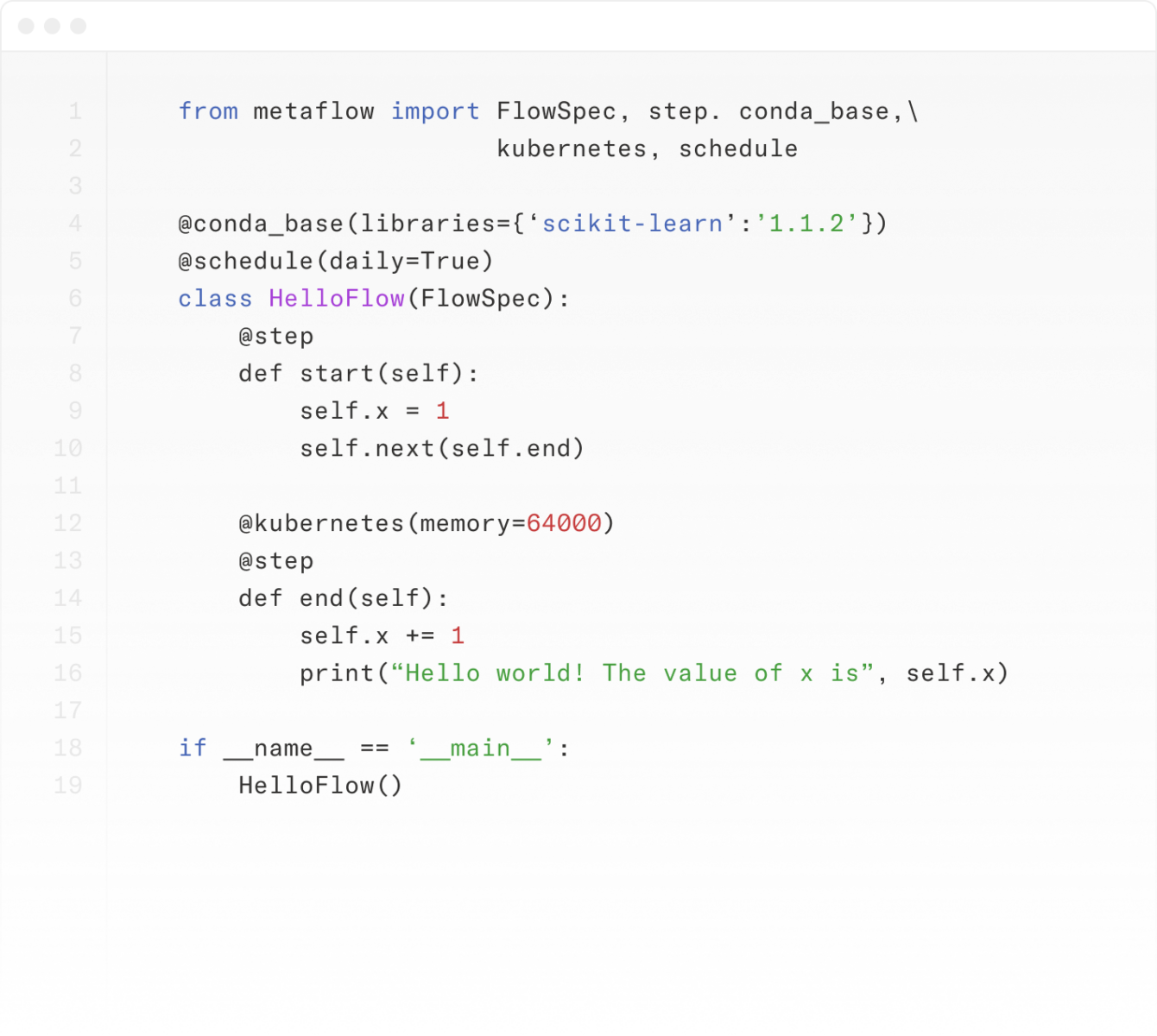
Metaflow is a Python framework developed at Netflix and open-sourced in 2019. It helps data science and engineering teams define, run, track, and deploy data-intensive workflows.
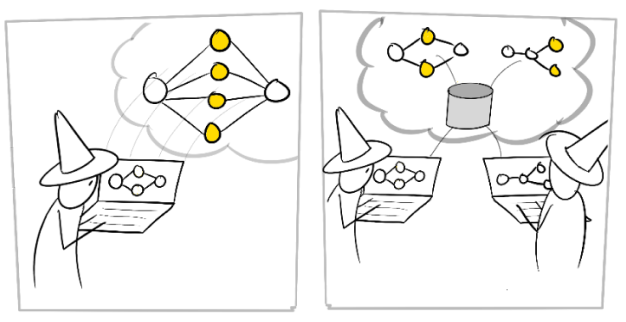
Teams can develop locally, then execute tasks on cloud or Kubernetes infrastructure. The framework connects with production orchestrators such as Argo Workflows, AWS Step Functions, Airflow, and Kubeflow.
Metaflow is open-source software, not a fully hosted orchestration service. Teams running it in production configure and operate the needed infrastructure, or may evaluate the separate managed Outerbounds platform.
Metaflow Decision Snapshot
A quick way to understand who this product may suit, where its limits matter, and which facts are most relevant before you compare alternatives.
Best suited toPython-based data science and ML teams that want to develop flows locally, track runs and artifacts, and deploy to cloud or Kubernetes infrastructure they manage.
Look elsewhere ifTeams seeking a turnkey hosted orchestration service, a broad non-Python workflow authoring experience, or an out-of-the-box production environment without infrastructure setup may need a managed service or another platform, and should evaluate alternatives such as Apache Airflow or Prefect instead.
PlatformsAWS, Azure, Google Cloud, Kubernetes, On-premises
TechZella assessment7.0/10
Metaflow — What Sets It Apart?
These are the product-specific differences that may matter when deciding whether the software fits your workflow. They are based on documented evidence rather than a universal ranking.
- Flows can start as local Python code and use the same framework for remote execution and production scheduling.
- Metaflow tracks runs and artifacts and exposes past results through a Python client API suitable for notebooks.
- The framework can deploy to multiple existing orchestration systems, including Argo Workflows, AWS Step Functions, Airflow, and Kubeflow.
Editorial assessmentMetaflow Pros & Cons
Pros
- Apache-2.0 open-source license.
- Supports progression from local Python development to cloud or Kubernetes execution.
- Provides a Client API for inspecting prior runs and artifacts.
- Can integrate with multiple production orchestrators.
Cons
- Production deployment requires the team to configure and operate infrastructure.
- Supported capabilities vary by orchestrator; Airflow has documented workflow and triggering limitations.
- The browser sandbox is temporary and does not provide persistent project hosting.
- No verified third-party review ratings or review themes were available.
Metaflow Gotchas & Operational Limits
These are documented constraints or practical friction points that may matter before you adopt the product.
The local-only deployment is intended for development and does not provide the scalability of an external compute layer or a production-grade deployment.
Production plans need cloud or Kubernetes resources and associated operational ownership.
Evidence source ↗Airflow deployments do not support nested foreaches or event-based triggering, and the documented Airflow integration uses Kubernetes execution rather than the AWS Batch integration.
Existing Airflow users should verify that their flow patterns fit these integration limits before adopting it.
Evidence source ↗The public browser sandbox sessions expire after a while.
The sandbox is suitable for evaluation and tutorials, not persistent project work.
Evidence source ↗Metaflow Pricing & Plans
Metaflow Open Source
$0
perpetual
Open-source Python framework under Apache License 2.0. Production infrastructure and cloud-provider usage are separate.
Check current pricing →Metaflow Sandbox
$0
free access
Browser-based playground for trying the open-source framework; sessions expire.
Check current pricing →Pricing may change. Verify current plans on the vendor's website.
Cost contextTotal Cost & Hidden Costs
Additional costs or implementation requirements that are documented in the available evidence.
Implementation and operations
The reviewed public documentation does not provide an implementation-time estimate. Production infrastructure must be configured in the user's cloud account or Kubernetes environment, which requires setup and operational ownership.
Evidence source ↗Hosting and compute
The open-source framework is self-managed; cloud compute, storage, and related infrastructure are supplied through the chosen environment. These underlying infrastructure charges are separate from the open-source license.
Evidence source ↗Optional managed service
Outerbounds sells a separate managed platform built around Metaflow. Its public pricing page lists a Starter plan at $2,499 per month, paid annually; this is not a Metaflow license fee.
Evidence source ↗Additional fees and limits
The sources reviewed do not identify paid add-ons or usage fees for the open-source Metaflow package. Review cloud-provider charges and the terms of any separately selected managed service.
Evidence source ↗Metaflow Competitors & Alternatives
Compare similar products directly, then see which alternatives may make more sense when your requirements differ.
At a glance
Developer ToolsOnly factors supported by the available research are shown. The comparison is descriptive, not a ranking.
Direct competitors
These products address broadly similar requirements. The descriptions focus on documented reasons a buyer might compare them with Metaflow.
CapabilitiesMetaflow Features
Workflow development
- Python-based flow and step authoring
- Local prototyping and execution
- Notebook-friendly workflow and result access
Tracking and artifacts
- Run and artifact tracking
- Python Client API for inspecting prior runs and artifacts
- Code and execution metadata access
Infrastructure and orchestration
- Remote compute with AWS Batch or Kubernetes, depending on deployment
- Production orchestration integrations for Argo Workflows, AWS Step Functions, Apache Airflow, and Kubeflow
- Documented AWS, Azure, Google Cloud, Kubernetes, and on-premises Kubernetes deployment options
Metaflow Specifications
| License | Apache License 2.0 |
|---|
| Primary language | Python |
|---|
| Current version verified | 2.19.41 on PyPI, released November 6, 2026 |
|---|
| Deployment | Self-managed local, cloud, or Kubernetes infrastructure |
|---|
| Production orchestrators | Argo Workflows, AWS Step Functions, Apache Airflow, Kubeflow |
|---|
| Cloud environments | AWS, Azure, Google Cloud |
|---|
| API | Python Client API and documented public API reference |
|---|
| Trial option | Free browser sandbox; sessions expire |
|---|
| Company origin | Developed at Netflix; open-sourced in 2019 |
|---|
Exit planningMigration & Lock-In
Documented portability, standards, export, or switching considerations. No switching-cost score is shown unless the evidence supports one.
Existing orchestrators
Metaflow can deploy flows to Airflow, Argo Workflows, AWS Step Functions, or Kubeflow. The documentation identifies Airflow and Kubeflow as options for teams with those orchestrators already deployed.
Evidence source ↗Data portability
The Client API accesses run metadata and artifacts, and documented data storage options include cloud object storage. The sources reviewed do not describe an automated migration utility for moving a separate orchestration product's historical data.
Evidence source ↗Our evidence-based assessmentTechZella Score
A proprietary editorial score based on product capabilities, usability, value, performance, support and user sentiment evidence.
7.0/10Moderate confidence
The open-source framework documents Python workflow authoring, artifact and run tracking, cloud and Kubernetes execution, and several production orchestrators. No verified third-party review score or review volume was found, so user sentiment is unscored.
Methodology v1.0. The assessment weighs feature coverage (25%), ease of use (15%), value for money (20%), performance (15%), support (10%) and user sentiment (15%), using researched product evidence and verified review evidence where available. It is a TechZella editorial assessment, not a direct user-review average.
Editorial transparency
Our Review Methodology
Key claims are linked to the sources used to verify them. This evidence record is separate from third-party user ratings.
TechZella evaluates software using documented product capabilities, pricing information, usability and value considerations, independent user evidence where available, and competitive context. The assessment is an editorial review, not a hands-on test unless one is explicitly identified. Our editorial assessment is based on 6 documented sources.
What TechZella adds- Flows can start as local Python code and use the same framework for remote execution and production scheduling.
- Metaflow tracks runs and artifacts and exposes past results through a Python client API suitable for notebooks.
- The framework can deploy to multiple existing orchestration systems, including Argo Workflows, AWS Step Functions, Airflow, and Kubeflow.
Important limitations- Production use requires teams to configure and operate infrastructure in their own cloud account or Kubernetes environment.
- The Airflow integration has documented constraints: nested foreaches are unsupported, the documented integration supports Kubernetes rather than AWS Batch for tasks, and event-based triggering is unavailable on Airflow.
- The open-source framework is not the same product as Outerbounds' separately priced, managed platform.
Evidence-backed claimsMetaflow is an open-source Python framework for data science, ML, and AI applications.The official documentation describes Metaflow as a Python library for developing, deploying, and operating data-intensive applications and identifies its Apache License 2.0.
View source ↗Verified 2026-11-11Metaflow supports local development and production infrastructure on AWS, Azure, Google Cloud, and Kubernetes.The infrastructure guide describes local-only, AWS, Azure, Google Cloud, and Kubernetes deployment options, including on-premises Kubernetes.
View source ↗Verified 2026-11-11Metaflow's production-orchestrator integrations include Argo Workflows, AWS Step Functions, Apache Airflow, and Kubeflow.The scheduling documentation lists these production orchestrators and describes use contexts for the integrations.
View source ↗Verified 2026-11-11Metaflow includes a Client API for inspecting past runs and their artifacts.The official client documentation describes APIs for accessing flow, run, task, and artifact objects and their data.
View source ↗Verified 2026-11-11Metaflow was open-sourced by Netflix in December 2019.Netflix's announcement of the open-source release is dated December 3, 2019.
View source ↗Verified 2026-11-11The Metaflow browser sandbox is an evaluation environment with sessions that expire.The official sandbox page describes browser-based playgrounds and says sessions expire after a while.
View source ↗Verified 2026-11-11 Common questionsMetaflow FAQs
Answers begin with the clearest available response, followed by the context that helps you act on it.
Is Metaflow free?
Yes. The open-source Metaflow framework is available under Apache License 2.0. Cloud infrastructure used for production runs is separate.
Can Metaflow run outside AWS?
Yes. The documentation covers Azure, Google Cloud, Kubernetes, and on-premises Kubernetes options, as well as AWS.
Does Metaflow work with Apache Airflow?
Yes. Metaflow documents deployment to existing Airflow servers, with some feature constraints including no event-based triggering in that integration.
Does Metaflow offer a free trial?
Yes. Metaflow offers a browser sandbox for trying the open-source framework. Sandbox sessions expire, and the page does not describe this as a trial of the separate Outerbounds platform.
Does Metaflow have a public API?
Yes. Its documented Python Client API can inspect previous flows, runs, tasks, and data artifacts.
Community feedback
Reviews
No reviews yet. Be the first to share your experience.
Write a Review
Please log in to submit a review.
Recently added Developer Tools