
The Cloud trial provides $300 in credits for 30 days, then the organization moves to pay-as-you-go when credits expire or run out.
A trial account can begin accruing charges unless the buyer monitors usage or closes the service.
Evidence source ↗
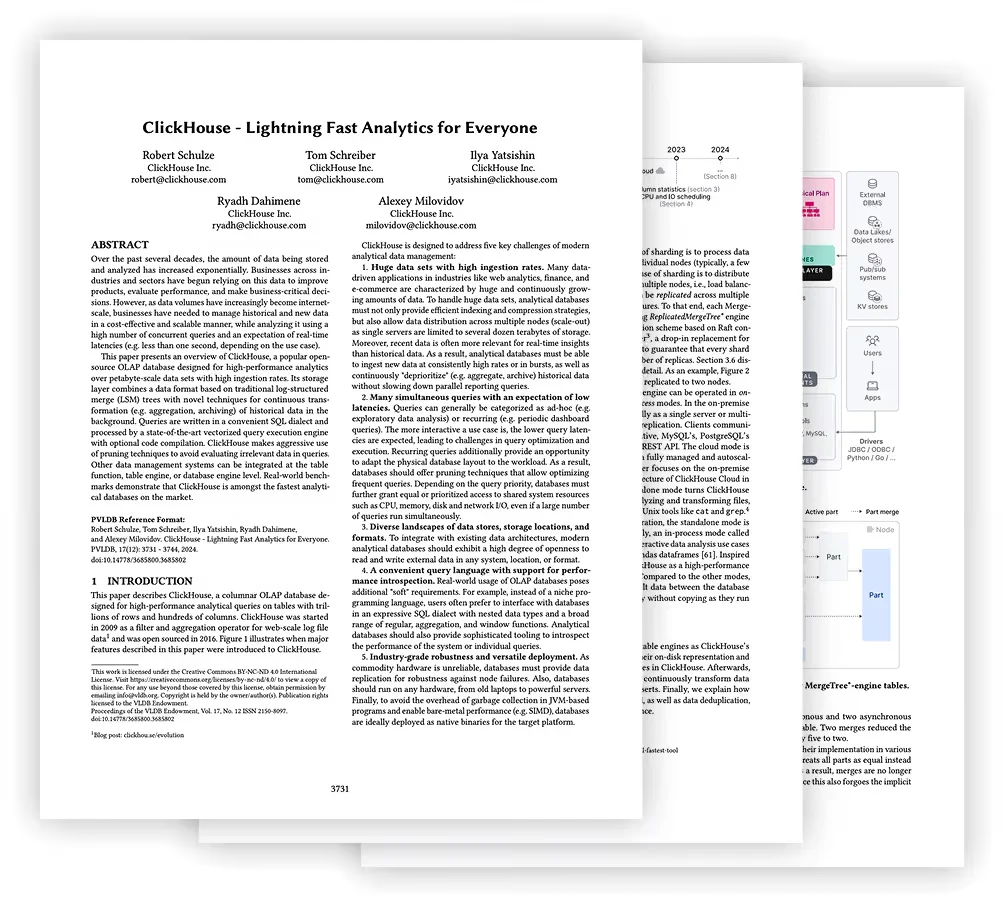
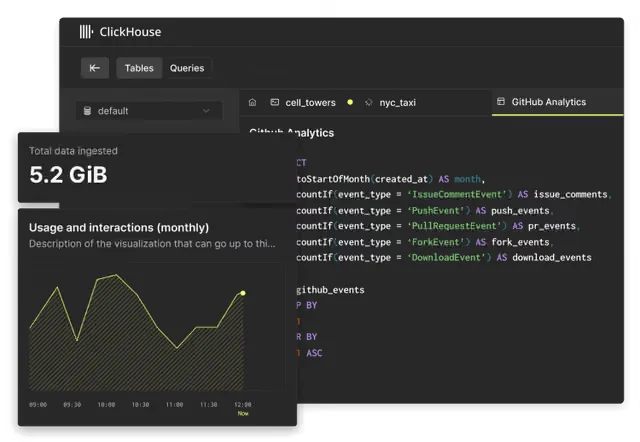
ClickHouse is an open-source, column-oriented SQL database for analytical workloads. It is available as self-managed software or as the managed ClickHouse Cloud service.
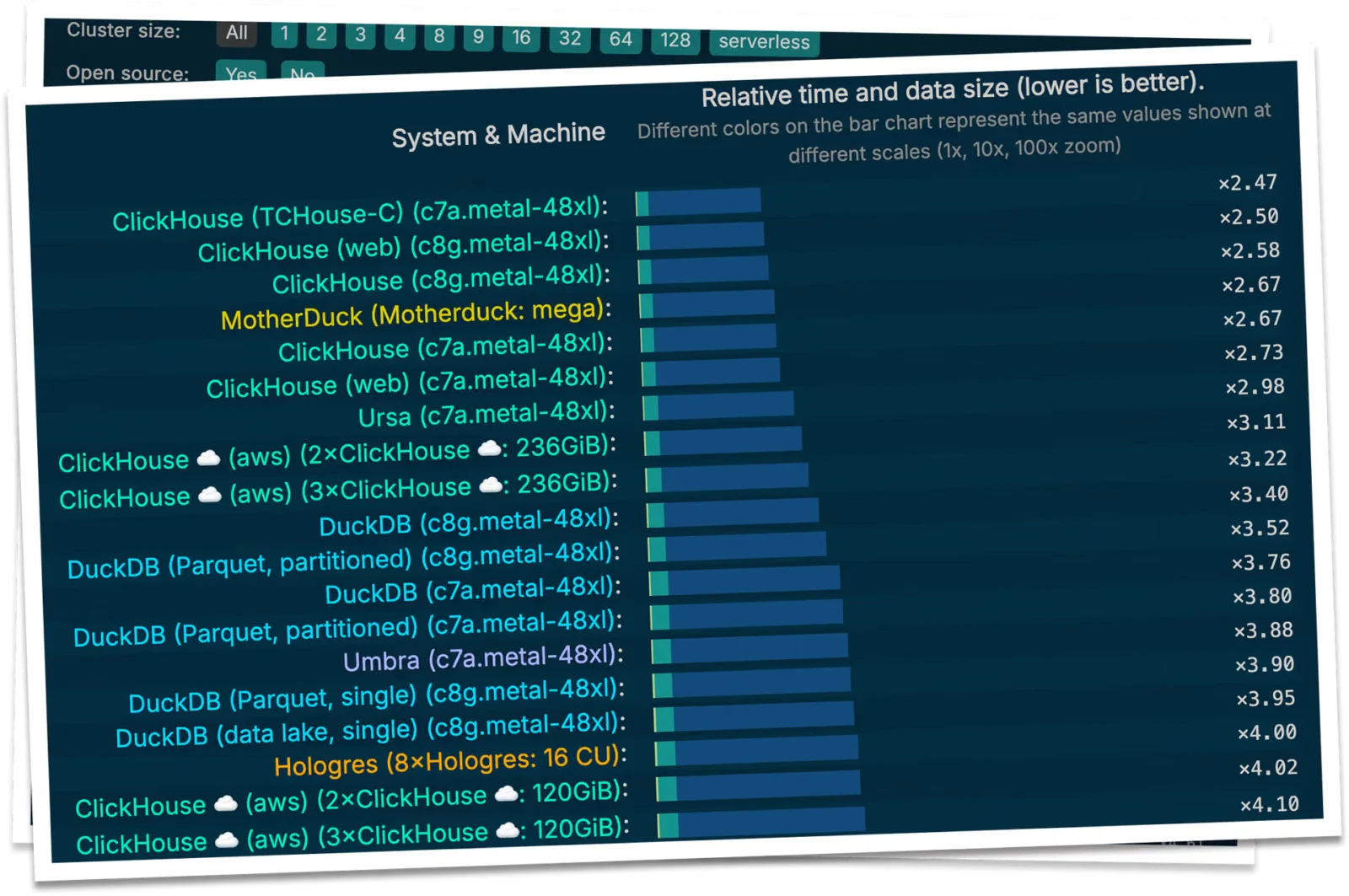
Official materials document a broad analytics database, managed ingestion, and several deployment options. Public G2 review snippets mention analytics performance and SQL familiarity, but do not establish an overall rating or representative review consensus.
This profile combines documented product information and independent evidence where available. It is not a hands-on test unless TechZella explicitly identifies one.
ClickHouse is an open-source, column-oriented SQL database designed for analytical queries. Teams use it for real-time analytics, data warehousing, and observability workloads.
Customers can run the database themselves or use ClickHouse Cloud. Cloud customers can also choose a Bring Your Own Cloud deployment in their own cloud account.
A quick way to understand who this product may suit, where its limits matter, and which facts are most relevant before you compare alternatives.
Engineering and data teams building real-time analytics, observability, and data-warehouse workloads that benefit from a column-oriented SQL database.
Teams seeking a fully managed experience without usage-based cost monitoring may prefer a service with a simpler, fixed-price structure. Self-managed deployments also require teams to operate their own infrastructure, and should evaluate alternatives such as Google BigQuery or Snowflake instead.
AWS, Cloud, Google Cloud, Linux, Microsoft Azure
8.1/10
These are the product-specific differences that may matter when deciding whether the software fits your workflow. They are based on documented evidence rather than a universal ranking.
These are documented constraints or practical friction points that may matter before you adopt the product.
A trial account can begin accruing charges unless the buyer monitors usage or closes the service.
Evidence source ↗An unused service can still generate recurring costs while data remains stored.
Evidence source ↗Workload estimates should include ingestion, retention, and egress rather than only query compute.
Evidence source ↗Apache 2.0 licensed database software. Infrastructure and operations are customer-managed.
Check current pricing →New organizations receive $300 in credits; pay-as-you-go billing begins when credits are used or the trial period ends.
Check current pricing →Starting price. Includes up to 1 TB storage, 8–12 GiB total memory, daily backups retained for one day, and one availability zone.
Check current pricing →Starting price. Includes unlimited storage, configurable memory, compute-compute separation, and expert support for Severity 1 issues.
Check current pricing →Starting price. Adds SAML SSO, private regions, custom vertical scaling profiles, and enterprise Severity 1 support.
Check current pricing →Pricing may change. Verify current plans on the vendor's website.
Compare similar products directly, then see which alternatives may make more sense when your requirements differ.
| Decision factor | ClickHouse | Google BigQuery | Snowflake |
|---|---|---|---|
| Core scope | Column-oriented SQL database for analytics, observability, and data warehousing. | Serverless data analytics platform with query processing and storage services. Source ↗ | Managed cloud data platform with analytics, warehouses, storage, and additional data services. Source ↗ |
| Deployment model | Self-managed software, managed ClickHouse Cloud, or BYOC in a customer cloud account. | Serverless managed platform; customers do not provision individual instances or virtual machines. Source ↗ | Snowflake-hosted cloud data service available across cloud providers and regions. Source ↗ |
| Pricing model | Cloud compute and storage are metered separately; listed Cloud plans start at $53 per month, with usage-based charges and other billable dimensions. | Query pricing can be on-demand per TiB processed or capacity-based per slot-hour; storage is charged separately. Source ↗ | Consumption-based pricing covers compute credits, storage, and data transfer; rates depend on edition, provider, region, and account terms. Source ↗ |
Only factors supported by the available research are shown. The comparison is descriptive, not a ranking.
These products address broadly similar requirements. The descriptions focus on documented reasons a buyer might compare them with ClickHouse.
| License | Apache 2.0 for ClickHouse OSS |
|---|---|
| Cloud providers | AWS, Google Cloud, Microsoft Azure |
| Cloud pricing model | Usage-based; compute and storage metered separately |
| Trial | $300 in credits for 30 days |
| API and interfaces | HTTP interface, native interface, Cloud infrastructure APIs |
| Supported self-managed platform | Linux x86_64; Docker image available |
| Additional platform builds | macOS and FreeBSD builds are listed with limited support |
Verified installation, hosting, administration, or environment details that can affect implementation.
| Managed service | ClickHouse Cloud is a managed service available on AWS, Google Cloud, and Azure. Source ↗ |
|---|---|
| Customer-cloud deployment | Bring Your Own Cloud deploys a managed service into the customer's AWS, Google Cloud, or Azure account; pricing requires an approved access request. Source ↗ |
| Self-managed | The open-source database can be installed on supported Linux systems; official materials also provide Docker images and other installation options. Source ↗ |
A proprietary editorial score based on product capabilities, usability, value, performance, support and user sentiment evidence.
Official materials document a broad analytics database, managed ingestion, and several deployment options. Public G2 review snippets mention analytics performance and SQL familiarity, but do not establish an overall rating or representative review consensus.
Methodology v1.0. The assessment weighs feature coverage (25%), ease of use (15%), value for money (20%), performance (15%), support (10%) and user sentiment (15%), using researched product evidence and verified review evidence where available. It is a TechZella editorial assessment, not a direct user-review average.
Key claims are linked to the sources used to verify them. This evidence record is separate from third-party user ratings.
TechZella evaluates software using documented product capabilities, pricing information, usability and value considerations, independent user evidence where available, and competitive context. The assessment is an editorial review, not a hands-on test unless one is explicitly identified. Our editorial assessment is based on 5 documented sources.
The official support policy identifies ClickHouse OSS Software as licensed under Apache 2.0.
View source ↗Verified 2026-11-07The official pricing page states that new organizations receive $300 in credits for 30 days and then move to pay-as-you-go when credits expire or are used.
View source ↗Verified 2026-11-07The official pricing page lists separate compute and storage dimensions and describes scaling unused compute to zero.
View source ↗Verified 2026-11-07The integrations page lists connectors including Amazon S3, Kafka, Google Cloud Storage, Postgres, and MySQL.
View source ↗Verified 2026-11-07The official customer stories include examples in each of these verticals.
View source ↗Verified 2026-11-07The company's announcement describes the acquisition and the Postgres service announcement.
View source ↗Verified 2026-11-07Answers begin with the clearest available response, followed by the context that helps you act on it.
No reviews yet. Be the first to share your experience.
Please log in to submit a review.