
Certificate Manager bills by endpoint-month, not simply by each certificate.
An endpoint can include up to three active certificates for billing purposes; each additional active certificate counts as another endpoint.
Evidence source ↗
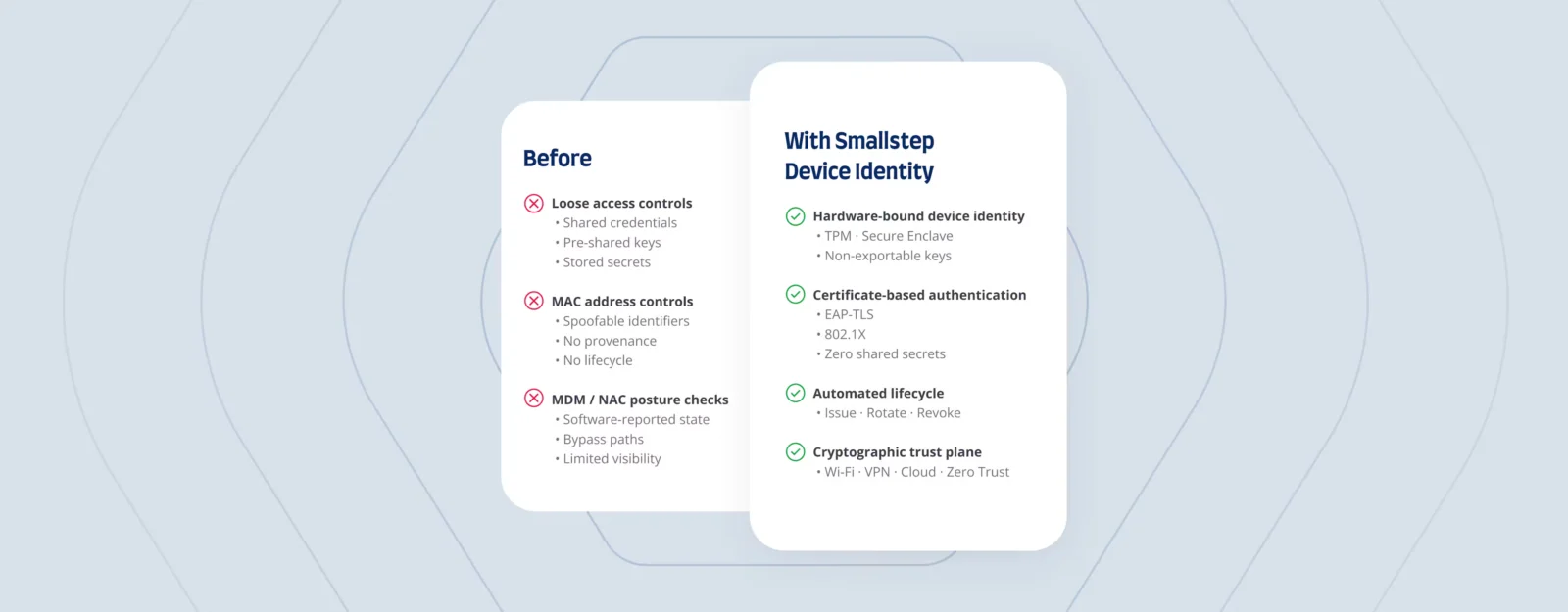
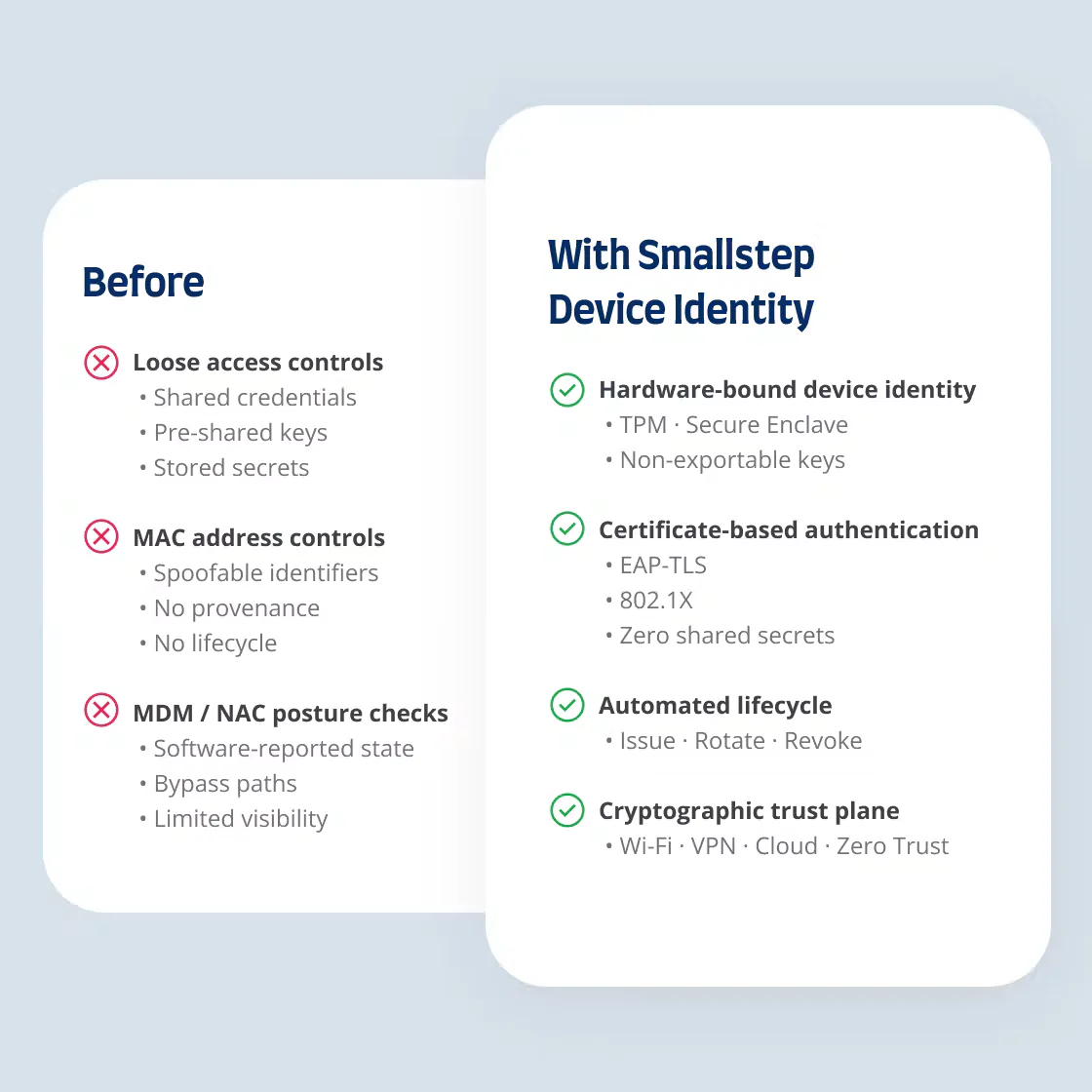
Smallstep provides device identity and certificate management for enterprise access, alongside open-source tools for operating private X.509 and SSH certificate authorities.
The platform combines certificate lifecycle automation, hardware-attested device identity, deployment options, and APIs. Setup requires integration with an MDM or infrastructure, and paid pricing is quote-based. Scores are editorial assessments, not hands-on test results.
This profile combines documented product information and independent evidence where available. It is not a hands-on test unless TechZella explicitly identifies one.
Smallstep combines a commercial device identity platform with an open-source certificate authority toolchain. Its products issue and manage certificates used to authenticate devices, users, and workloads to infrastructure and network resources.
The hosted platform connects device inventories and MDM systems with certificate workflows for Wi-Fi, VPN, SSH, and other use cases. Organizations can also choose customer-managed Run Anywhere deployment. The separate open-source step-ca toolchain provides certificate automation, but Smallstep notes that it does not provide the commercial platform’s device identity capabilities out of the box.
A quick way to understand who this product may suit, where its limits matter, and which facts are most relevant before you compare alternatives.
Organizations seeking device-bound certificates for managed endpoints, Wi-Fi, VPN, SSH, or workload identity, especially where teams need cloud, self-managed, or mixed-platform deployment options.
Teams seeking a published, fixed-price service or a turnkey setup without PKI, MDM, or infrastructure configuration may find the sales-led pricing and deployment work difficult to assess.
Linux, macOS, SaaS, Self-hosted, Windows
7.6/10
These are the product-specific differences that may matter when deciding whether the software fits your workflow. They are based on documented evidence rather than a universal ranking.
These are documented constraints or practical friction points that may matter before you adopt the product.
An endpoint can include up to three active certificates for billing purposes; each additional active certificate counts as another endpoint.
Evidence source ↗The customer-managed deployment requires a Kubernetes cluster, PostgreSQL, Redis, load balancing, and a KMS or HSM, so buyers must plan for infrastructure operations.
Evidence source ↗Organizations depending on those VPN modes should confirm their configuration before selecting this integration path.
Evidence source ↗Smallstep offers bundled or bespoke commercial solutions and requests a scoping exercise. Standard rates are not publicly listed.
Check current pricing →Documentation describes endpoint-month billing. Up to three active certificates count toward one endpoint; each additional active certificate is billed as another endpoint. Unit pricing is not public.
Check current pricing →Smallstep publishes an open-source certificate toolchain. The certificates repository identifies its license as Apache-2.0; infrastructure and operating costs depend on the deployment.
Check current pricing →Pricing may change. Verify current plans on the vendor's website.
Compare the product with documented alternatives across the factors that can change a buying decision. Each row is evidence-backed rather than a generic feature checklist.
| Decision factor | Smallstep | Microsoft Cloud PKI |
|---|---|---|
| Core scope | Smallstep documents device identity, certificate authorities, Wi-Fi, VPN, SSH, and workload identity use cases. | Microsoft describes Cloud PKI as cloud certificate management built into Intune, with certificate workflows for Intune-managed devices. Source ↗ |
| Deployment model | Smallstep offers SaaS and customer-managed Run Anywhere deployments, as well as open-source step-ca. | Microsoft Cloud PKI is described as a cloud-based solution built into Intune. Source ↗ |
| Pricing model | Smallstep requests a sales conversation for a scoped quote; Certificate Manager documentation describes endpoint-month billing. | Microsoft lists Cloud PKI as included in Microsoft 365 E5, with the E5 plan displayed at $60.00 per user/month, paid yearly. Source ↗ |
Only factors supported by the available research are shown. The comparison is descriptive, not a ranking.

| Commercial pricing | Quote-based |
|---|---|
| Certificate Manager billing | Endpoint-month; each active certificate above three per endpoint counts as an additional endpoint |
| API | OpenAPI conformant; API tokens can be scoped and time-limited |
| Deployment | SaaS, customer-managed Run Anywhere, or open-source toolchain |
| Agent operating systems | macOS, Windows, Linux |
| Run Anywhere infrastructure | Kubernetes, PostgreSQL, Redis, load balancing, and KMS or HSM |
| Open-source license | Apache-2.0 for smallstep/certificates |
Verified installation, hosting, administration, or environment details that can affect implementation.
| Hosted service | Smallstep SaaS is offered as a cloud service; official platform documentation describes it as the default recommended option unless a customer cannot use a cloud CA. Source ↗ |
|---|---|
| Customer-managed | Run Anywhere can be deployed in a customer-managed data center or cloud environment. Its documented components include Kubernetes, PostgreSQL, Redis, load balancing, and KMS or HSM. Source ↗ |
| Open-source software | The step CLI, step-ca, step-issuer, and autocert form Smallstep's open-source certificate and PKI toolchain. Source ↗ |
Microsoft Cloud PKI may be a better match for organizations already centered on Intune that want cloud certificate management within that ecosystem. Smallstep may suit teams needing documented customer-managed deployment options, Linux coverage, or broader device identity and workload certificate use cases. Compare supported devices, attestation needs, hosting preferences, and total license scope before choosing.
Documented portability, standards, export, or switching considerations. No switching-cost score is shown unless the evidence supports one.
Smallstep documents compatibility with SCEP and NDES and says customers can bring an existing root CA when moving from AD CS.
Evidence source ↗The step-ca configuration guide says the open-source server has no built-in API or interface for easy database export; embedded Badger and BoltDB databases also cannot be accessed simultaneously by multiple processes.
Evidence source ↗A proprietary editorial score based on product capabilities, usability, value, performance, support and user sentiment evidence.
The platform combines certificate lifecycle automation, hardware-attested device identity, deployment options, and APIs. Setup requires integration with an MDM or infrastructure, and paid pricing is quote-based. Scores are editorial assessments, not hands-on test results.
Methodology v1.0. The assessment weighs feature coverage (25%), ease of use (15%), value for money (20%), performance (15%), support (10%) and user sentiment (15%), using researched product evidence and verified review evidence where available. It is a TechZella editorial assessment, not a direct user-review average.
Key claims are linked to the sources used to verify them. This evidence record is separate from third-party user ratings.
TechZella evaluates software using documented product capabilities, pricing information, usability and value considerations, independent user evidence where available, and competitive context. The assessment is an editorial review, not a hands-on test unless one is explicitly identified. Our editorial assessment is based on 5 documented sources.
Smallstep documents a SaaS cloud offering and Run Anywhere deployment in customer-managed data centers or cloud hosting providers.
View source ↗Verified 2026-11-24The official API documentation lists devices, protected resources, X.509 CAs, provisioners, and SSH hosts as manageable resources, and describes the API as OpenAPI conformant.
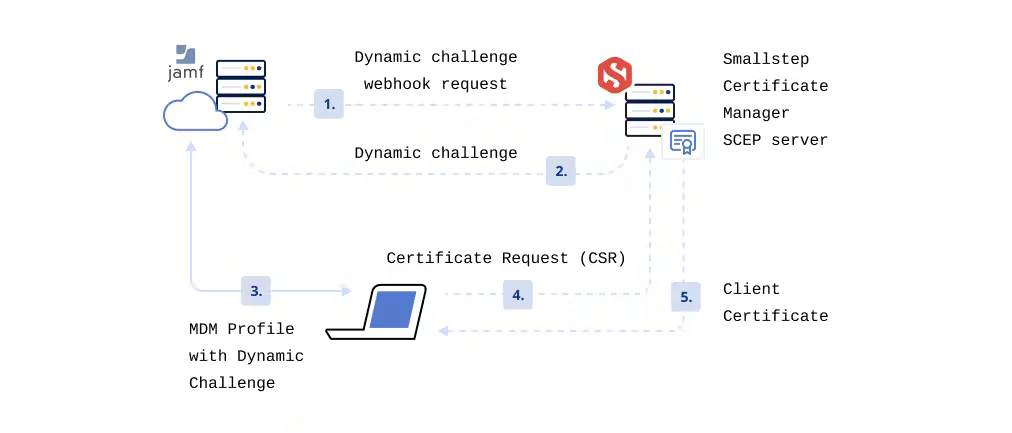
View source ↗Verified 2026-11-24The platform documentation names Jamf, Intune, Workspace ONE, Mosyle, Ivanti, and Google Workspace for dynamic SCEP workflows.
View source ↗Verified 2026-11-24Smallstep's step-ca documentation describes an online CA for automated X.509 and SSH certificate management.
View source ↗Verified 2026-11-24The pricing page directs prospective customers to request pricing and describes bundles or bespoke solutions.
View source ↗Verified 2026-11-24The G2 product review page reports a 4.2 average and 10 reviews.
View source ↗Verified 2026-11-24Answers begin with the clearest available response, followed by the context that helps you act on it.
No reviews yet. Be the first to share your experience.
Please log in to submit a review.