
Connected storage does not continuously synchronize new files into a project.
Teams adding data to an existing bucket must initiate another import through the UI or SDK.
Evidence source ↗
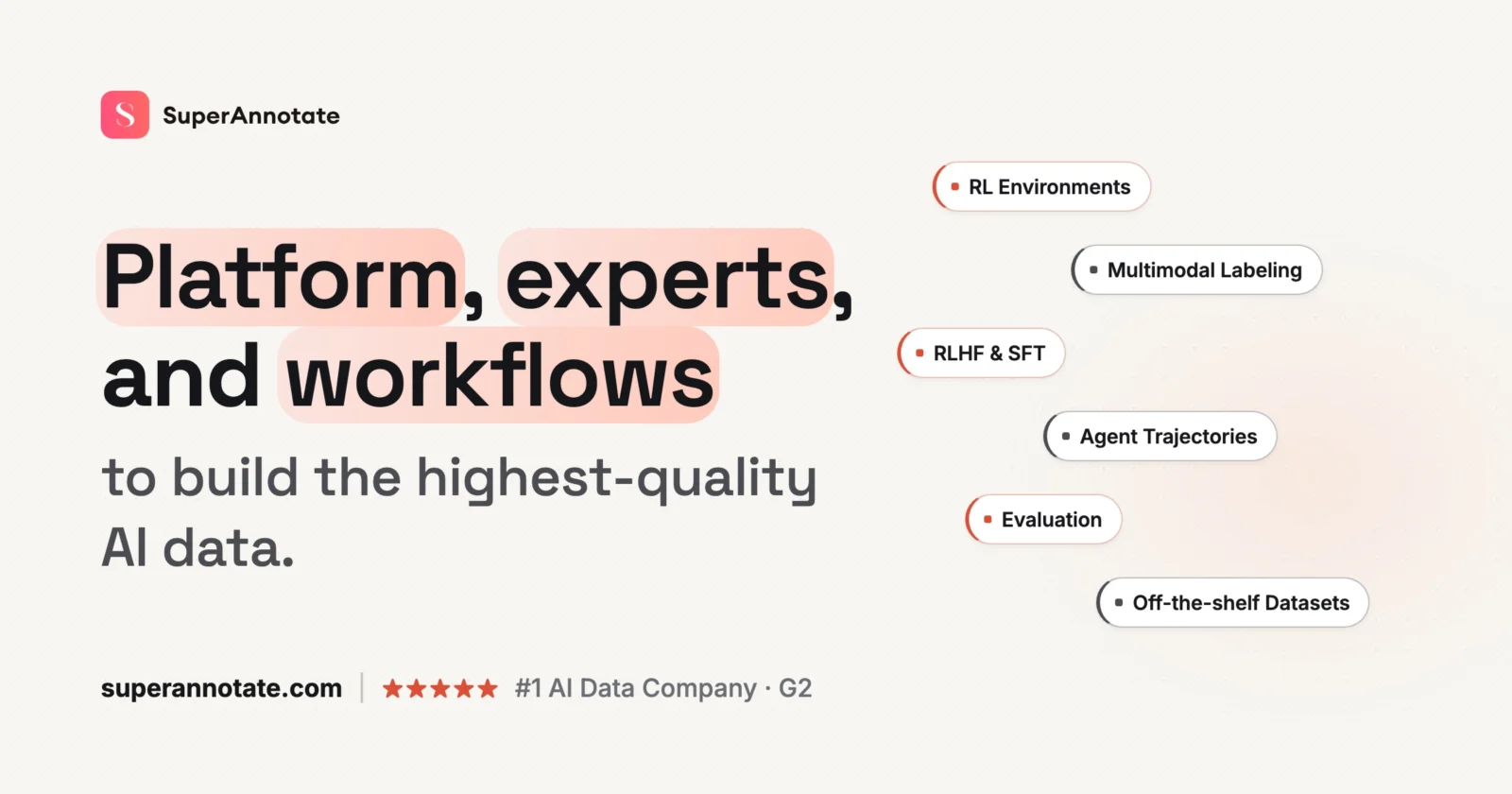
SuperAnnotate is a cloud-based platform for annotating, curating, and evaluating multimodal AI datasets, with project workflows, automation, and a Python SDK.
The platform documents multimodal annotation, project QA, automation, cloud-storage integrations, and a Python SDK. G2 shows a 4.8 average from 382 reviews and summarizes praise for usability and annotation tools, alongside reports of lag on very large projects. Public plan prices are not listed, limiting value assessment.
This profile combines documented product information and independent evidence where available. It is not a hands-on test unless TechZella explicitly identifies one.
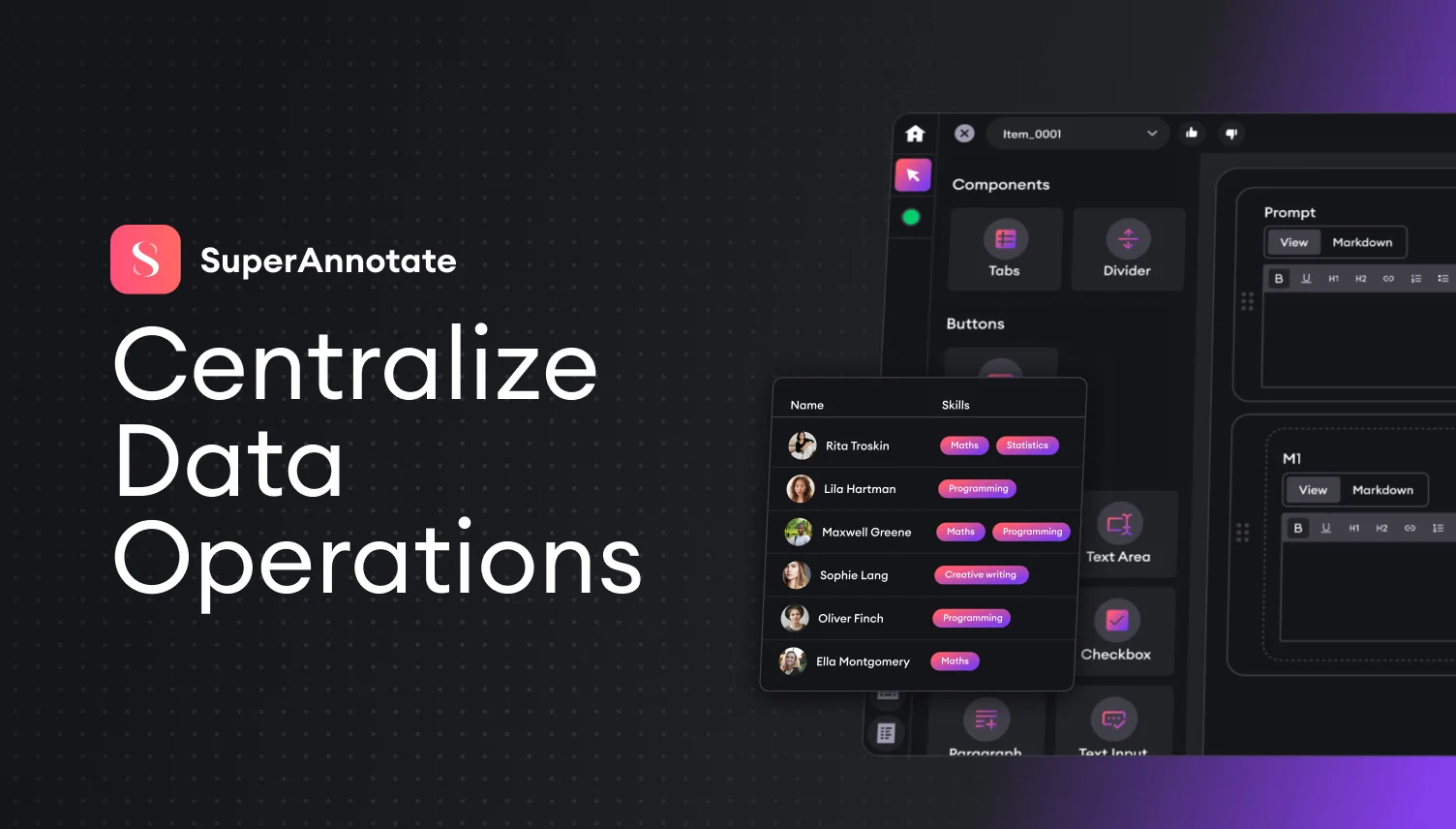
SuperAnnotate is a hosted platform for AI dataset annotation, curation, and evaluation. It supports image, video, text, and audio editors, with project management and workflow tools for human review.
Teams can connect cloud data stores, import datasets, and use a Python SDK or Orchestrate pipelines to automate selected operations. The product is aimed at organizations developing or evaluating AI models, rather than general-purpose document annotation.
A quick way to understand who this product may suit, where its limits matter, and which facts are most relevant before you compare alternatives.
AI and machine-learning teams that need managed annotation and evaluation workflows across text, image, video, and audio, particularly when connecting existing cloud data stores or automating work through Python.
Teams needing a publicly priced subscription, an offline desktop application, or automatic ongoing synchronization from connected storage should confirm fit first; the vendor says new external-storage items must be imported again manually, and should evaluate alternatives such as Labelbox or V7 Darwin instead.
Linux, Python, SaaS, Web, Windows
8.0/10
These are the product-specific differences that may matter when deciding whether the software fits your workflow. They are based on documented evidence rather than a universal ranking.
These are documented constraints or practical friction points that may matter before you adopt the product.
Teams adding data to an existing bucket must initiate another import through the UI or SDK.
Evidence source ↗Decide whether annotations should be stored on SuperAnnotate or external storage before establishing a repeatable ingestion process.
Evidence source ↗Budgeting requires contacting the vendor or using the Starter sign-up path to establish applicable terms.
Evidence source ↗For getting started and managing smaller projects; includes 1,000 Orchestrate compute hours. Numeric price not published.
Check current pricing →For scaling AI projects and MLOps needs; includes 2,500 Orchestrate compute hours. Numeric price not published.
Check current pricing →For recurring, high-volume projects; includes 10,000 Orchestrate compute hours and listed enterprise features such as SSO. Numeric price not published.
Check current pricing →Pricing may change. Verify current plans on the vendor's website.
Compare similar products directly, then see which alternatives may make more sense when your requirements differ.
| Decision factor | SuperAnnotate | Labelbox | V7 Darwin |
|---|---|---|---|
| Modalities | Pricing page lists image, video, text, and audio editors. | Official guidance lists images, video, text, conversational text, PDF, geospatial imagery, audio, HTML, and DICOM. Source ↗ | V7 documentation focuses on visual data workflows, including image and video annotation and radiology labeling. Source ↗ |
| Cloud data workflow | Integrations include AWS, GCP, Azure, Databricks, Snowflake, and custom storage; imported files are not automatically re-imported when new files are added. | Cloud-bucket documentation describes folder synchronization into Catalog after a one-time delegated-access setup. Source ↗ | Not documented |
| Pricing model | Starter, Pro, and Enterprise plans are listed, but numeric prices are not public on the pricing page. | The current pages reviewed did not provide a directly comparable public subscription price. Source ↗ | The V7 sources reviewed did not establish a directly comparable current numeric plan price. Source ↗ |
| Data access and SDK | Supports cloud-storage integrations and a Python SDK for imports and broader platform operations. | Not documented | Provides a Python library and documented upload/import workflows for visual data. Source ↗ |
Only factors supported by the available research are shown. The comparison is descriptive, not a ranking.
These products address broadly similar requirements. The descriptions focus on documented reasons a buyer might compare them with SuperAnnotate.
| Deployment | Hosted web platform |
|---|---|
| SDK | Python SDK; Python 3.10+ supported per documentation |
| Tested SDK operating systems | Linux and Windows |
| Storage integrations | AWS S3, Google Cloud Storage, Azure, Databricks, Snowflake, and custom storage |
| Annotation export formats | SuperAnnotate JSON, JSONL, CSV |
| Public pricing | Not listed; quote or sign-up path varies by plan |
| Orchestrate allowances | Starter 1K, Pro 2.5K, Enterprise 10K compute hours |
Verified installation, hosting, administration, or environment details that can affect implementation.
| Hosting | Vendor-hosted platform; a public self-hosted deployment option was not verified. Source ↗ |
|---|---|
| SDK environment | Python SDK installed from PyPI; documentation says the latest version supports Python 3.10+ and was tested on Linux and Windows. Source ↗ |
Documented portability, standards, export, or switching considerations. No switching-cost score is shown unless the evidence supports one.
Project exports can include annotation JSON and data; documented download formats include SuperAnnotate JSON, JSONL, and CSV.
Evidence source ↗A proprietary editorial score based on product capabilities, usability, value, performance, support and user sentiment evidence.
The platform documents multimodal annotation, project QA, automation, cloud-storage integrations, and a Python SDK. G2 shows a 4.8 average from 382 reviews and summarizes praise for usability and annotation tools, alongside reports of lag on very large projects. Public plan prices are not listed, limiting value assessment.
Methodology v1.0. The assessment weighs feature coverage (25%), ease of use (15%), value for money (20%), performance (15%), support (10%) and user sentiment (15%), using researched product evidence and verified review evidence where available. It is a TechZella editorial assessment, not a direct user-review average.
Key claims are linked to the sources used to verify them. This evidence record is separate from third-party user ratings.
TechZella evaluates software using documented product capabilities, pricing information, usability and value considerations, independent user evidence where available, and competitive context. The assessment is an editorial review, not a hands-on test unless one is explicitly identified. Our editorial assessment is based on 6 documented sources.
The company page identifies 2018 as its founding year and dates its founding milestone to August 2018.
View source ↗Verified 2026-11-12The current pricing page names these three plans, shows plan features and compute-hour allowances, and does not display numeric prices.
View source ↗Verified 2026-11-12The product documentation lists these storage and data integrations.
View source ↗Verified 2026-11-12Official SDK documentation covers authentication, team and organization clients, project access, and SDK operations.
View source ↗Verified 2026-11-12The integration documentation says users must import newly added items again manually.
View source ↗Verified 2026-11-12G2's public profile displayed the rating and review count on the date checked.
View source ↗Verified 2026-11-12The official changelog states that the keys support expiration, rotation, and revocation.
View source ↗Verified 2026-11-12Answers begin with the clearest available response, followed by the context that helps you act on it.
No reviews yet. Be the first to share your experience.
Please log in to submit a review.