Editorial overview
Aggregated Overview
Official documentation describes experiment tracking, model packaging and registry, deployment, and GenAI tracing and evaluation. The self-hosted option has no software subscription price, but operating infrastructure and administration are the user's responsibility. No public review evidence was verified, so user sentiment is not scored.
This profile combines documented product information and independent evidence where available. It is not a hands-on test unless TechZella explicitly identifies one.
Overview
MLflow is an open-source project for managing machine-learning development workflows. Its components cover experiment tracking, model packaging and registry, and model deployment; current documentation also covers LLM and agent tracing, prompt workflows, and evaluation.
Teams can install MLflow locally or run a tracking server for shared access. Self-hosted users choose and maintain the backend database, artifact storage, and infrastructure. Databricks provides a managed MLflow option as part of its platform.
MLflow Decision Snapshot
A quick way to understand who this product may suit, where its limits matter, and which facts are most relevant before you compare alternatives.
Best suited toMachine-learning and AI engineering teams that want an open-source system for experiment records, model packaging, registry workflows, and LLM application tracing and evaluation.
Look elsewhere ifTeams seeking a turnkey hosted service with vendor-managed infrastructure and support should assess managed offerings; self-hosted MLflow requires teams to configure and operate its server, database, and artifact storage, and should evaluate alternatives such as Weights & Biases or Comet instead.
PlatformsCloud, JavaScript, Python, REST API, Self-hosted
TechZella assessment6.9/10
MLflow — What Sets It Apart?
These are the product-specific differences that may matter when deciding whether the software fits your workflow. They are based on documented evidence rather than a universal ranking.
- The project combines traditional ML experiment tracking and model packaging with GenAI tracing, prompt workflows, and evaluation in one open-source toolkit.
- Self-hosted deployments can place run data and artifacts in storage chosen by the operating team, including supported cloud object stores.
- The Tracking API is available through Python, Java, R, and REST interfaces, while GenAI tracing includes documented Python and JavaScript/TypeScript workflows.
Editorial assessmentMLflow Pros & Cons
Pros
- Open-source software with no MLflow subscription fee for self-hosted use.
- Combines experiment tracking and model workflows with newer GenAI tracing and evaluation capabilities.
- Supports multiple model frameworks and configurable artifact-store backends.
- Offers Python and REST interfaces for programmatic tracking.
Cons
- Self-hosted teams must provision and operate server, backend, and artifact storage.
- Remote artifact storage setup can involve provider credentials and extra dependencies.
- Language API coverage is uneven; Python has the broadest documented functionality.
- No public review-platform rating was verified.
MLflow Gotchas & Operational Limits
These are documented constraints or practical friction points that may matter before you adopt the product.
The default server storage behavior depends on MLflow version; documentation says MLflow 3.7.0 changed the default tracking backend to SQLite.
Existing file-store users should review the migration guidance and confirm their backend and artifact-store configuration before upgrading.
Evidence source ↗Artifact-store credentials and setup are managed separately from the MLflow installation; some object-store integrations require additional client packages.
Teams should budget time for credentials, network access, storage configuration, and dependency management when deploying remotely.
Evidence source ↗MLflow Pricing & Plans
Open-source MLflow
$0
perpetual
Open-source software. Self-hosting infrastructure and operations are separate costs.
Check current pricing →Databricks managed MLflow
Managed option offered within the Databricks platform; MLflow-specific standalone price not verified.
Check current pricing →Pricing may change. Verify current plans on the vendor's website.
Cost contextTotal Cost & Hidden Costs
Additional costs or implementation requirements that are documented in the available evidence.
Software license
The MLflow project is open-source and its official site describes the software as free. Databricks-hosted managed services are separate offerings; no standalone MLflow subscription price was verified.
Evidence source ↗Hosting and infrastructure
Self-hosting requires compute plus a tracking backend and artifact storage appropriate to the deployment. Cloud storage and database charges are determined by the selected providers; MLflow documentation does not publish a bundled infrastructure price.
Evidence source ↗Implementation and onboarding
Official setup documentation provides pip and Docker paths, but does not publish a standard onboarding duration or implementation fee. Server, database, credentials, and artifact-store configuration can require operator effort.
Evidence source ↗Hidden or usage fees
No general MLflow overage, seat, or add-on fees were identified for the open-source project. Costs for managed hosting, cloud compute, storage, and optional model-provider usage are outside the open-source software price.
Evidence source ↗MLflow Competitors & Alternatives
Compare similar products directly, then see which alternatives may make more sense when your requirements differ.
Direct competitors
These products address broadly similar requirements. The descriptions focus on documented reasons a buyer might compare them with MLflow.
CapabilitiesMLflow Features
Machine learning lifecycle
- Experiment tracking for parameters, metrics, code versions, and artifacts
- Model packaging using framework flavors
- Model registry and model search
- Model deployment interfaces and plugins
LLM and agent workflows
- Tracing for LLM and agent application calls
- Evaluation and scorer workflows
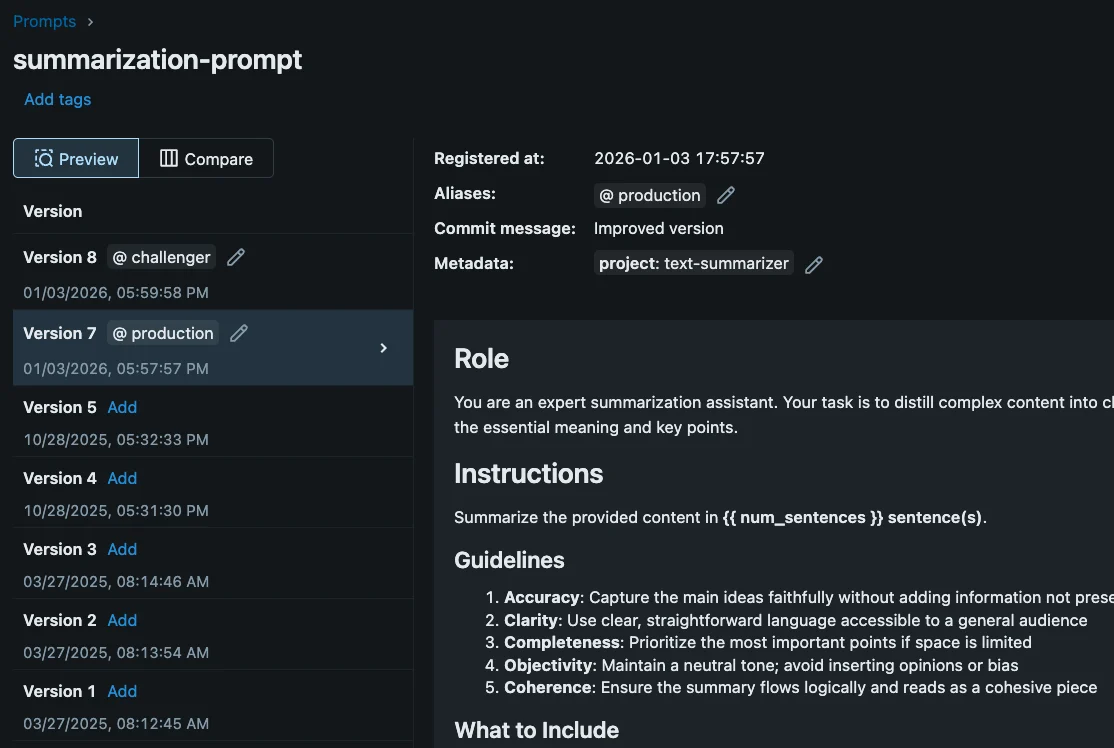
- Prompt registration and evaluation
- Human feedback linked to traces
Integration and storage
- Python, Java, R, and REST Tracking APIs
- Integrations for machine-learning frameworks and LLM/agent libraries
- Artifact stores including local files, Amazon S3, Azure Blob Storage, and Google Cloud Storage
MLflow Specifications
| License | Apache-2.0 |
|---|
| Deployment | Self-hosted; Databricks-managed option |
|---|
| Tracking API | Python, REST, R, and Java |
|---|
| GenAI tracing | Python and JavaScript/TypeScript workflows documented |
|---|
| Default server backend | SQLite in MLflow 3.7.0 and later, according to current self-hosting documentation |
|---|
| Artifact storage | Local filesystem and supported remote stores, including S3, Azure Blob Storage, and Google Cloud Storage |
|---|
Exit planningMigration & Lock-In
Documented portability, standards, export, or switching considerations. No switching-cost score is shown unless the evidence supports one.
Data portability
The Tracking API supports searching and retrieving runs, and documented artifact stores include local storage and several cloud object stores. Migration steps and compatibility depend on the selected backend and artifact locations.
Evidence source ↗Our evidence-based assessmentTechZella Score
A proprietary editorial score based on product capabilities, usability, value, performance, support and user sentiment evidence.
6.9/10Moderate confidence
Official documentation describes experiment tracking, model packaging and registry, deployment, and GenAI tracing and evaluation. The self-hosted option has no software subscription price, but operating infrastructure and administration are the user's responsibility. No public review evidence was verified, so user sentiment is not scored.
Methodology v1.0. The assessment weighs feature coverage (25%), ease of use (15%), value for money (20%), performance (15%), support (10%) and user sentiment (15%), using researched product evidence and verified review evidence where available. It is a TechZella editorial assessment, not a direct user-review average.
Editorial transparency
Our Review Methodology
Key claims are linked to the sources used to verify them. This evidence record is separate from third-party user ratings.
TechZella evaluates software using documented product capabilities, pricing information, usability and value considerations, independent user evidence where available, and competitive context. The assessment is an editorial review, not a hands-on test unless one is explicitly identified. Our editorial assessment is based on 5 documented sources.
What TechZella adds- The project combines traditional ML experiment tracking and model packaging with GenAI tracing, prompt workflows, and evaluation in one open-source toolkit.
- Self-hosted deployments can place run data and artifacts in storage chosen by the operating team, including supported cloud object stores.
- The Tracking API is available through Python, Java, R, and REST interfaces, while GenAI tracing includes documented Python and JavaScript/TypeScript workflows.
Important limitations- A self-hosted deployment requires operators to select and manage backend and artifact storage; cloud storage integrations may need separate credentials and optional provider packages.
- The documented tracking API feature set is not identical across languages; the Python API has the broadest coverage.
- No standalone commercial price or general product support tier was verified for the open-source project.
Evidence-backed claimsMLflow tracks experiment parameters, code versions, metrics, and output files through an API and UI.The official Tracking documentation describes logging and later visualizing these run records.
View source ↗Verified 2026-11-11The tracking server exposes a REST API and UI for shared experiment access.The tracking-server documentation describes a standalone HTTP server with REST endpoints and a Tracking UI.
View source ↗Verified 2026-11-11MLflow supports remote artifact stores including Amazon S3, Azure Blob Storage, and Google Cloud Storage.The artifact-store documentation lists these and other supported destinations, with setup and credential requirements.
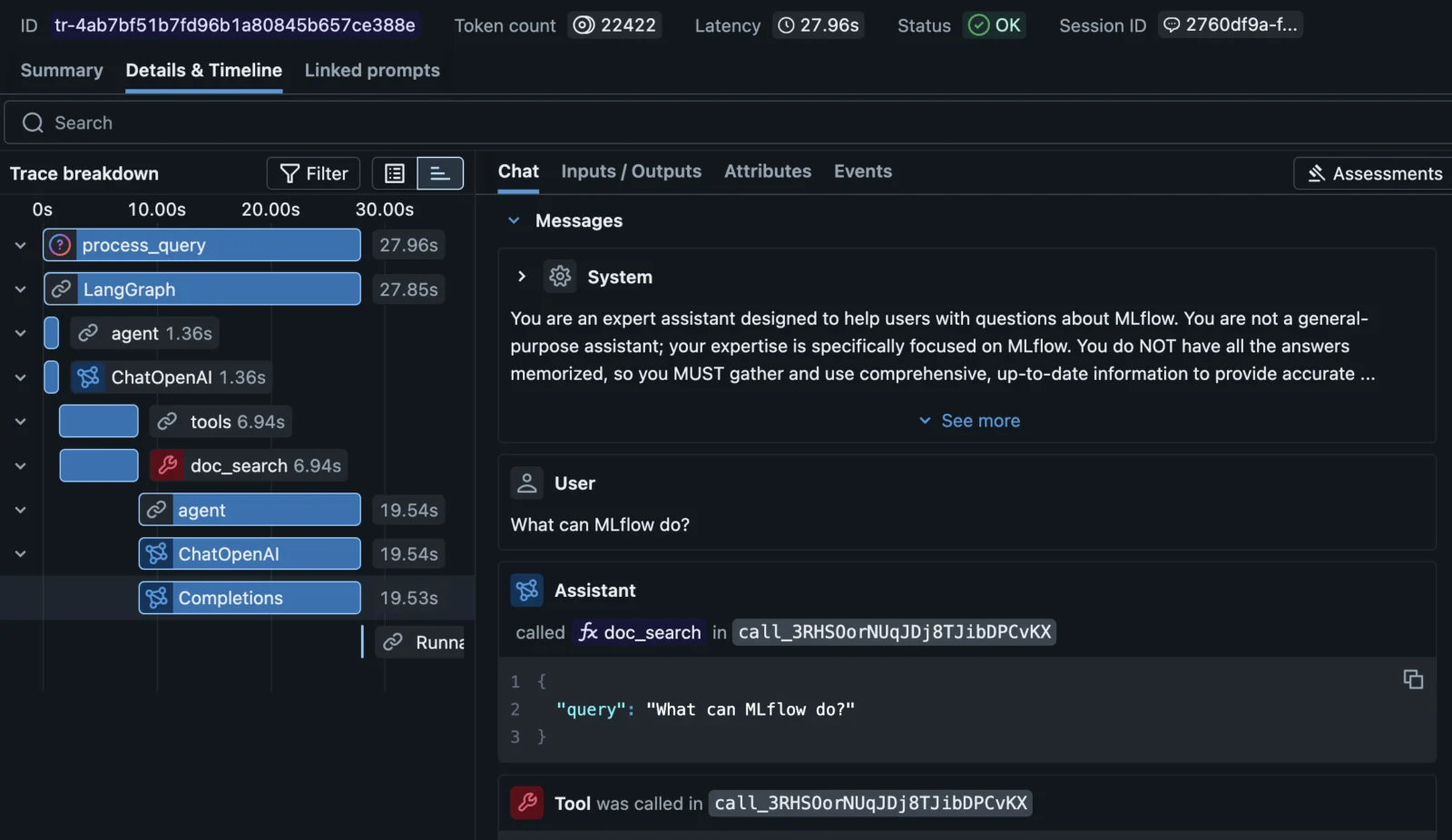
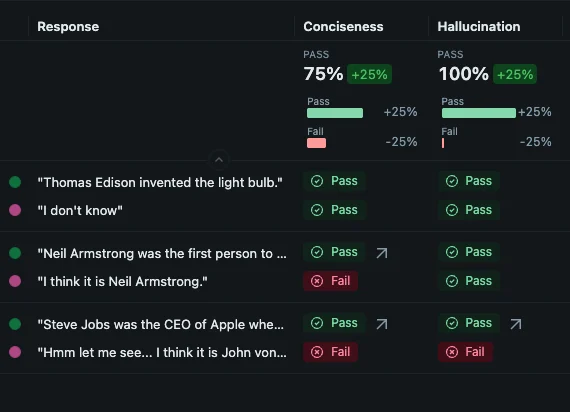
View source ↗Verified 2026-11-11MLflow GenAI tracing captures request-step inputs, outputs, and metadata and can support evaluation workflows.The GenAI tracing documentation describes tracing, feedback, evaluation, monitoring, and integrations with agent and LLM frameworks.
View source ↗Verified 2026-11-11MLflow was created by Databricks and joined the Linux Foundation in 2020.The Linux Foundation announcement identifies MLflow as a Databricks-created project and records its joining announcement on June 25, 2020.
View source ↗Verified 2026-11-11 Common questionsMLflow FAQs
Answers begin with the clearest available response, followed by the context that helps you act on it.
Is MLflow free?
Yes. The open-source MLflow project is free. Hosting and cloud infrastructure costs are separate.
Can MLflow be self-hosted?
Yes. Official instructions describe installation with pip or Docker and running a tracking server.
Does MLflow have a REST API?
Yes. The tracking server provides REST endpoints for experiment and run operations.
Which artifact stores can MLflow use?
Documentation lists local storage, Amazon S3, Azure Blob Storage, Google Cloud Storage, and other destinations. Some integrations need provider credentials or optional packages.
Does MLflow support LLM tracing?
Yes. MLflow documents tracing and evaluation workflows, including automatic integrations for multiple LLM and agent frameworks.
Community feedback
Reviews
No reviews yet. Be the first to share your experience.
Write a Review
Please log in to submit a review.
Recently added Developer Tools