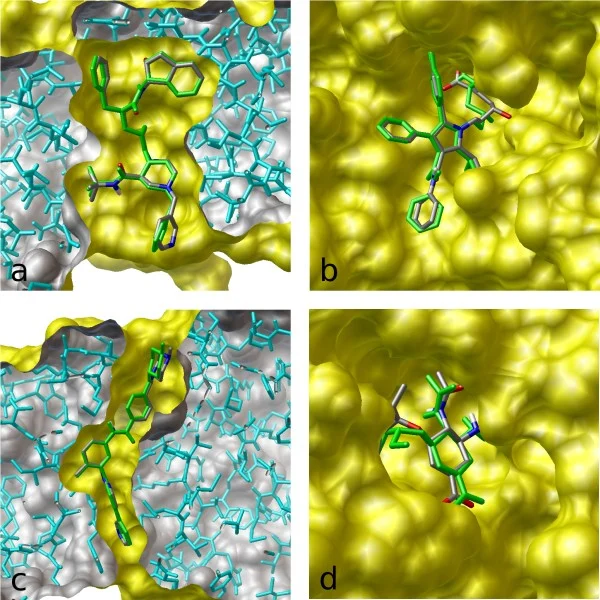
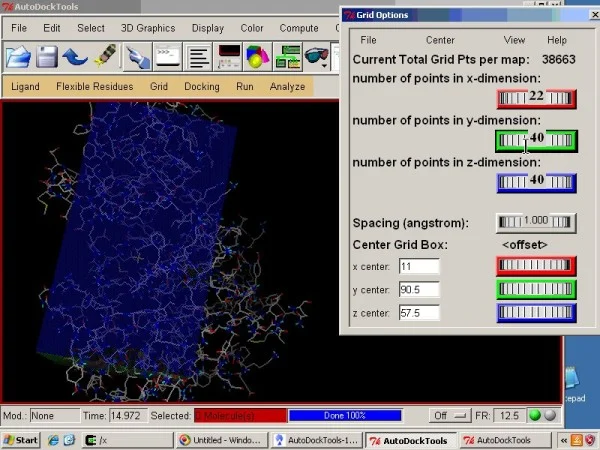
Editorial overview
Aggregated Overview
The published feature set includes multiple scoring modes, batch docking, specialized docking protocols, and Python bindings. It is free under Apache 2.0, but installation and workflow preparation require scientific-computing tools. No reliable public product-review ratings were verified, so sentiment and support scores have low confidence.
This profile combines documented product information and independent evidence where available. It is not a hands-on test unless TechZella explicitly identifies one.
Overview
AutoDock Vina is a molecular docking engine in the AutoDock software suite. It searches for ligand poses and scores predicted interactions with a receptor structure. The Forli Lab at Scripps Research maintains the project.
Researchers can use the command-line program, Python bindings, or integrate Vina into larger workflows. It is software for computational research, not a hosted drug-discovery service; preparing molecular structures and interpreting predictions may require other tools and domain expertise.
AutoDock Vina Decision Snapshot
A quick way to understand who this product may suit, where its limits matter, and which facts are most relevant before you compare alternatives.
Best suited toResearch teams and computational chemists who need a free, scriptable engine for small-molecule docking or virtual-screening workflows.
Look elsewhere ifBuyers seeking a hosted turnkey platform, built-in graphical workflow, or a complete ligand and receptor preparation suite may need additional tools, and should evaluate alternatives such as GNINA or smina instead.
PlatformsLinux, macOS, Windows
TechZella assessment7.5/10
AutoDock Vina — What Sets It Apart?
These are the product-specific differences that may matter when deciding whether the software fits your workflow. They are based on documented evidence rather than a universal ranking.
- Version 1.2.x combines Vina and AutoDock4 scoring options with batch and simultaneous multi-ligand docking.
- It includes specialized protocols such as hydrated docking and macrocycle support, alongside Python bindings.
- Apache License 2.0 permits broad use and modification subject to the license terms.
Editorial assessmentAutoDock Vina Pros & Cons
Pros
- Free and distributed under Apache License 2.0.
- Supports batch and multiple-ligand docking workflows.
- Offers several scoring options and specialized docking protocols.
- Python bindings support scripted workflows.
Cons
- The binary executable and Python bindings require separate installation.
- Documented Python bindings are limited to Linux and macOS.
- Requires molecular structure preparation and target-specific assessment.
- No official hosted service or end-user review ratings were verified.
AutoDock Vina Gotchas & Operational Limits
These are documented constraints or practical friction points that may matter before you adopt the product.
Installing the Python bindings does not install the Vina executable, and installing the executable does not install the bindings.
A scripted setup may require separate installation steps for the Python package and command-line application.
Evidence source ↗Docking score and pose predictions should be evaluated for the specific biological target.
A predicted pose or score alone does not establish experimental binding or suitability as a drug candidate.
Evidence source ↗AutoDock Vina Pricing & Plans
Open-source software
$0
Available under the Apache License, Version 2.0. No paid plans or official free-trial terms were found.
Check current pricing →Pricing may change. Verify current plans on the vendor's website.
Cost contextTotal Cost & Hidden Costs
Additional costs or implementation requirements that are documented in the available evidence.
License
The source code is available under Apache License 2.0; no paid product tier was identified.
Evidence source ↗Installation and onboarding
Users install binaries or build from source; Python workflows may require a separate binding installation and dependencies such as NumPy, Boost, and SWIG.
Evidence source ↗Hosting and compute
The documented installation is local. Compute hardware or external infrastructure costs are not included or publicly priced by the project.
Evidence source ↗AutoDock Vina Competitors & Alternatives
Compare similar products directly, then see which alternatives may make more sense when your requirements differ.
At a glance
Open Source SoftwareOnly factors supported by the available research are shown. The comparison is descriptive, not a ranking.
Direct competitors
These products address broadly similar requirements. The descriptions focus on documented reasons a buyer might compare them with AutoDock Vina.
GNINACore scoring approach: Adds convolutional-neural-network scoring and optimization to its molecular docking workflow.
sminaCore scoring approach: Fork of Vina with a focus on scoring-function development and energy minimization.
CapabilitiesAutoDock Vina Features
Docking and scoring
- Vina scoring function
- AutoDock4.2 scoring function
- Vinardo scoring function
- Flexible receptor side chains
Screening workflows
- Batch docking
- Simultaneous docking of multiple ligands
- Multi-core CPU support
Specialized docking
- Macrocycle support
- Hydrated docking
- Specialized metal coordination models
Programmatic access
- Python 3 bindings for Linux and macOS
- Command-line executable
- Source code
AutoDock Vina Specifications
| License | Apache License 2.0 |
|---|
| Latest release found | 1.2.7 |
|---|
| Primary workflow | Molecular docking and virtual screening |
|---|
| Python bindings | Python 3; Linux and macOS documented |
|---|
| Installation | Local binaries, source build, or Python package |
|---|
Exit planningMigration & Lock-In
Documented portability, standards, export, or switching considerations. No switching-cost score is shown unless the evidence supports one.
Data portability
The software reads and writes structure and docking files, including PDBQT output; workflows may also use other preparation and analysis tools.
Evidence source ↗Our evidence-based assessmentTechZella Score
A proprietary editorial score based on product capabilities, usability, value, performance, support and user sentiment evidence.
7.5/10Low confidence
The published feature set includes multiple scoring modes, batch docking, specialized docking protocols, and Python bindings. It is free under Apache 2.0, but installation and workflow preparation require scientific-computing tools. No reliable public product-review ratings were verified, so sentiment and support scores have low confidence.
Methodology v1.0. The assessment weighs feature coverage (25%), ease of use (15%), value for money (20%), performance (15%), support (10%) and user sentiment (15%), using researched product evidence and verified review evidence where available. It is a TechZella editorial assessment, not a direct user-review average.
Editorial transparency
Our Review Methodology
Key claims are linked to the sources used to verify them. This evidence record is separate from third-party user ratings.
TechZella evaluates software using documented product capabilities, pricing information, usability and value considerations, independent user evidence where available, and competitive context. The assessment is an editorial review, not a hands-on test unless one is explicitly identified. Our editorial assessment is based on 4 documented sources.
What TechZella adds- Version 1.2.x combines Vina and AutoDock4 scoring options with batch and simultaneous multi-ligand docking.
- It includes specialized protocols such as hydrated docking and macrocycle support, alongside Python bindings.
- Apache License 2.0 permits broad use and modification subject to the license terms.
Important limitations- The official documentation says the command-line binary and Python bindings are installed separately.
- Python bindings are documented for Linux and macOS, while release binaries are provided separately.
- The official manual cautions that predictive accuracy varies by target and recommends evaluation on the specific target.
Evidence-backed claimsAutoDock Vina is an open-source molecular docking and virtual-screening program.The project repository describes it as a docking and virtual-screening program and identifies its Apache 2.0 license.
View source ↗Verified 2026-11-10The project supports AutoDock4 scoring, batch docking, simultaneous multiple-ligand docking, hydrated docking, and macrocycle docking.The project README and the peer-reviewed version 1.2.0 paper describe these methods and capabilities.
View source ↗Verified 2026-11-10Python bindings and the command-line executable require separate installation steps.The installation documentation explicitly distinguishes the binding and binary installation processes.
View source ↗Verified 2026-11-10Docking prediction accuracy varies with the target.The official manual advises evaluating predictive accuracy against the user's particular target.
View source ↗Verified 2026-11-10 Common questionsAutoDock Vina FAQs
Answers begin with the clearest available response, followed by the context that helps you act on it.
Is AutoDock Vina free?
Yes. Its source code is distributed under the Apache License, Version 2.0.
Does AutoDock Vina have a Python API?
Yes. The project provides Python 3 bindings, documented for Linux and macOS.
Does installing the Python package install the Vina executable?
No. The official installation guide says the bindings and binary are separate installations.
Is AutoDock Vina a hosted service?
The official installation documentation describes local binaries, source builds, and Python bindings; no official hosted SaaS offering was identified.
Should docking scores be treated as experimental results?
No. The official manual says predictive accuracy varies by target and recommends target-specific evaluation.
Community feedback
Reviews
No reviews yet. Be the first to share your experience.
Write a Review
Please log in to submit a review.
Recently added Open Source Software