Editorial overview
Aggregated Overview
The platform combines engineering, warehousing, governance, and AI capabilities with cloud-provider choice and open table formats. Public G2 feedback is positive overall, while noting learning-curve and cost-management challenges. Scores are editorial assessments, not hands-on test results.
This profile combines documented product information and independent evidence where available. It is not a hands-on test unless TechZella explicitly identifies one.
Overview
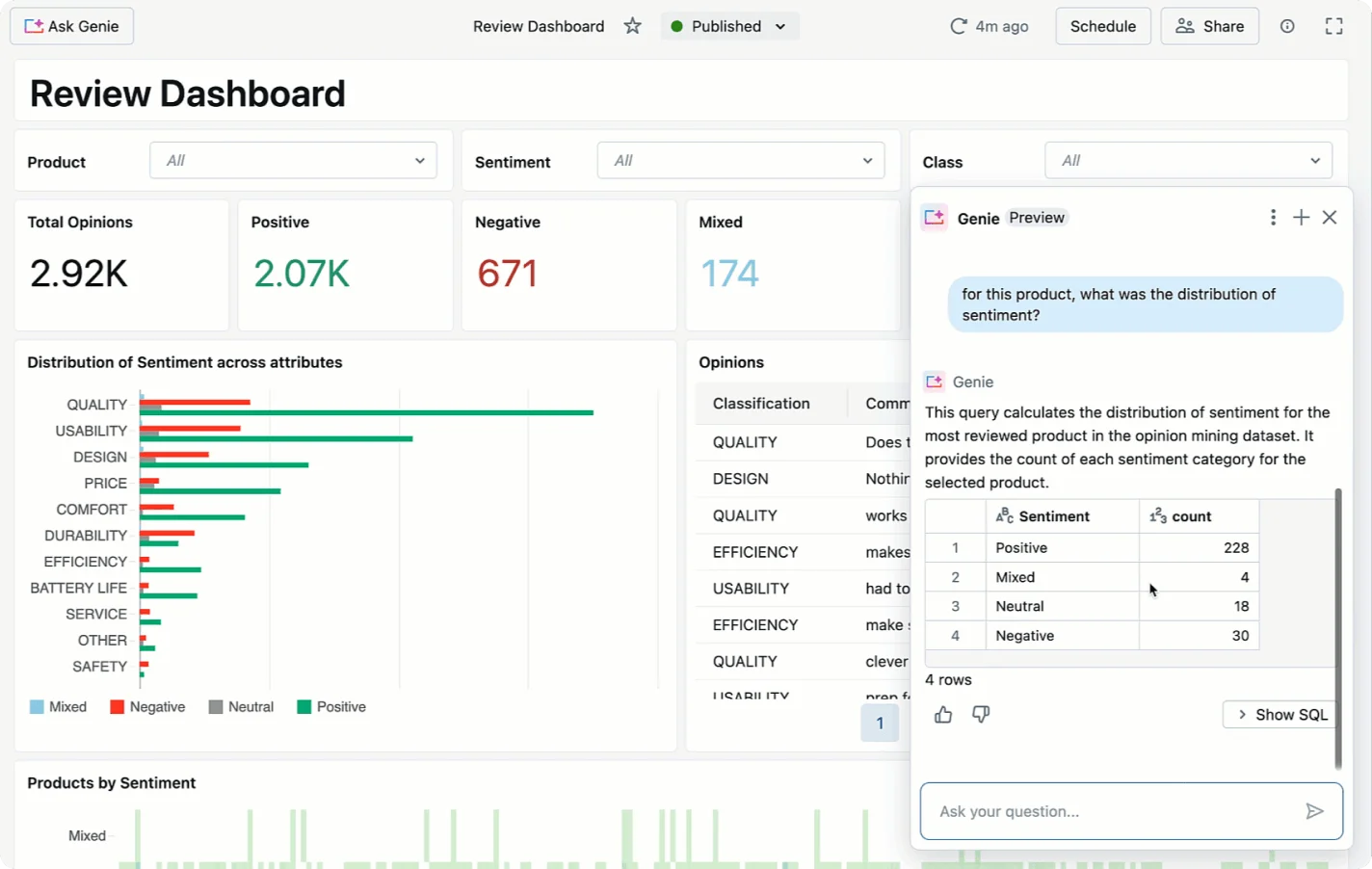
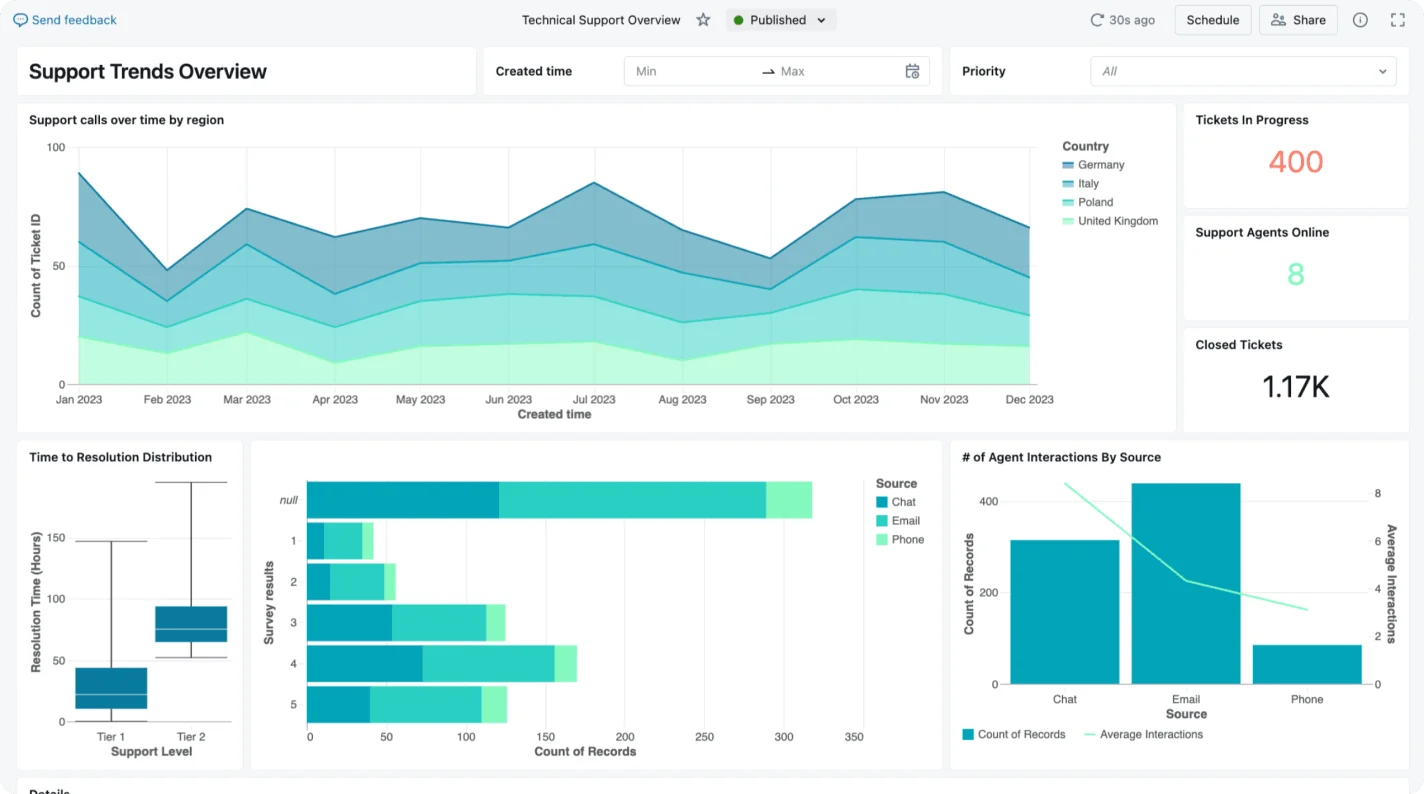
Databricks Lakehouse is a cloud data platform for engineering, SQL analytics, governance, data science, and AI workloads. It combines data lake and warehouse functions within a shared platform, with deployments available on AWS, Azure, and Google Cloud.
Its storage layer uses open table formats, including Delta Lake, and supports Spark-based batch and streaming workflows. The platform also connects to external BI, ingestion, transformation, and development tools. Teams should account for both Databricks usage charges and applicable cloud infrastructure costs.
Databricks Lakehouse Decision Snapshot
A quick way to understand who this product may suit, where its limits matter, and which facts are most relevant before you compare alternatives.
Best suited toData and AI teams that want to run data engineering, SQL analytics, streaming, governance, and machine-learning workloads on shared lakehouse data across AWS, Azure, or Google Cloud.
Look elsewhere ifTeams seeking a low-administration SQL-only warehouse or predictable fixed monthly pricing may prefer a narrower product; Databricks usage and cloud infrastructure charges depend on workload and configuration, and should evaluate alternatives such as Snowflake: comparable cloud data platform with consumption-based pricing and managed data warehousing; consider it when the required workflow centers on its warehouse and sharing capabilities. or Google BigQuery: managed Google Cloud analytics warehouse with serverless operations and on-demand or capacity-based pricing; consider it when the organization is centered on Google Cloud analytics. instead.
PlatformsAWS, Azure, Google Cloud, REST API, Web
TechZella assessment8.1/10
Databricks Lakehouse — What Sets It Apart?
These are the product-specific differences that may matter when deciding whether the software fits your workflow. They are based on documented evidence rather than a universal ranking.
- Combines batch, streaming, SQL analytics, data science, and AI workflows around lakehouse data.
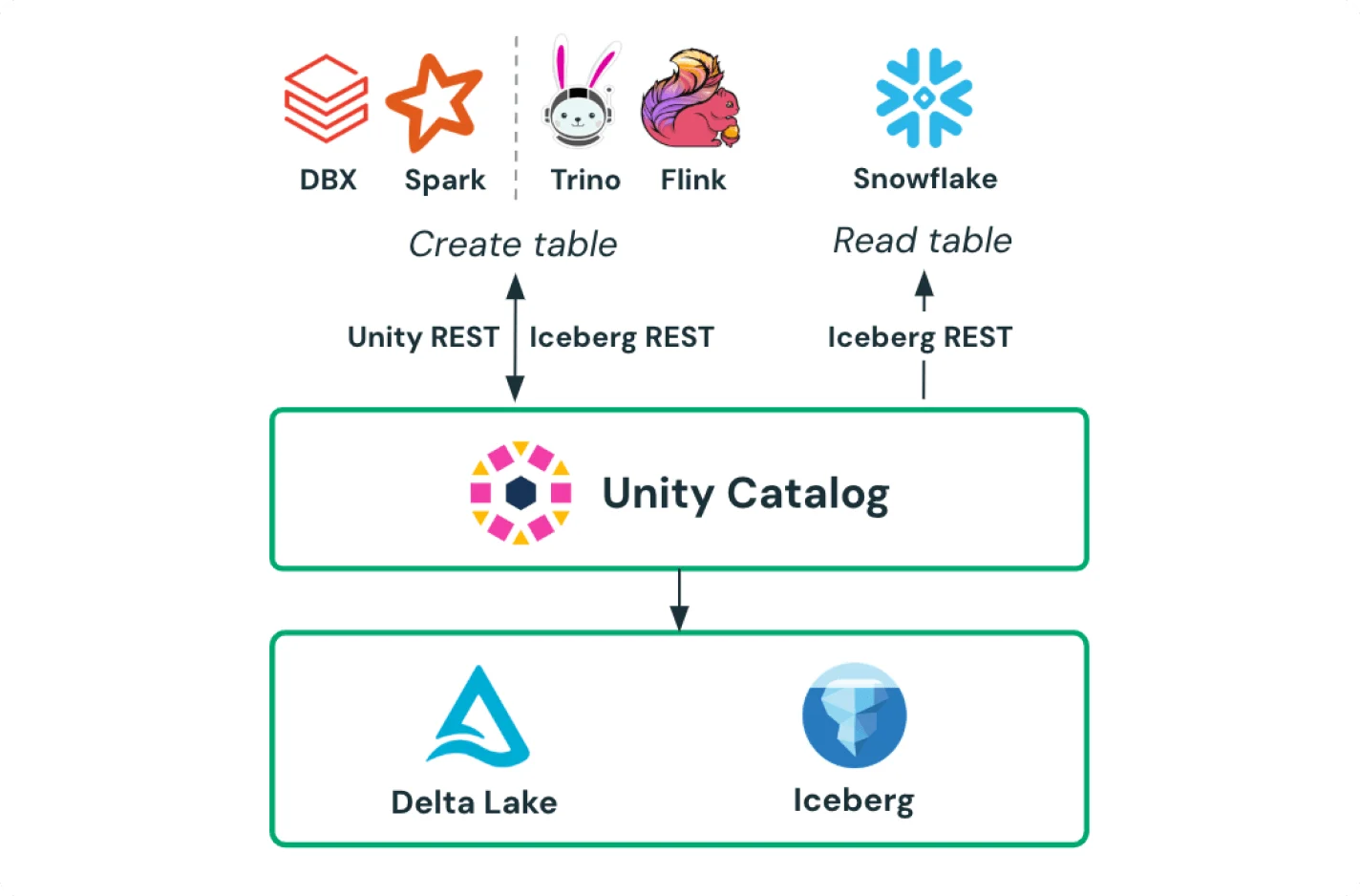
- Delta Lake provides an open table layer with ACID transactions and Spark compatibility; documentation also covers Apache Iceberg support.
- Offers deployment choices across AWS, Microsoft Azure, and Google Cloud, with a shared REST API reference.
Editorial assessmentDatabricks Lakehouse Pros & Cons
Pros
- Combines data engineering, warehousing, governance, streaming, data science, and AI workloads.
- Available across AWS, Azure, and Google Cloud.
- Open table formats support data portability and Spark-compatible workflows.
- Official integrations include BI, ingestion, and transformation products.
Cons
- Usage-based billing requires workload and cost monitoring.
- Cloud storage, networking, and infrastructure may add charges beyond platform usage.
- Public review summaries identify a learning curve for new users.
- Public pricing differs by workload, cloud provider, and region.
Databricks Lakehouse Gotchas & Operational Limits
These are documented constraints or practical friction points that may matter before you adopt the product.
Trial eligibility, credit amount, and credit expiry can depend on Databricks account determination; the trial can end when credits run out.
A trial budget is not necessarily a fixed amount for every account, so confirm the account's offer and expiration before planning a proof of concept.
Evidence source ↗Using a trial with the customer's cloud account can generate separate cloud-provider charges.
Databricks credits may not cover the underlying cloud resources used in the customer's account.
Evidence source ↗Databricks charges are usage-based, and storage, networking, and cloud infrastructure costs can vary separately.
Buyers should estimate both platform consumption and cloud-provider costs for representative workloads.
Evidence source ↗Databricks Lakehouse Pricing & Plans
Pay as you go
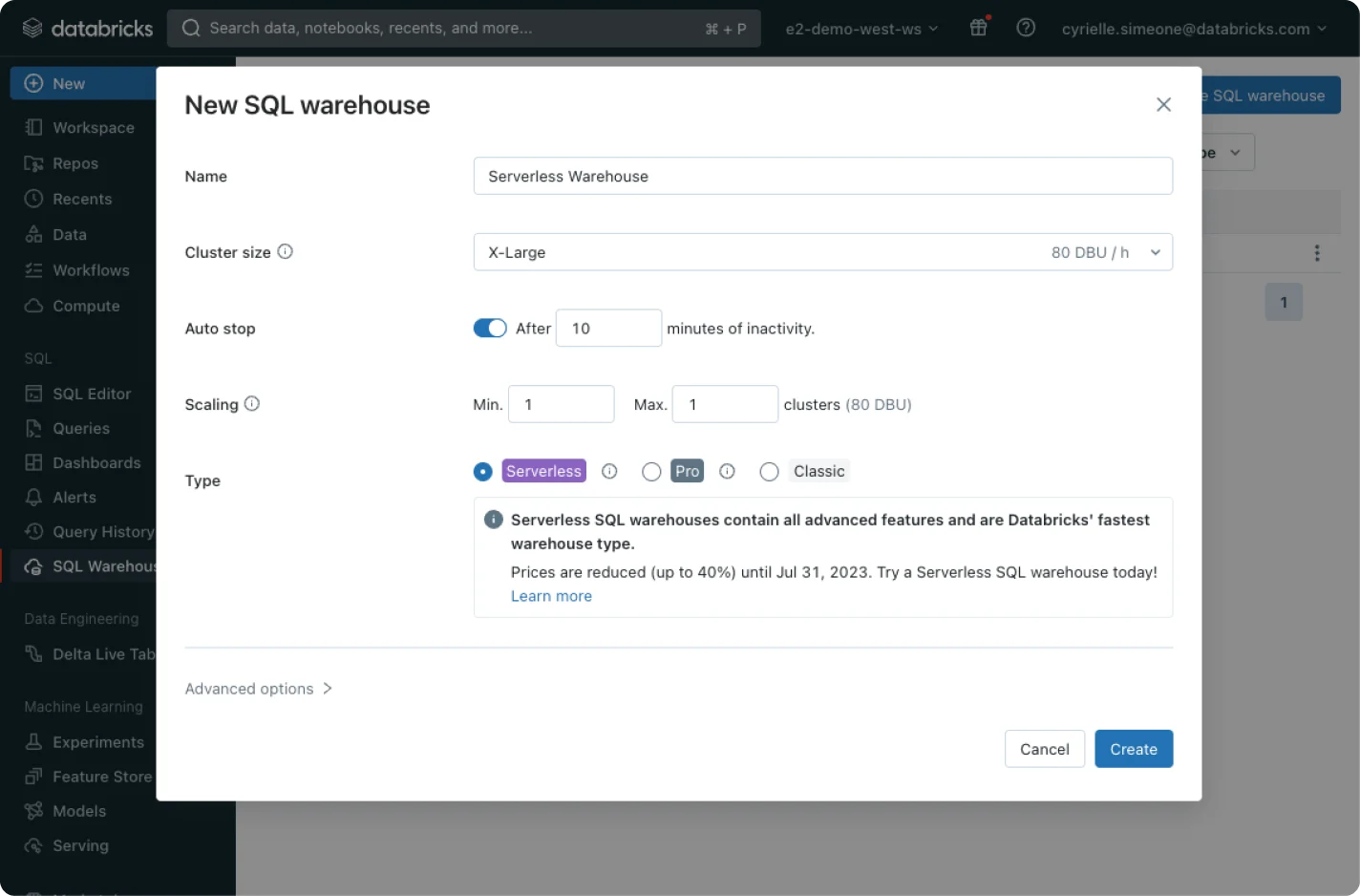
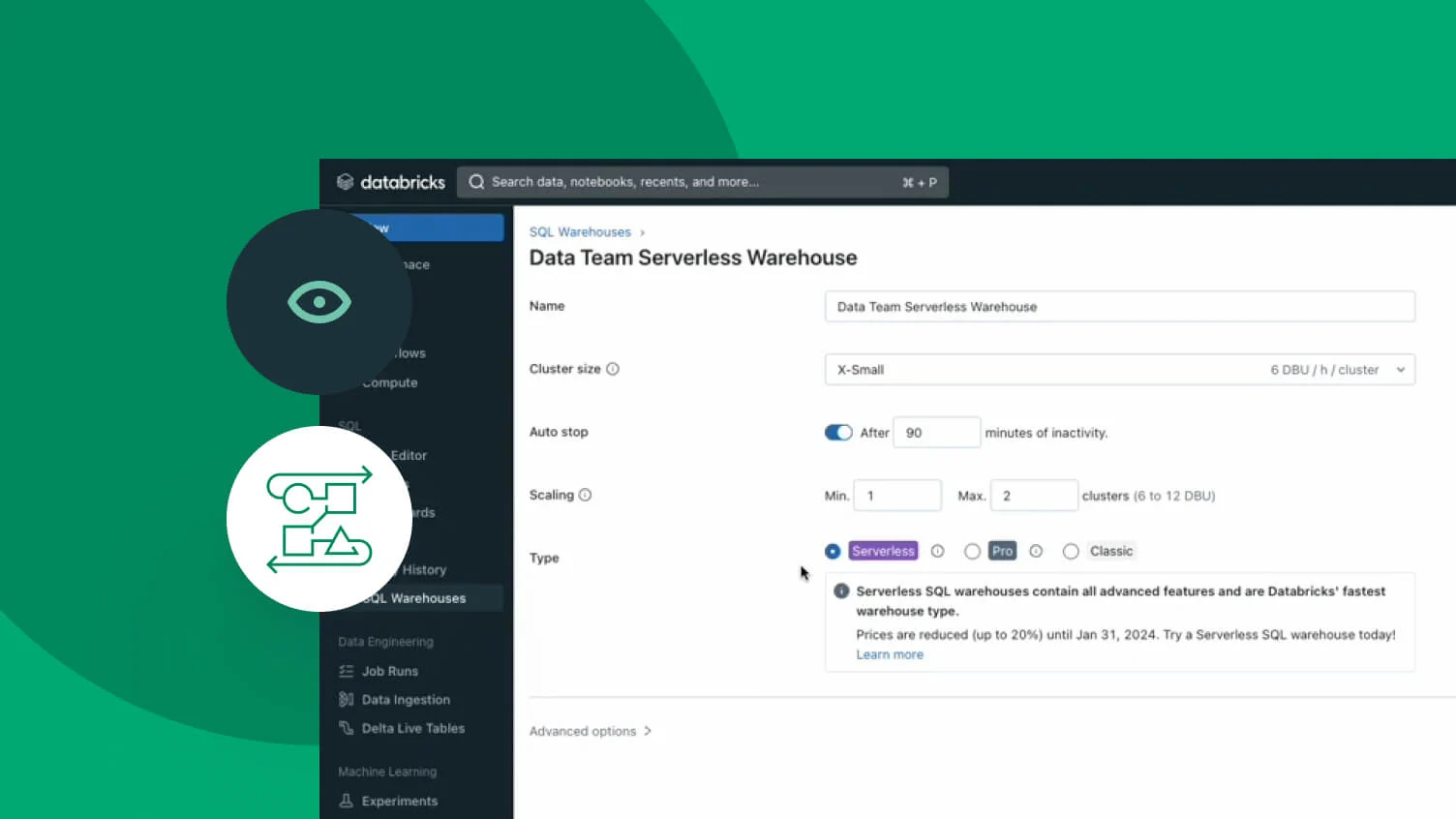
Starting at $0.22 / DBU for data warehousing
Usage-based
Rates vary by workload, cloud, region, and configuration. Cloud infrastructure and networking costs may also apply.
Check current pricing →Databricks Trial
Up to $400 in credits
Two weeks
Commercial evaluation offer; credit availability and eligibility are determined by Databricks.
Check current pricing →Free Edition
$0
Free
No-expiration account for learning and non-commercial use, with usage and feature limits.
Check current pricing →Pricing may change. Verify current plans on the vendor's website.
Cost contextTotal Cost & Hidden Costs
Additional costs or implementation requirements that are documented in the available evidence.
Implementation and onboarding
The public pricing page does not state a fixed implementation fee or onboarding duration. Buyers should estimate engineering, migration, governance setup, and validation effort for their workloads.
Evidence source ↗Hosting and infrastructure
Databricks usage is billed by platform services, while storage, networking, and related infrastructure costs vary by selected services and cloud provider. Trial users connecting their own cloud account can still pay the cloud provider.
Evidence source ↗Usage and commitments
Pay-as-you-go charges depend on service use and DBU or other applicable units; committed-use contracts may offer discounts, but require usage commitments. Workload and region affect listed prices.
Evidence source ↗Quick Comparison
Compare the product with documented alternatives across the factors that can change a buying decision. Each row is evidence-backed rather than a generic feature checklist.
Databricks Lakehouse vs. Snowflake
Documented comparisonDatabricks Lakehouse vs. Google BigQuery
Documented comparisonOnly factors supported by the available research are shown. The comparison is descriptive, not a ranking.
CapabilitiesDatabricks Lakehouse Features
Data and analytics
- Lakehouse data storage
- SQL data warehousing
- Batch and streaming pipelines
- Data ingestion and transformation
- Data science and machine-learning workflows
Governance and sharing
- Unity Catalog governance
- Data and AI asset management
- Delta Sharing
- Data lineage and access controls
Developer and integration
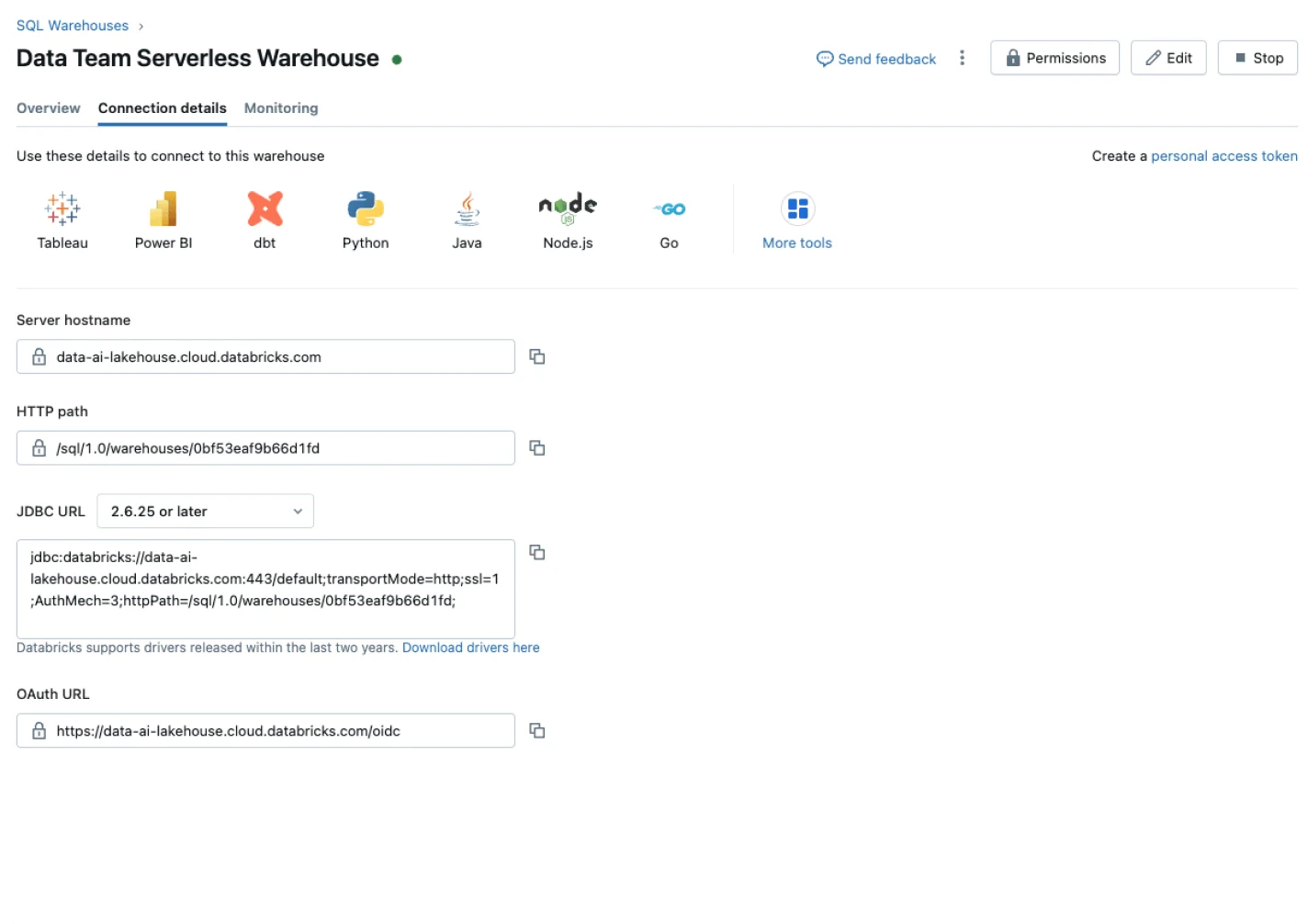
- Workspace REST APIs
- Python and SQL workflows
- Power BI and Tableau connectivity
- Partner integrations for ingestion, transformation, and machine learning
Databricks Lakehouse Specifications
| Deployment | Cloud service |
|---|
| Cloud providers | AWS, Microsoft Azure, Google Cloud |
|---|
| API | Workspace REST API |
|---|
| Storage formats | Delta Lake; Apache Iceberg supported |
|---|
| Pricing basis | Usage-based platform charges; cloud infrastructure may be billed separately |
|---|
| Free trial | Two-week commercial trial; up to $400 in credits subject to eligibility |
|---|
| Free edition | No-expiration learning and non-commercial account with usage limits |
|---|
Alternatives
Snowflake is a comparable cloud data platform with consumption-based compute, storage, and data-transfer pricing. It may suit teams focused on managed warehouse workflows and Snowflake’s data-sharing ecosystem; Databricks may suit teams needing its Spark-centered engineering, streaming, and AI workload range.
Google BigQuery is a managed Google Cloud analytics platform with serverless operations and on-demand or capacity pricing. It may suit organizations centered on Google Cloud and usage metered by scanned data or reserved slots; Databricks may suit teams requiring its lakehouse architecture across AWS, Azure, and Google Cloud.
Migration & Lock-In
Documented portability, standards, export, or switching considerations. No switching-cost score is shown unless the evidence supports one.
Data portability
Lakehouse storage supports open table formats including Delta Lake and Apache Iceberg; moving workloads can still require changes to jobs, governance, integrations, and cloud configuration.
Evidence source ↗Our evidence-based assessmentTechZella Score
A proprietary editorial score based on product capabilities, usability, value, performance, support and user sentiment evidence.
8.1/10Moderate confidence
The platform combines engineering, warehousing, governance, and AI capabilities with cloud-provider choice and open table formats. Public G2 feedback is positive overall, while noting learning-curve and cost-management challenges. Scores are editorial assessments, not hands-on test results.
Methodology v1.0. The assessment weighs feature coverage (25%), ease of use (15%), value for money (20%), performance (15%), support (10%) and user sentiment (15%), using researched product evidence and verified review evidence where available. It is a TechZella editorial assessment, not a direct user-review average.
Editorial transparency
Our Review Methodology
Key claims are linked to the sources used to verify them. This evidence record is separate from third-party user ratings.
TechZella evaluates software using documented product capabilities, pricing information, usability and value considerations, independent user evidence where available, and competitive context. The assessment is an editorial review, not a hands-on test unless one is explicitly identified. Our editorial assessment is based on 6 documented sources.
What TechZella adds- Combines batch, streaming, SQL analytics, data science, and AI workflows around lakehouse data.
- Delta Lake provides an open table layer with ACID transactions and Spark compatibility; documentation also covers Apache Iceberg support.
- Offers deployment choices across AWS, Microsoft Azure, and Google Cloud, with a shared REST API reference.
Important limitations- Pricing varies by workload, cloud provider, region, and infrastructure usage, so forecasting requires workload estimates.
- A Databricks trial connected to a customer's cloud account can still incur charges from that cloud provider.
- Public G2 review summaries flag a learning curve and the need to monitor usage costs; these are review themes, not independently tested findings.
Evidence-backed claimsDatabricks Lakehouse spans warehousing, data engineering, data governance, sharing, analytics, data science, and AI.The product page describes these workloads as part of the Lakehouse offering.
View source ↗Verified 2026-11-07Databricks offers usage-based pricing and lists data-warehousing rates starting at $0.22 per DBU.The official pricing page describes pay-as-you-go rates and a starting rate for data warehousing.
View source ↗Verified 2026-11-07Databricks Lakehouse is available across AWS, Azure, and Google Cloud.Official product and documentation pages describe availability across the three cloud environments.
View source ↗Verified 2026-11-07Databricks exposes workspace-level REST APIs.The API reference documents workspace REST operations and cloud-specific authentication methods.
View source ↗Verified 2026-11-07Delta Lake supports ACID transactions and Spark-compatible batch and streaming operations.Databricks documentation describes Delta Lake's transaction log, Spark API compatibility, and Structured Streaming integration.
View source ↗Verified 2026-11-07The commercial Databricks trial is distinct from its non-commercial Free Edition.The signup comparison distinguishes the two-week business evaluation trial from the no-expiration Free Edition for learning and non-commercial use.
View source ↗Verified 2026-11-07 Independent review sources
Databricks Lakehouse Ratings & Reviews
Ratings are published by the respective review platforms and may change over time.
Common questionsDatabricks Lakehouse FAQs
Answers begin with the clearest available response, followed by the context that helps you act on it.
Does Databricks offer a free trial?
Yes. Databricks lists a two-week commercial evaluation trial with up to $400 in credits, subject to account eligibility and offer terms. A separate Free Edition is available for learning and non-commercial use.
Does a Databricks trial include cloud infrastructure charges?
Not necessarily. The pricing page says customers who connect Databricks to their own cloud account may still be charged by that cloud provider for resources.
How is Databricks priced?
The platform offers pay-as-you-go pricing based on services used, with DBUs used to measure many workloads. Storage, networking, and cloud infrastructure may affect total cost.
Which clouds support Databricks Lakehouse?
Databricks documents support for AWS, Microsoft Azure, and Google Cloud.
Does Databricks have a REST API?
Yes. Databricks publishes a workspace REST API reference, including operations for managing workspace resources.
Community feedback
Reviews
No reviews yet. Be the first to share your experience.
Write a Review
Please log in to submit a review.
Recently added Artificial Intelligence Software