
The 14-day Agentic Free Trial runs on preloaded sample data and does not accept customer data.
Teams evaluating ingestion and production-source setup need the separate AWS Marketplace trial or a sales-assisted evaluation.
Evidence source ↗
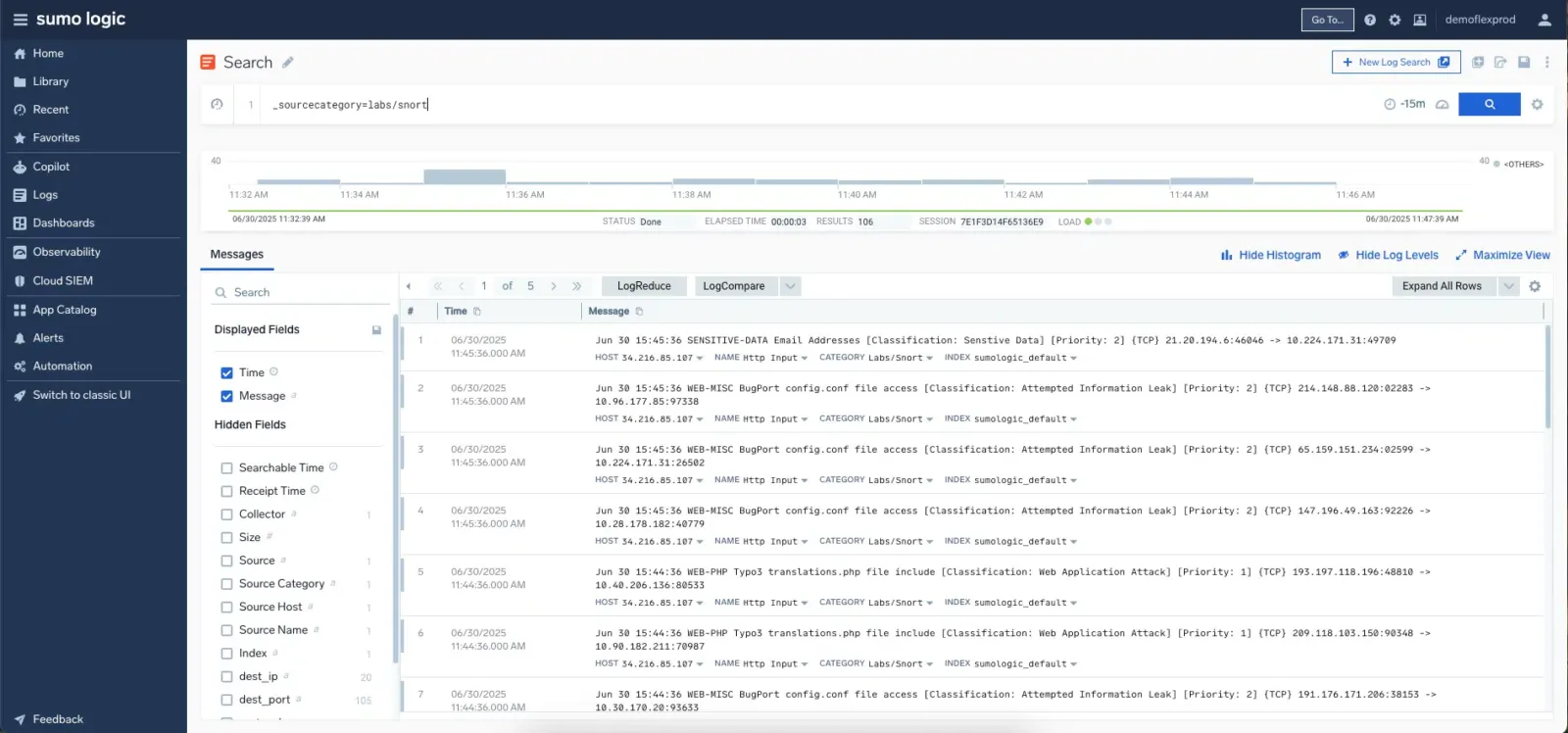
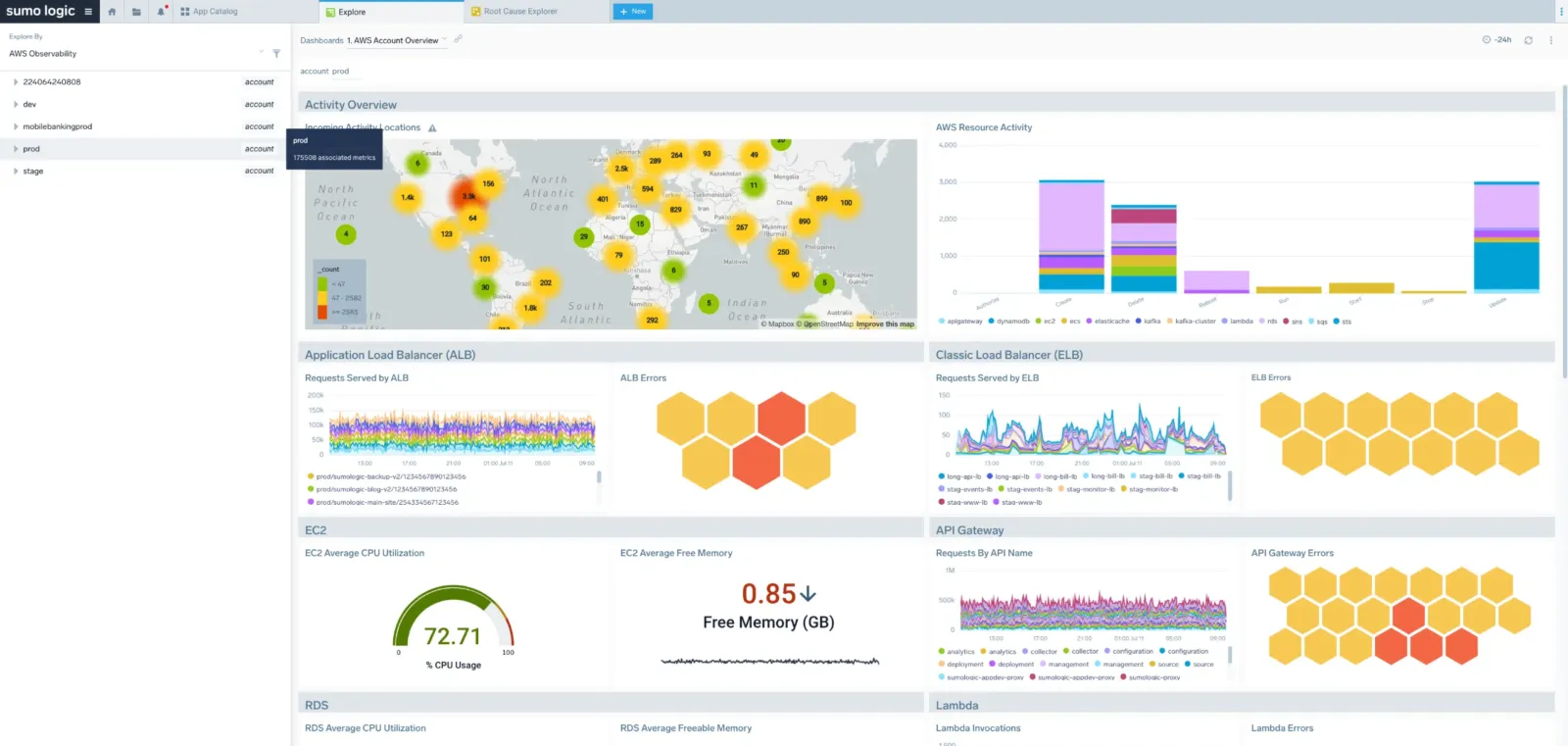
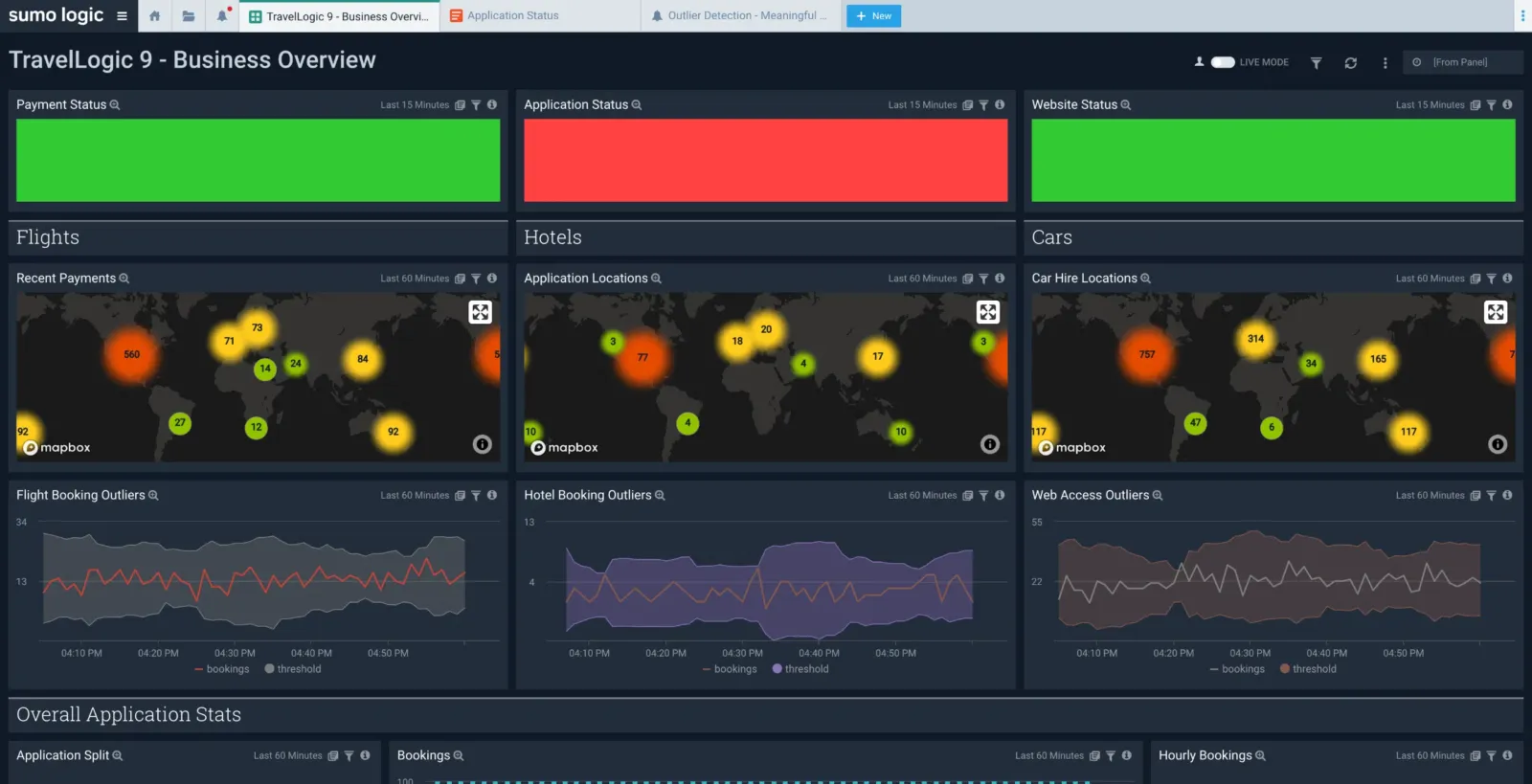
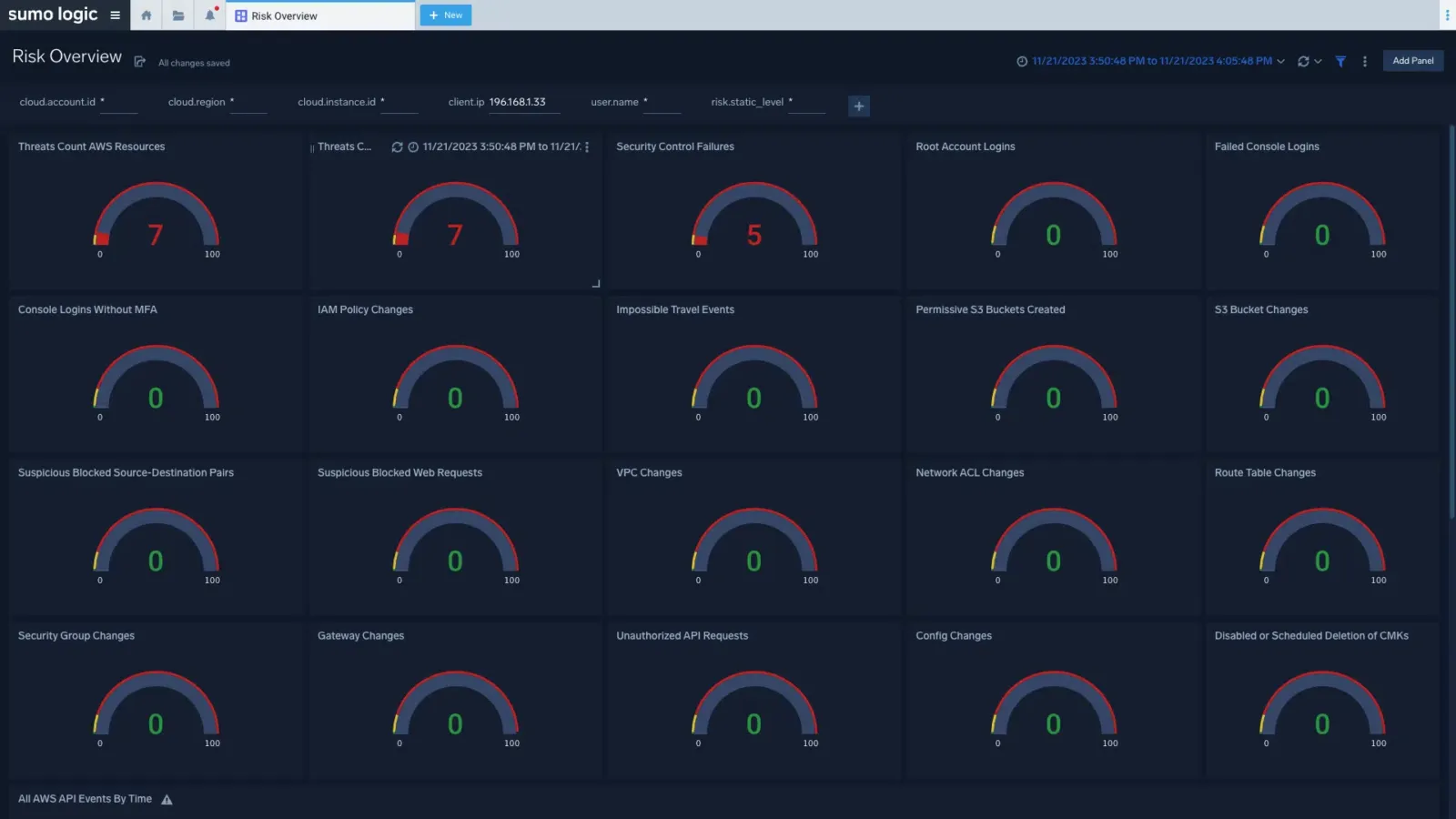
Sumo Logic is a cloud-hosted analytics platform for logs, metrics, and traces, with observability, security analytics, and SIEM capabilities.
The platform combines log analytics, observability, and security capabilities with extensive integrations and APIs. Pricing depends on plan and usage, and implementation can require collector setup and data-source configuration.
This profile combines documented product information and independent evidence where available. It is not a hands-on test unless TechZella explicitly identifies one.
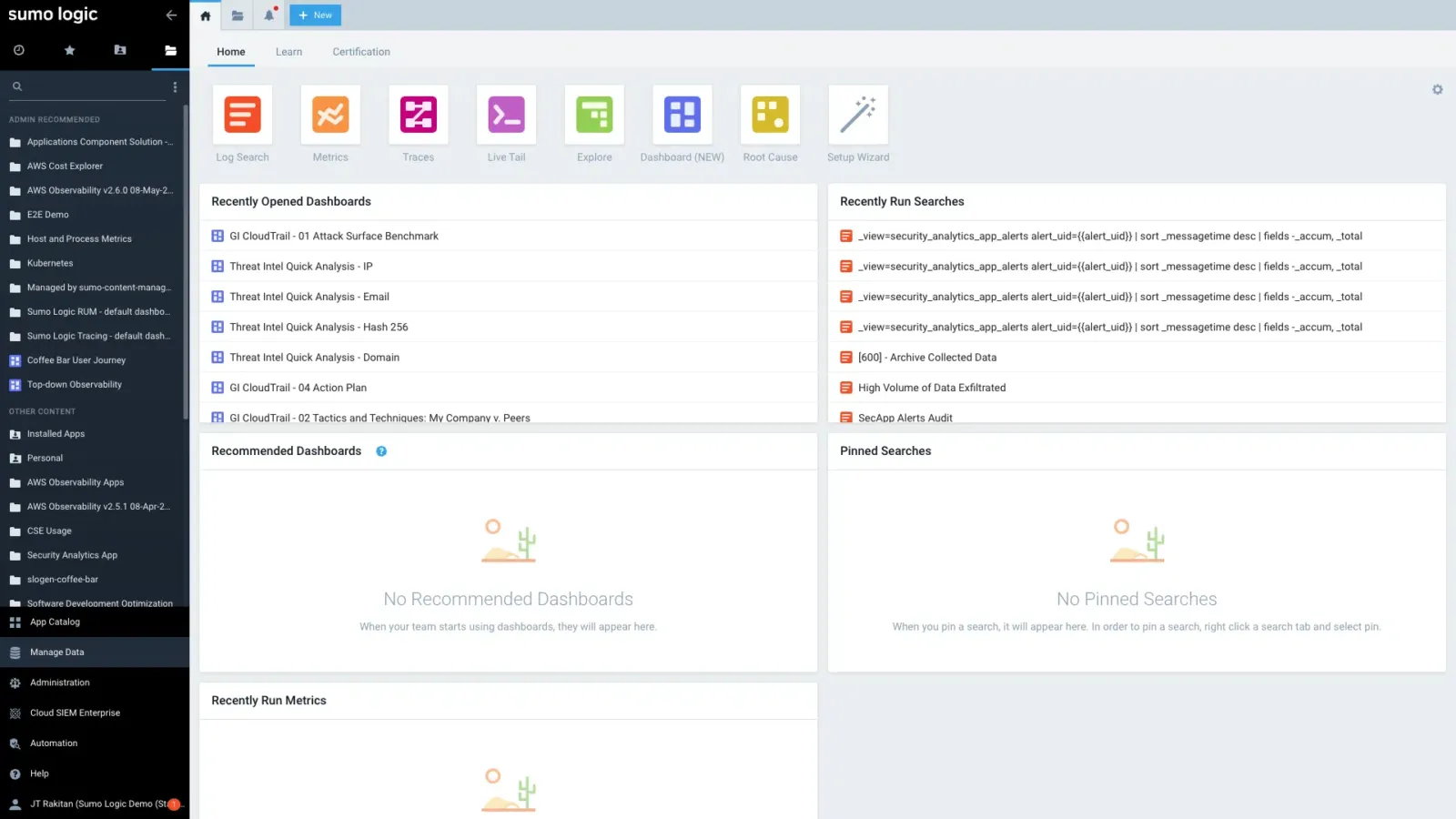
Sumo Logic is a SaaS platform for collecting and analyzing logs, metrics, and traces. It supports observability and security workflows, including SIEM and SOAR capabilities.
Teams can collect data using Sumo-hosted collectors, locally installed collectors, or an OpenTelemetry distribution. Its API and integration catalog support connections to cloud services, applications, and security tools.
A quick way to understand who this product may suit, where its limits matter, and which facts are most relevant before you compare alternatives.
Security and operations teams seeking shared log analytics, monitoring, and security-investigation workflows across cloud and hybrid environments.
Teams requiring a fully self-hosted analytics platform or a free account that accepts ongoing production data; the Free account does not support ingestion, and should evaluate alternatives such as Datadog: compare when a team wants published per-unit log ingestion and indexed-event prices, while Sumo Logic provides credit-based options across data and security workflows. or Splunk Observability Cloud: compare when a buyer wants listed per-host observability prices, while Sumo Logic packages observability and security capabilities across its account plans. instead.
AWS, Cloud, Kubernetes, SaaS, Web
7.9/10
These are the product-specific differences that may matter when deciding whether the software fits your workflow. They are based on documented evidence rather than a universal ranking.
These are documented constraints or practical friction points that may matter before you adopt the product.
Teams evaluating ingestion and production-source setup need the separate AWS Marketplace trial or a sales-assisted evaluation.
Evidence source ↗It is useful for limited exploration after a trial, but not as a permanent free log-ingestion tier.
Evidence source ↗Automation scripts configured for the wrong regional endpoint can fail even when credentials are correct.
Evidence source ↗For security-sensitive software, TechZella focuses on documented architecture, authentication, data handling, deployment and privacy details that can affect a buying decision. This is product research, not an independent security audit.
| Deployment | SaaS |
|---|---|
| Compliance | Vendor lists PCI, SOC 2 Type 2, CSA, ISO, and HIPAA-related platform coverage; confirm applicable scope with Sumo Logic |
| Regional deployments | Includes US, Canada, Europe, Australia, Japan, Korea, Switzerland, and US federal environments |
The account documentation lists these six account types and describes their plan distinctions.
Source ↗The announcement describes both apps and says they were available in the App Catalog.
Source ↗Security claims are presented only when supported by documented sources. The presence of this section does not constitute a penetration test, certification or independent security audit.
Free account with no ingestion, seven-day log retention, and up to three users.
Check current pricing →Paid, credits-based option for foundational log analytics and monitoring; pricing depends on configuration and usage.
Check current pricing →Enterprise account options with product capabilities and activation requirements that vary by package.
Check current pricing →No-credit-card trial using preloaded sample data; customer-data ingestion is unavailable in this trial.
Check current pricing →Separate trial that allows users to ingest and analyze their own data; afterward, the pay-as-you-go subscription bills monthly based on actual usage.
Check current pricing →Pricing may change. Verify current plans on the vendor's website.
Compare the product with documented alternatives across the factors that can change a buying decision. Each row is evidence-backed rather than a generic feature checklist.
| Decision factor | Sumo Logic | Datadog |
|---|---|---|
| Core scope | Combines log analytics, observability, and security capabilities on one SaaS platform. | Offers observability and security products, with logs priced through ingestion and indexed-event components. Source ↗ |
| Pricing model | Credit-based plans track consumption across ingestion, storage, and metrics; some configurations use scan-based Flex pricing. | Publishes unit rates for log ingestion and indexed log events, with retention-dependent indexed-event rates. Source ↗ |
| Published price visibility | The Sumo Logic pricing page provides plan details and a configurable estimate, but does not provide a universal fixed plan price. | The public pricing page lists per-GB ingestion and per-million indexed-event prices. Source ↗ |
| Decision factor | Sumo Logic | Splunk Observability Cloud |
|---|---|---|
| Core scope | Brings log analytics, SIEM, and observability features together in its platform and plan portfolio. | Splunk Observability Cloud focuses on monitoring and correlating metrics, traces, and logs; Splunk lists security products separately. Source ↗ |
| Pricing model | Uses credit-based and configurable usage models, with plan and regional details affecting cost. | Lists host-based Observability Cloud plans with monthly per-host prices. Source ↗ |
| Published price visibility | Does not publish a single fixed price for all Sumo Logic configurations. | Lists Observability Cloud starting prices of $15 per host monthly for Infrastructure, $60 for App & Infra, and $75 for End-to-End, billed annually. Source ↗ |
Only factors supported by the available research are shown. The comparison is descriptive, not a ranking.

| Deployment | SaaS |
|---|---|
| User interface | Browser-based web application |
| Collection methods | Hosted collectors, installed collectors, and OpenTelemetry distribution |
| Supported collector environments | Linux, macOS, Windows, Kubernetes |
| API | REST APIs with deployment-specific endpoints and OpenAPI documentation |
| Integrations | Apps, automation, Cloud SIEM integrations, collectors, partner integrations, and webhooks |
| Free account limits | No ingestion; seven-day log retention; three users; deletion after 90 days if not upgraded |
| Compliance | Vendor lists PCI, SOC 2 Type 2, CSA, ISO, and HIPAA-related platform coverage; confirm applicable scope with Sumo Logic |
| Regional deployments | Includes US, Canada, Europe, Australia, Japan, Korea, Switzerland, and US federal environments |
Verified installation, hosting, administration, or environment details that can affect implementation.
| Service hosting | SaaS platform; Sumo Logic hosts the service and hosted collectors in AWS. Source ↗ |
|---|---|
| Data collection | Customers can use hosted collectors, installed collectors, or the OpenTelemetry distribution on supported environments. Source ↗ |
| Regional deployments | The API documentation lists deployments including US, Canada, Europe, Australia, Japan, Korea, Switzerland, and a US federal environment. Source ↗ |
Datadog may suit teams that prefer published per-unit log-ingestion and indexed-event pricing. Splunk Observability Cloud may suit buyers comparing host-based observability plans with listed per-host starting prices.
Both products overlap with Sumo Logic in log analytics and observability, but their published pricing units and product packaging differ. Compare actual workloads, retention, and security requirements before treating headline rates as equivalent.
Documented portability, standards, export, or switching considerations. No switching-cost score is shown unless the evidence supports one.
Installed collectors can forward raw data to external destinations using syslog or a generic REST API; the public documentation does not describe a complete migration service.
Evidence source ↗A proprietary editorial score based on product capabilities, usability, value, performance, support and user sentiment evidence.
The platform combines log analytics, observability, and security capabilities with extensive integrations and APIs. Pricing depends on plan and usage, and implementation can require collector setup and data-source configuration.
Methodology v1.0. The assessment weighs feature coverage (25%), ease of use (15%), value for money (20%), performance (15%), support (10%) and user sentiment (15%), using researched product evidence and verified review evidence where available. It is a TechZella editorial assessment, not a direct user-review average.
Key claims are linked to the sources used to verify them. This evidence record is separate from third-party user ratings.
TechZella evaluates software using documented product capabilities, pricing information, usability and value considerations, independent user evidence where available, and competitive context. The assessment is an editorial review, not a hands-on test unless one is explicitly identified. Our editorial assessment is based on 5 documented sources.
The account documentation lists these six account types and describes their plan distinctions.
View source ↗Verified 2026-11-08The plan documentation lists these account limits and states that Free accounts are deleted after 90 days if not upgraded.
View source ↗Verified 2026-11-08The sign-up guide states that this trial has no setup or ingestion of customer data; a distinct AWS Marketplace option offers a 30-day trial for customer data.
View source ↗Verified 2026-11-08The API guide documents regional endpoints and access-key authentication; API references use OpenAPI.
View source ↗Verified 2026-11-08Its collector documentation describes hosted and installed collectors and an OpenTelemetry distribution.
View source ↗Verified 2026-11-08The announcement describes both apps and says they were available in the App Catalog.
View source ↗Verified 2026-11-08Answers begin with the clearest available response, followed by the context that helps you act on it.
No reviews yet. Be the first to share your experience.
Please log in to submit a review.