Editorial overview
Aggregated Overview
The official documentation verifies multiple disc formats, save states, rewind, and rendering options, but also notes renderer issues and setup requirements. No reputable public review rating or review-count evidence was verified; scores are editorial assessments, not user ratings.
This profile combines documented product information and independent evidence where available. It is not a hands-on test unless TechZella explicitly identifies one.
Overview
Beetle PSX is a Mednafen-derived PlayStation emulator core built for the libretro API. It is generally used through RetroArch or another compatible frontend, rather than as a standalone application.
The standard core focuses on software rendering and adds PGXP subpixel precision and resolution scaling. Libretro documents a separate Beetle PSX HW core for hardware rendering. These variants have different rendering options and requirements.
Beetle PSX Decision Snapshot
A quick way to understand who this product may suit, where its limits matter, and which facts are most relevant before you compare alternatives.
Best suited toRetroArch users seeking a PlayStation core with an accuracy-focused software renderer, PGXP subpixel precision, and support for several disc-image formats.
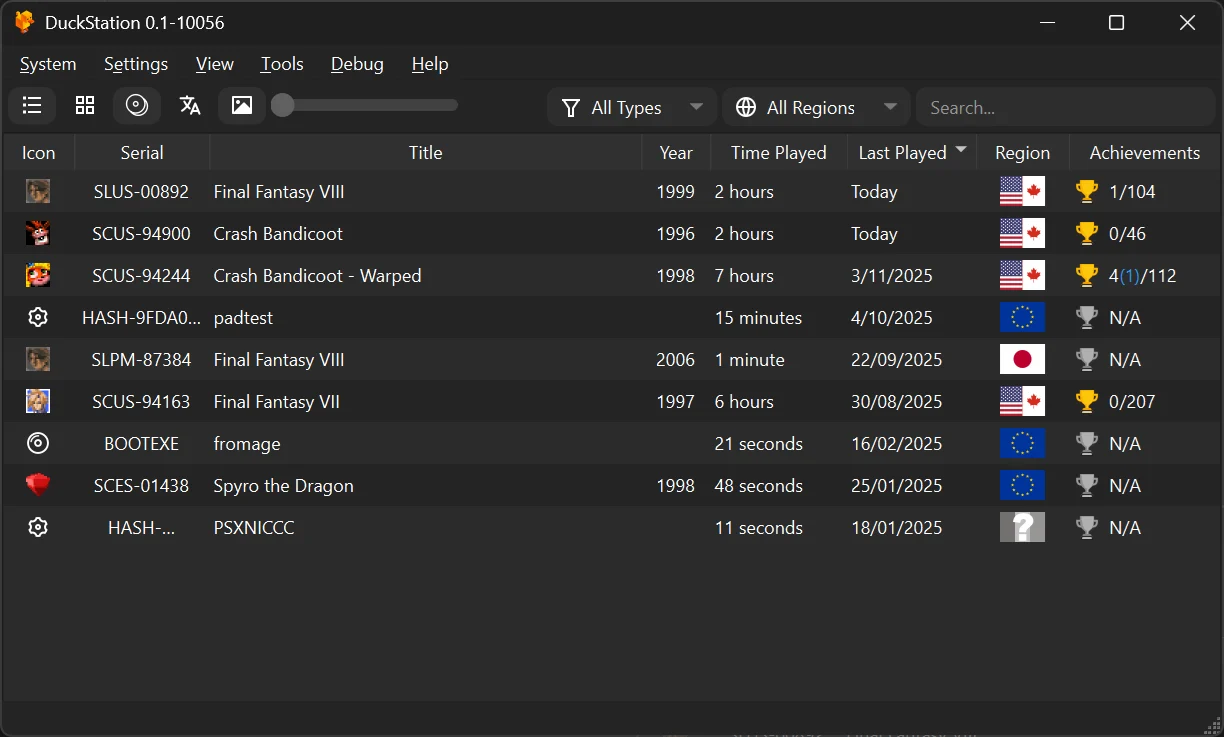
Look elsewhere ifUsers who need built-in netplay, a standalone emulator interface, or dependable hardware-renderer enhancements should assess other options; Beetle PSX does not support netplay, and its documentation records rendering caveats, and should evaluate alternatives such as DuckStation or PCSX ReARMed instead.
PlatformsLinux, macOS, Windows
TechZella assessment7.1/10
Beetle PSX — What Sets It Apart?
These are the product-specific differences that may matter when deciding whether the software fits your workflow. They are based on documented evidence rather than a universal ranking.
- The standard Beetle PSX core uses a software renderer; a separate Beetle PSX HW core provides OpenGL and Vulkan rendering.
- The project adds support for PBP and CHD disc images, software-renderer resolution scaling, and PGXP subpixel precision to its Mednafen-derived core.
Editorial assessmentBeetle PSX Pros & Cons
Pros
- Free and GPLv2-licensed.
- Supports PBP and CHD in addition to other documented PlayStation formats.
- Includes a software renderer with internal resolution scaling and PGXP subpixel precision.
- Supports save states, rewind, controller remapping, rumble, and disc control.
Cons
- Requires a compatible libretro frontend rather than offering a documented standalone interface.
- The standard Beetle PSX core does not have hardware rendering.
- The core does not support netplay.
- The separate HW renderer has documented compatibility and graphics-output caveats.
Beetle PSX Gotchas & Operational Limits
These are documented constraints or practical friction points that may matter before you adopt the product.
The core documentation lists cue, toc, m3u, ccd, exe, pbp, and chd formats. For disc images using BIN/CUE, the cue sheet must describe the tracks.
A user with a disc image may need to prepare or select the corresponding cue sheet rather than simply opening an arbitrary file.
Evidence source ↗The core supports an included OpenBIOS fallback, while user-supplied regional BIOS files are also supported.
Users should not assume a Sony BIOS file is bundled or required in every configuration; regional games may require the matching BIOS to be supplied.
Evidence source ↗Libretro documents that hardware-renderer enhancements can have bugs, and that the HW renderer has issues with interlacing shaders and CRT output.
Users prioritizing rendering enhancements or CRT display workflows may need to test settings or select the software renderer.
Evidence source ↗Beetle PSX Pricing & Plans
Pricing may change. Verify current plans on the vendor's website.
Cost contextTotal Cost & Hidden Costs
The sticker price is rarely the whole cost. TechZella did not find published figures for the items below in the sources reviewed, so confirm them with the vendor before budgeting.
Implementation time
Not publicly documented. Ask for a typical onboarding and migration timeline for a team of your size, and whether paid onboarding is required.
Hosting & infrastructure
Not publicly documented for this product. For SaaS, hosting is normally part of the subscription; for self-hosted or hybrid deployments, budget for servers, backups, security patching and admin time.
Hidden fees & add-ons
No overage, add-on or premium-support fees were documented in the reviewed sources. Request a written quote that lists usage limits, minimum seats, integrations, support tiers and renewal terms.
Beetle PSX Competitors & Alternatives
Compare similar products directly, then see which alternatives may make more sense when your requirements differ.
Direct competitors
These products address broadly similar requirements. The descriptions focus on documented reasons a buyer might compare them with Beetle PSX.
CapabilitiesBeetle PSX Features
Emulation and graphics
- Software renderer
- Software-renderer internal resolution scaling
- PGXP subpixel precision
- Separate Beetle PSX HW variant with OpenGL and Vulkan renderer options
Media and gameplay
- Supports cue, toc, m3u, ccd, exe, pbp, and chd extensions
- Memory-card saves and save states
- Rewind
- Controller remapping and rumble
- Disc control
Beetle PSX Specifications
| Product type | PlayStation emulator core for the libretro API |
|---|
| License | GPLv2 |
|---|
| Platforms | Linux, Windows, OSX (listed in documentation) |
|---|
| Frontend | RetroArch or another compatible libretro frontend |
|---|
| Integrations | libretro frontend compatibility; RetroArch is documented |
|---|
| API | libretro API implementation; no separate user-facing API documented |
|---|
| Free trial | Not applicable; software is free |
|---|
| Supported formats | CUE, TOC, M3U, CCD, EXE, PBP, CHD |
|---|
| BIOS | User-supplied BIOS supported; OpenBIOS fallback documented |
|---|
Our evidence-based assessmentTechZella Score
A proprietary editorial score based on product capabilities, usability, value, performance, support and user sentiment evidence.
7.1/10Low confidence
The official documentation verifies multiple disc formats, save states, rewind, and rendering options, but also notes renderer issues and setup requirements. No reputable public review rating or review-count evidence was verified; scores are editorial assessments, not user ratings.
Methodology v1.0. The assessment weighs feature coverage (25%), ease of use (15%), value for money (20%), performance (15%), support (10%) and user sentiment (15%), using researched product evidence and verified review evidence where available. It is a TechZella editorial assessment, not a direct user-review average.
Editorial transparency
Our Review Methodology
Key claims are linked to the sources used to verify them. This evidence record is separate from third-party user ratings.
TechZella evaluates software using documented product capabilities, pricing information, usability and value considerations, independent user evidence where available, and competitive context. The assessment is an editorial review, not a hands-on test unless one is explicitly identified. Our editorial assessment is based on 3 documented sources.
What TechZella adds- The standard Beetle PSX core uses a software renderer; a separate Beetle PSX HW core provides OpenGL and Vulkan rendering.
- The project adds support for PBP and CHD disc images, software-renderer resolution scaling, and PGXP subpixel precision to its Mednafen-derived core.
Important limitations- The core is a libretro component, rather than a documented standalone application, and its listed operating systems are Linux, OSX, and Windows.
- Netplay is not supported by the core.
- The standard core lacks hardware rendering; the separate HW variant has documented renderer issues and additional graphics API requirements.
Evidence-backed claimsBeetle PSX is a port or fork of Mednafen's PlayStation module for the libretro API.The project README describes its origin and API.
View source ↗Verified 2026-10-03The standard core is listed for Linux, OSX, and Windows.The project README and core documentation list those operating systems.
View source ↗Verified 2026-10-03The standard core includes software-renderer resolution scaling and PGXP subpixel precision.Libretro's core documentation identifies both additions.
View source ↗Verified 2026-10-03The core supports PBP and CHD formats and lists several other supported file extensions.The documentation lists cue, toc, m3u, ccd, exe, pbp, and chd extensions.
View source ↗Verified 2026-10-03The standard core supports saves, save states, and rewind, but not netplay.The frontend feature-support table marks saves, states, and rewind as supported and netplay as unsupported.
View source ↗Verified 2026-10-03A separate Beetle PSX HW variant offers OpenGL and Vulkan renderers.The HW documentation describes its renderer options and graphics API requirements.
View source ↗Verified 2026-10-03 Common questionsBeetle PSX FAQs
Answers begin with the clearest available response, followed by the context that helps you act on it.
Is Beetle PSX free?
Yes. The core is licensed under GPLv2, and no paid plans are documented.
Does Beetle PSX need a BIOS file?
Yes. Libretro documentation says user-supplied BIOS files are supported but not required because OpenBIOS is used when none is provided. Certain regional games may require an appropriate BIOS.
Which platforms are listed?
The project documentation lists Linux, OSX, and Windows.
Does it have a public API?
Yes. Beetle PSX implements the libretro API as a core. No separate end-user API is documented.
Does it offer a free trial?
No trial is listed; the core itself is free software.
What integrations are documented?
It is designed for libretro frontends, with RetroArch documented as a way to load the core. No other product integrations are listed in the reviewed documentation.
Community feedback
Reviews
No reviews yet. Be the first to share your experience.
Write a Review
Please log in to submit a review.
Recently added Entertainment Software