
WireGuard does not distribute keys or push configurations between peers.
Teams must establish a secure key exchange and configuration workflow, manually or with separately selected management software.
Evidence source ↗
WireGuard is an open-source VPN protocol and software suite that creates encrypted IP tunnels between configured peers over UDP.
WireGuard provides peer-key authentication, encrypted IP tunnels, routing, roaming, and clients across major platforms. Its core project does not provide centralized key distribution, pushed configurations, or a managed administration service, so deployment and operations require technical ownership. No verified third-party ratings were found.
This profile combines documented product information and independent evidence where available. It is not a hands-on test unless TechZella explicitly identifies one.
WireGuard is a VPN protocol and software suite for creating encrypted IP tunnels between configured peers. It uses public keys to authenticate peers and associate them with allowed tunnel IP addresses.
The core project provides implementations and configuration tools, but not a managed VPN service. Administrators must arrange key distribution and configuration delivery separately, making it better suited to users who can manage network infrastructure.
A quick way to understand who this product may suit, where its limits matter, and which facts are most relevant before you compare alternatives.
Technical users and administrators who want to build and manage encrypted peer-to-peer or site-to-site VPN connectivity on their own systems.
Organizations seeking a turnkey VPN service with centralized user provisioning, an administrative console, vendor-managed hosting, or bundled enterprise support, and should evaluate alternatives such as OpenVPN Community Edition or Tailscale instead.
Android, iOS, Linux, macOS, Windows
6.9/10
These are the product-specific differences that may matter when deciding whether the software fits your workflow. They are based on documented evidence rather than a universal ranking.
These are documented constraints or practical friction points that may matter before you adopt the product.
Teams must establish a secure key exchange and configuration workflow, manually or with separately selected management software.
Evidence source ↗Without an appropriate network design or keepalive setting, a peer behind NAT may not stay reachable after idle periods.
Evidence source ↗For security-sensitive software, TechZella focuses on documented architecture, authentication, data handling, deployment and privacy details that can affect a buying decision. This is product research, not an independent security audit.
| Deployment | Installed and operated on user-managed systems |
|---|
The project overview describes packet encapsulation over UDP and a configurable tunnel interface.
Source ↗Security claims are presented only when supported by documented sources. The presence of this section does not constitute a penetration test, certification or independent security audit.
Core WireGuard software is free software. Infrastructure and any separately selected management services are not included.
Check current pricing →Pricing may change. Verify current plans on the vendor's website.
Compare similar products directly, then see which alternatives may make more sense when your requirements differ.
| Decision factor | WireGuard | OpenVPN Community Edition | Tailscale |
|---|---|---|---|
| Core scope | VPN tunnel protocol and implementations for configured peers; key distribution and pushed configuration are outside the core scope. | Free, open-source client-server VPN project with manual configuration. Source ↗ | Managed mesh networking service that adds authentication and network management around WireGuard tunnels. Source ↗ |
| Administration | Uses interface configuration and command-line tools; no core central management console is listed. | OpenVPN describes Community Edition as CLI-oriented with no management GUI or API in its comparison with Access Server. Source ↗ | Provides a hosted admin console and identity-based management for its managed network. Source ↗ |
| Pricing model | Core software is free software; no official subscription price is listed for the project. | Community Edition is free and open source; OpenVPN Access Server is a separate commercial product with a free tier and paid plans. Source ↗ | Offers a Personal plan at $0 for up to six users and paid per-user plans; Enterprise pricing is custom. Source ↗ |
Only factors supported by the available research are shown. The comparison is descriptive, not a ranking.
These products address broadly similar requirements. The descriptions focus on documented reasons a buyer might compare them with WireGuard.

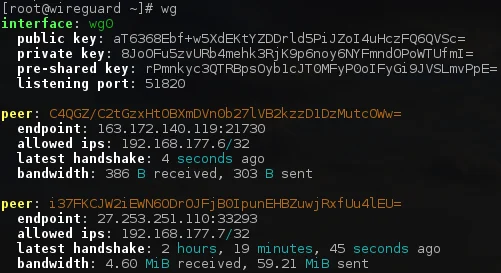
| Product model | Open-source VPN protocol and software implementations |
|---|---|
| Deployment | Installed and operated on user-managed systems |
| Transport | UDP |
| Addressing | IPv4 and IPv6 |
| Administration API | No general hosted REST API documented; wgctrl-go provides a Go control library |
| Configuration management | Key distribution and pushed configuration are outside the core project scope |
| Platforms | Windows, macOS, Android, iOS, and multiple Linux distributions |
| Pricing | Free software; infrastructure costs are separate |
Verified installation, hosting, administration, or environment details that can affect implementation.
| Installation or hosting | Installed on supported endpoints or servers. Linux distributions package the kernel module and tools; other platforms have clients or userspace implementations. The project does not present a hosted VPN control plane. Source ↗ |
|---|---|
| Network architecture | Creates one or more tunnel network interfaces and encapsulates IP packets over UDP between configured peers. Source ↗ |
Documented portability, standards, export, or switching considerations. No switching-cost score is shown unless the evidence supports one.
The official quick start documents text-based interface and peer configuration with keys, allowed IP ranges, and endpoints. Moving a deployment therefore requires carrying forward configuration and protecting private keys; no central migration service is documented.
Evidence source ↗A proprietary editorial score based on product capabilities, usability, value, performance, support and user sentiment evidence.
WireGuard provides peer-key authentication, encrypted IP tunnels, routing, roaming, and clients across major platforms. Its core project does not provide centralized key distribution, pushed configurations, or a managed administration service, so deployment and operations require technical ownership. No verified third-party ratings were found.
Methodology v1.0. The assessment weighs feature coverage (25%), ease of use (15%), value for money (20%), performance (15%), support (10%) and user sentiment (15%), using researched product evidence and verified review evidence where available. It is a TechZella editorial assessment, not a direct user-review average.
Key claims are linked to the sources used to verify them. This evidence record is separate from third-party user ratings.
TechZella evaluates software using documented product capabilities, pricing information, usability and value considerations, independent user evidence where available, and competitive context. The assessment is an editorial review, not a hands-on test unless one is explicitly identified. Our editorial assessment is based on 4 documented sources.
The project overview describes packet encapsulation over UDP and a configurable tunnel interface.
View source ↗Verified 2026-11-22The project describes this association as cryptokey routing, which is used for packet routing and source-address checks.
View source ↗Verified 2026-11-22The official conceptual overview expressly places these functions in other layers rather than in WireGuard itself.
View source ↗Verified 2026-11-22The installation page lists client downloads or distribution installation instructions for those platforms.
View source ↗Verified 2026-11-22The quick start demonstrates key generation, peer configuration, and interface activation using wg and standard network commands.
View source ↗Verified 2026-11-22The official repository list identifies wgctrl-go as a library for programmatic control of WireGuard instances.
View source ↗Verified 2026-11-22Yes. WireGuard is distributed as free software; the official project does not list a paid core subscription.
No. WireGuard provides tunnel software and protocol implementations. Operators configure peers and provide the systems that run them.
No. Its project overview places key distribution and pushed configurations outside the core software’s scope.
Yes. The official installation page lists Windows, macOS, Android, and iOS, alongside installation instructions for Linux distributions.
A Go library named wgctrl is listed for programmatic control of WireGuard instances. The core project does not document a general hosted REST API.
It can, but peers that need to receive traffic after idle periods may require persistent keepalive configuration to preserve a NAT or firewall mapping.
No reviews yet. Be the first to share your experience.
Please log in to submit a review.