
Web export is experimental and currently lacks C# scripting, video playback, and Visual Scripting.
Teams building browser games need a C++ workflow and should test the target browsers and features before committing.
Evidence source ↗
Flax Engine is a C++ and C# 3D game engine with visual scripting, editor tools, and deployment targets including desktop, mobile, consoles, and experimental web.
Official documentation describes a broad 3D toolset, C++ and C# scripting, source access, and multiple deployment targets. The commercial royalty threshold and documented platform limitations affect fit. No reliable public review-platform score was verified, so sentiment is not a user-rating estimate.
This profile combines documented product information and independent evidence where available. It is not a hands-on test unless TechZella explicitly identifies one.
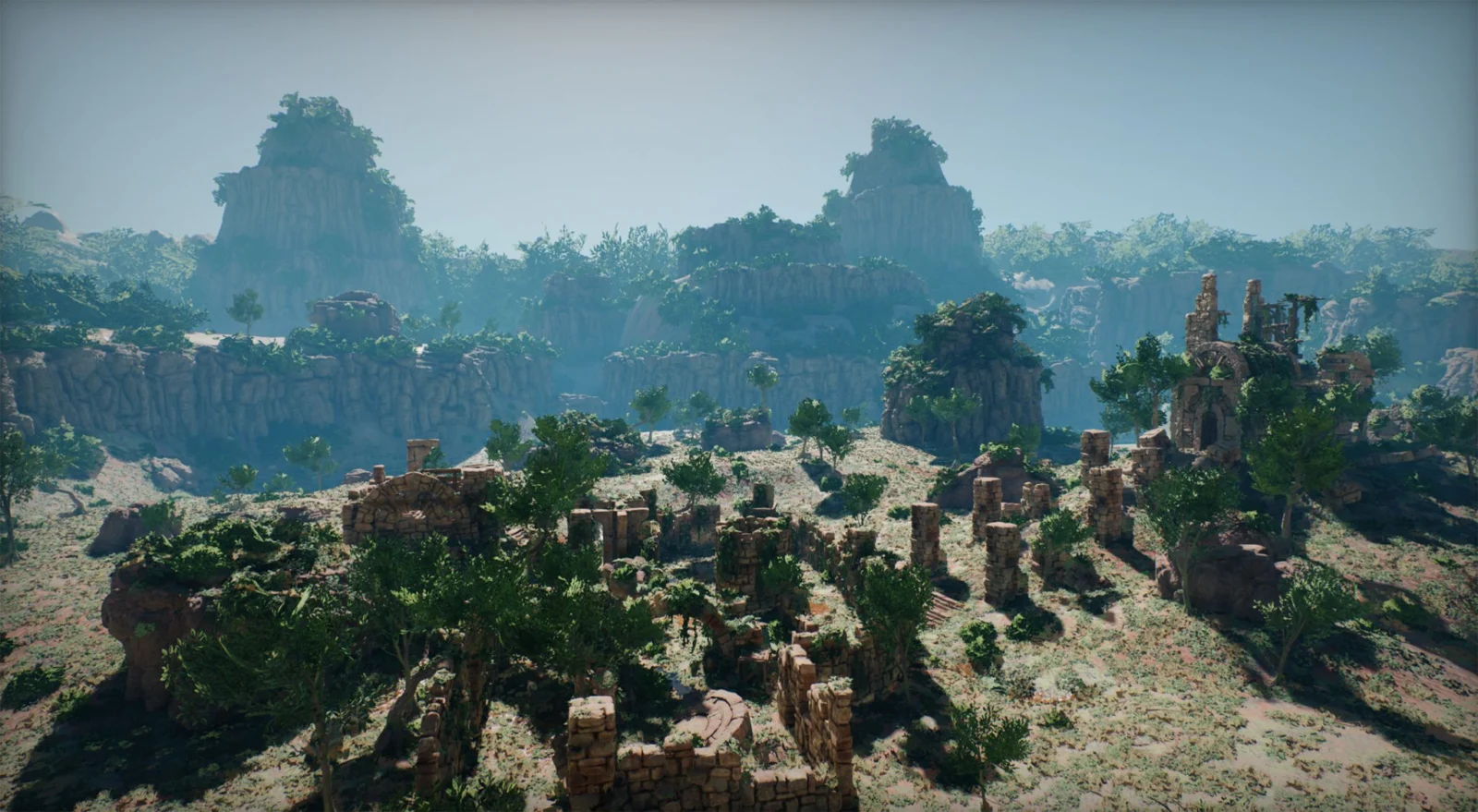
Flax Engine is a 3D game engine built around C++ and C# scripting. Its editor includes visual scripting, animation, visual effects, terrain and foliage tools, networking, and rendering features.
The engine can target desktop, mobile, console, and web platforms. Web support is experimental and lacks several capabilities, including C# scripting and Visual Scripting.
The source code is available, but the EULA governs its use. Commercial projects owe 4% of gross revenue above $250,000 per game per calendar quarter.
A quick way to understand who this product may suit, where its limits matter, and which facts are most relevant before you compare alternatives.
Developers creating 3D games who want C++ and C# scripting, visual scripting, source access, and several desktop or mobile deployment targets.
Teams requiring mature web export with C# scripting should look elsewhere or validate the experimental web workflow first. Commercial products exceeding the stated quarterly threshold also need royalty tracking and reporting, and should evaluate alternatives such as Godot Engine: A comparable game engine for teams that prioritize a dedicated 2D workflow and MIT licensing. or Unity: A comparable engine for teams evaluating a subscription-plan model and Unity's platform publishing requirements. instead.
Android, iOS, Linux, macOS, Windows
7.3/10
These are the product-specific differences that may matter when deciding whether the software fits your workflow. They are based on documented evidence rather than a universal ranking.
These are documented constraints or practical friction points that may matter before you adopt the product.
Teams building browser games need a C++ workflow and should test the target browsers and features before committing.
Evidence source ↗Revenue reports and publisher agreements should account for the engine's gross-revenue basis rather than only net store receipts.
Evidence source ↗A target platform appearing in the engine's supported-platform list does not by itself establish access to platform SDKs or development approval.
Evidence source ↗Free for noncommercial and educational usage. Commercial releases owe 4% of gross revenue above $250,000 per game per calendar quarter.
Check current pricing →Pricing may change. Verify current plans on the vendor's website.
Compare the product with documented alternatives across the factors that can change a buying decision. Each row is evidence-backed rather than a generic feature checklist.
| Decision factor | Flax Engine | Godot Engine |
|---|---|---|
| Core scope | Flax is presented as a 3D game engine with built-in terrain, foliage, animation, VFX, and networking tools. | Godot provides a unified 2D and 3D engine with a dedicated 2D workflow. Source ↗ |
| Scripting | Flax supports C++ and C# scripting, plus visual scripting. | Godot provides GDScript and C# support; C++ extensions are available through GDExtension. Source ↗ |
| License model | Flax is free for noncommercial and educational use; commercial products owe 4% on quarterly gross revenue above the stated threshold. | Godot is distributed under the MIT license and does not charge engine royalties. Source ↗ |
| Console access | Flax lists console targets, but some console support is available only to registered developers. | Godot's official documentation says console publishing is handled through third-party publishers. Source ↗ |
| Decision factor | Flax Engine | Unity |
|---|---|---|
| Core scope | Flax is a 3D engine with C++ and C# scripting and built-in visual scripting. | Unity provides a game engine with Personal, Pro, and Enterprise plans and a separately described Industry offering. Source ↗ |
| Scripting | Flax supports both C++ and C# scripting. | Unity's product pages describe its Unity Engine; the reviewed pricing pages do not specify scripting-language support. Source ↗ |
| License model | Flax charges a 4% royalty on per-game quarterly gross revenue above $250,000. | Unity's 2026 Personal plan is free for eligible users under its stated revenue and funding limit; its 2026 Pro pricing is subscription-based. Source ↗ |
| Console access | Flax lists consoles as targets, with some console functions limited to registered developers. | Unity says publishing to closed platforms requires an active Pro subscription or a platform-holder license key, plus platform-holder approval. Source ↗ |
Only factors supported by the available research are shown. The comparison is descriptive, not a ranking.



| Product type | 3D game engine |
|---|---|
| Scripting languages | C++ and C# |
| Editor downloads | Windows Launcher; Linux x64 Editor; macOS arm64 Editor |
| Game targets | Windows, Linux, Android, macOS, iOS, Xbox, PlayStation, Switch, Web |
| API | C++ and C# scripting API reference |
| Online services | Steam, Xbox Live, PlayStation Network |
| License | Flax Engine EULA; commercial royalty terms apply |
| Web status | Experimental; C# scripting and Visual Scripting are not implemented |
| Commercial royalty | 4% of gross revenue above $250,000 per game per calendar quarter |
Verified installation, hosting, administration, or environment details that can affect implementation.
| Installation or hosting | A locally installed editor and Launcher are available; the official site offers Linux x64 and macOS arm64 editor builds. It is not presented as a hosted SaaS editor. Source ↗ |
|---|---|
| Game deployment targets | Official documentation lists Windows, Xbox, PlayStation, Linux, Android, Switch, macOS, iOS, and Web. Web is experimental. Source ↗ |
Godot Engine may suit teams seeking a permissively licensed engine with no royalties and a dedicated 2D workflow. Flax is more directly aligned with teams seeking its bundled 3D features and C++/C# workflow.
Unity may suit buyers who need Unity’s plan structure or closed-platform publishing path. Unity’s 2026 pricing is subscription-based for Pro, while Flax uses a commercial royalty above its stated per-game quarterly threshold.
Documented portability, standards, export, or switching considerations. No switching-cost score is shown unless the evidence supports one.
The Flax 1.13 notes describe a .NET 10 migration from .NET 8 and flag that affected scene-animation assets may need to be re-authored or re-saved; there is no automatic repair for that documented issue.
Evidence source ↗Engine source is publicly available, but its use is governed by the Flax EULA rather than an unrestricted open-source license.
Evidence source ↗A proprietary editorial score based on product capabilities, usability, value, performance, support and user sentiment evidence.
Official documentation describes a broad 3D toolset, C++ and C# scripting, source access, and multiple deployment targets. The commercial royalty threshold and documented platform limitations affect fit. No reliable public review-platform score was verified, so sentiment is not a user-rating estimate.
Methodology v1.0. The assessment weighs feature coverage (25%), ease of use (15%), value for money (20%), performance (15%), support (10%) and user sentiment (15%), using researched product evidence and verified review evidence where available. It is a TechZella editorial assessment, not a direct user-review average.
Key claims are linked to the sources used to verify them. This evidence record is separate from third-party user ratings.
TechZella evaluates software using documented product capabilities, pricing information, usability and value considerations, independent user evidence where available, and competitive context. The assessment is an editorial review, not a hands-on test unless one is explicitly identified. Our editorial assessment is based on 6 documented sources.
The official FAQ describes the engine's languages, and the feature page lists visual scripting.
View source ↗Verified 2026-11-13The official platform manual enumerates Windows, Linux, Android, macOS, iOS, Xbox, PlayStation, Switch, and Web.
View source ↗Verified 2026-11-13The web manual labels support experimental and says C# scripting, video playback, and Visual Scripting are not implemented.
View source ↗Verified 2026-11-13The FAQ specifies the gross-revenue basis, per-game threshold, and reporting/payment timing.
View source ↗Verified 2026-11-13The learning page links the official manual and scripting API reference; the download page lists sample projects.
View source ↗Verified 2026-11-13The official release notes identify the October 2026 release and document these changes.
View source ↗Verified 2026-11-13See the buyer questions below for sourced answers about commercial pricing, API support, integrations, web export, and trial availability.
No reviews yet. Be the first to share your experience.
Please log in to submit a review.