
Xbox is not included in the standard public download.
A team must first obtain Microsoft approval, then request access to Defold's Xbox resources before building for Xbox.
Evidence source ↗
Defold is a free game engine with an integrated editor, Lua scripting, native extensions, and deployment tools for desktop, mobile, web, and selected consoles.
Assessment reflects documented editor, Lua and native-extension workflows, cross-platform exports, free licensing, and limited public review evidence. G2 lists only two reviews, so user-sentiment evidence is weak.
This profile combines documented product information and independent evidence where available. It is not a hands-on test unless TechZella explicitly identifies one.
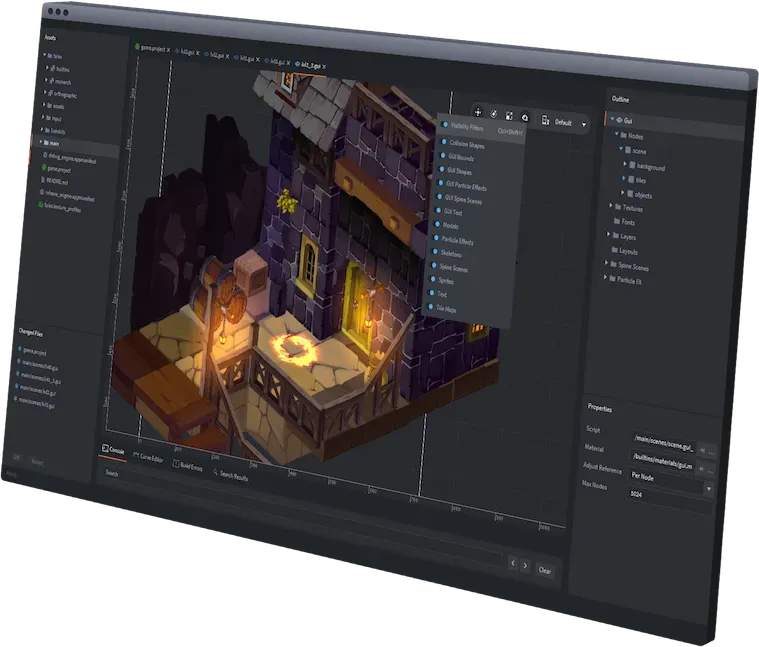
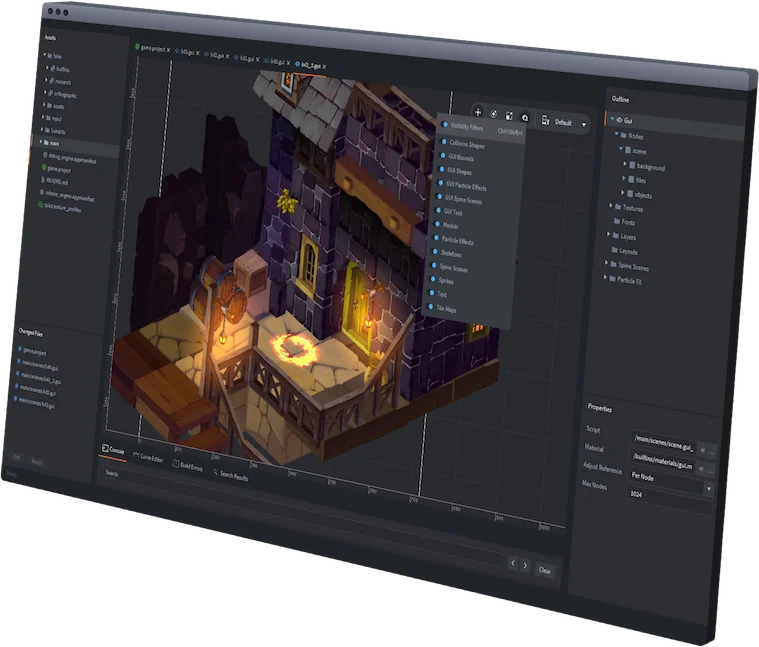
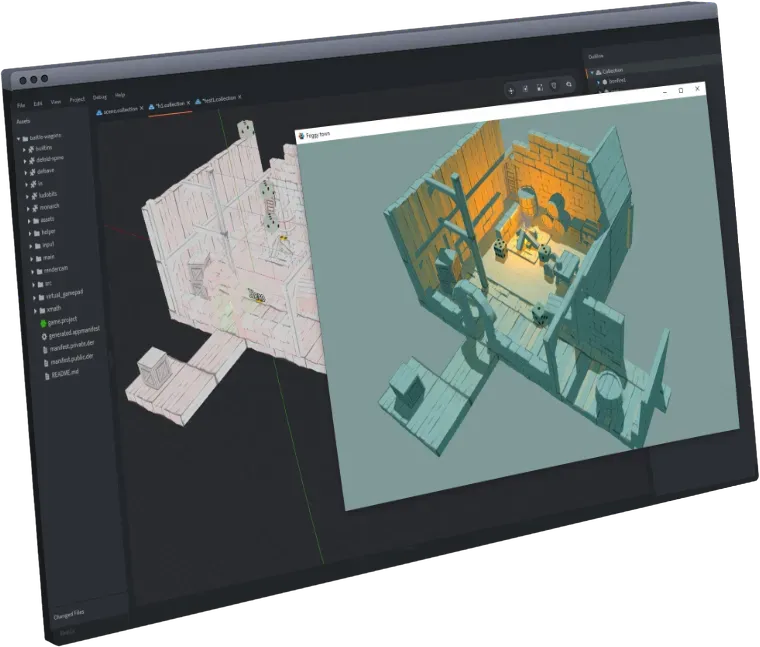
Defold is a game engine developed by the Defold Foundation. Its desktop editor combines Lua scripting, debugging, visual tools, and project building.
The engine supports 2D and 3D projects and exports to desktop, mobile, and web targets. Console targets have additional access requirements; Xbox, for example, requires Microsoft approval and Defold-specific resources.
The editor is free to use, and the Foundation says games carry no licensing fees or royalties. The license separately restricts commercializing modified versions of the engine or editor.
A quick way to understand who this product may suit, where its limits matter, and which facts are most relevant before you compare alternatives.
Developers building 2D or 3D games who want a free editor, Lua-based workflow, native extensions, and exports to multiple desktop, mobile, web, and console platforms.
Teams needing a permissive license that allows commercial distribution of modified engine/editor versions should review Defold's license restrictions. Developers targeting Xbox also need platform-holder approval and access to Defold's Xbox resources, and should evaluate alternatives such as Godot: A comparable game engine with a dedicated 2D workflow, 3D tools, and an MIT license; consider it when those licensing or scripting characteristics suit the project. or Unity: A comparable 2D and 3D engine with C# scripting and tiered licensing; consider it when the team's workflow or publishing requirements call for Unity-specific tools. instead.
Android, Linux, macOS, Web, Windows
8.1/10
These are the product-specific differences that may matter when deciding whether the software fits your workflow. They are based on documented evidence rather than a universal ranking.
These are documented constraints or practical friction points that may matter before you adopt the product.
A team must first obtain Microsoft approval, then request access to Defold's Xbox resources before building for Xbox.
Evidence source ↗External automation should discover operations from the running editor's OpenAPI document instead of relying on a fixed endpoint list.
Evidence source ↗Teams planning to sell a modified engine or editor need to evaluate this restriction separately from the license for games created with Defold.
Evidence source ↗The engine is free to use, with no upfront costs, licensing fees, or royalties for games made with Defold. Native extension cloud builds are also provided free of charge.
Check current pricing →Pricing may change. Verify current plans on the vendor's website.
Compare the product with documented alternatives across the factors that can change a buying decision. Each row is evidence-backed rather than a generic feature checklist.
| Decision factor | Defold | Godot |
|---|---|---|
| Core scope | A game engine for 2D and 3D games, with an integrated editor and Lua scripting. | A game engine with a dedicated 2D workflow and 3D tools; its built-in scripting language is GDScript. Source ↗ |
| Pricing model | Free to use, with no upfront costs, licensing fees, or royalties for games made with Defold. | Free and open source under the MIT license; Godot says game creators can license their games as they choose. Source ↗ |
| Scripting and extension model | Game logic uses Lua; native extensions can use supported languages including C, C++, Objective-C, Java, and JavaScript, with C# support documented as experimental for extensions. | Godot offers GDScript, C# through its .NET version, and a C++ GDExtension API. Source ↗ |
| Decision factor | Defold | Unity |
|---|---|---|
| Core scope | A game engine for 2D and 3D games, with an integrated editor and Lua scripting. | A 2D and 3D engine with C# scripting and publishing options across web, desktop, AR/VR, and mobile on Personal. Source ↗ |
| Pricing model | Free to use, with no upfront costs, licensing fees, or royalties for games made with Defold. | Unity Personal is free for eligible users whose applicable revenue and funding remain below the stated $200,000 threshold; Pro and higher plans are paid or custom-priced. Source ↗ |
| Scripting and extension model | Game logic uses Lua; native extensions can use supported languages including C, C++, Objective-C, Java, and JavaScript, with C# support documented as experimental for extensions. | Unity's engine scripting uses .NET and C#. Source ↗ |
Only factors supported by the available research are shown. The comparison is descriptive, not a ranking.



| Primary scripting language | Lua |
|---|---|
| Native extension languages | C, C++, Objective-C, Java, and JavaScript; C# support is experimental for extensions. |
| Editor operating systems | Windows, macOS, Ubuntu Linux |
| Documented game targets | Windows, macOS, Linux, iOS, Android, HTML5, PlayStation, Nintendo Switch, and Xbox for approved developers with access |
| Editor API | Local HTTP API; documented as experimental |
| Pricing model | Free to use |
| Native extension build service | Cloud-based build service provided free of charge; hosted in Europe |
| License note | Games carry no stated licensing fees or royalties; commercializing derivative versions of the editor or engine is restricted |
Verified installation, hosting, administration, or environment details that can affect implementation.
| Editor installation | Desktop editor downloads are offered for Windows, macOS, and Ubuntu Linux. Source ↗ |
|---|---|
| Game build targets | Official materials list desktop, Android, iOS, and HTML5 targets; console availability has platform-specific access requirements. Source ↗ |
| Native extension builds | The Foundation provides a cloud build server for native extensions without charge; the documented service is hosted in Europe. Source ↗ |
Godot is worth evaluating when a team wants a free MIT-licensed engine, a dedicated 2D workflow, or GDScript and C# options. Defold may suit teams preferring Lua and its documented native-extension build workflow.
Unity may fit teams whose workflow depends on C# and Unity’s publishing ecosystem. Unity Personal is free only for eligible users under its stated financial threshold, while Defold describes its engine as free without such a threshold for game use.
Documented portability, standards, export, or switching considerations. No switching-cost score is shown unless the evidence supports one.
The 1.14.1 release notes identify migration considerations for legacy GLES 2.0/WebGL 1 shader targets, native extensions using the engine web server, custom iOS Info.plist files, and font defaults. Projects should review release notes and test target builds before upgrading.
Evidence source ↗A proprietary editorial score based on product capabilities, usability, value, performance, support and user sentiment evidence.
Assessment reflects documented editor, Lua and native-extension workflows, cross-platform exports, free licensing, and limited public review evidence. G2 lists only two reviews, so user-sentiment evidence is weak.
Methodology v1.0. The assessment weighs feature coverage (25%), ease of use (15%), value for money (20%), performance (15%), support (10%) and user sentiment (15%), using researched product evidence and verified review evidence where available. It is a TechZella editorial assessment, not a direct user-review average.
Key claims are linked to the sources used to verify them. This evidence record is separate from third-party user ratings.
TechZella evaluates software using documented product capabilities, pricing information, usability and value considerations, independent user evidence where available, and competitive context. The assessment is an editorial review, not a hands-on test unless one is explicitly identified. Our editorial assessment is based on 6 documented sources.
The official product overview and About page state that the engine has no upfront costs, licensing fees, or royalties for games.
View source ↗Verified 2026-11-12The FAQ lists current editor operating systems and requirements.
View source ↗Verified 2026-11-12The product overview describes a built-in code editor, debugger, visual editors, and Lua game logic.
View source ↗Verified 2026-11-12The extensions manual describes supported native languages, use cases, and the Foundation's cloud build workflow.
View source ↗Verified 2026-11-12The official release announcement gives the release date and feature summary.
View source ↗Verified 2026-11-12The 1.14.0 release notes state that the standard public download lacks an Xbox target and describe the access process.
View source ↗Verified 2026-11-12Answers begin with the clearest available response, followed by the context that helps you act on it.
No reviews yet. Be the first to share your experience.
Please log in to submit a review.