Editorial overview
Aggregated Overview
Assessment reflects documented authentication methods, SDKs, APIs, tenant SSO and SCIM capabilities, published plan limits, and G2's displayed rating. It is not based on hands-on testing; public review text was not systematically analyzed.
This profile combines documented product information and independent evidence where available. It is not a hands-on test unless TechZella explicitly identifies one.
Decision guideDescope Decision Snapshot
A quick way to understand who this product may suit, where its limits matter, and which facts are most relevant before you compare alternatives.
Best suited toSoftware teams building B2B or B2C applications that need programmable authentication, tenant-aware SSO, and user lifecycle workflows across web or mobile clients.
Look elsewhere ifOrganizations seeking a consumer password vault, an on-premises identity server, or an identity service whose project data must be moved between regions after setup, and should evaluate alternatives such as Clerk or Auth0 instead.
PlatformsAndroid, API, iOS, SaaS, Web
TechZella assessment8.2/10
Overview
Descope is a hosted identity platform for application developers. It provides authentication, user management, and authorization capabilities through a visual flow builder, SDKs, and APIs.
Its product is oriented toward customer identity, including B2B SaaS applications with multiple customer tenants. Each tenant can have its own SSO configuration, and administrators can use a guided setup suite for supported identity providers.
Descope is not a personal password manager. Although it supports password-based sign-in as one option, its broader purpose is integrating identity and access workflows into applications.
Descope — What Sets It Apart?
These are the product-specific differences that may matter when deciding whether the software fits your workflow. They are based on documented evidence rather than a universal ranking.
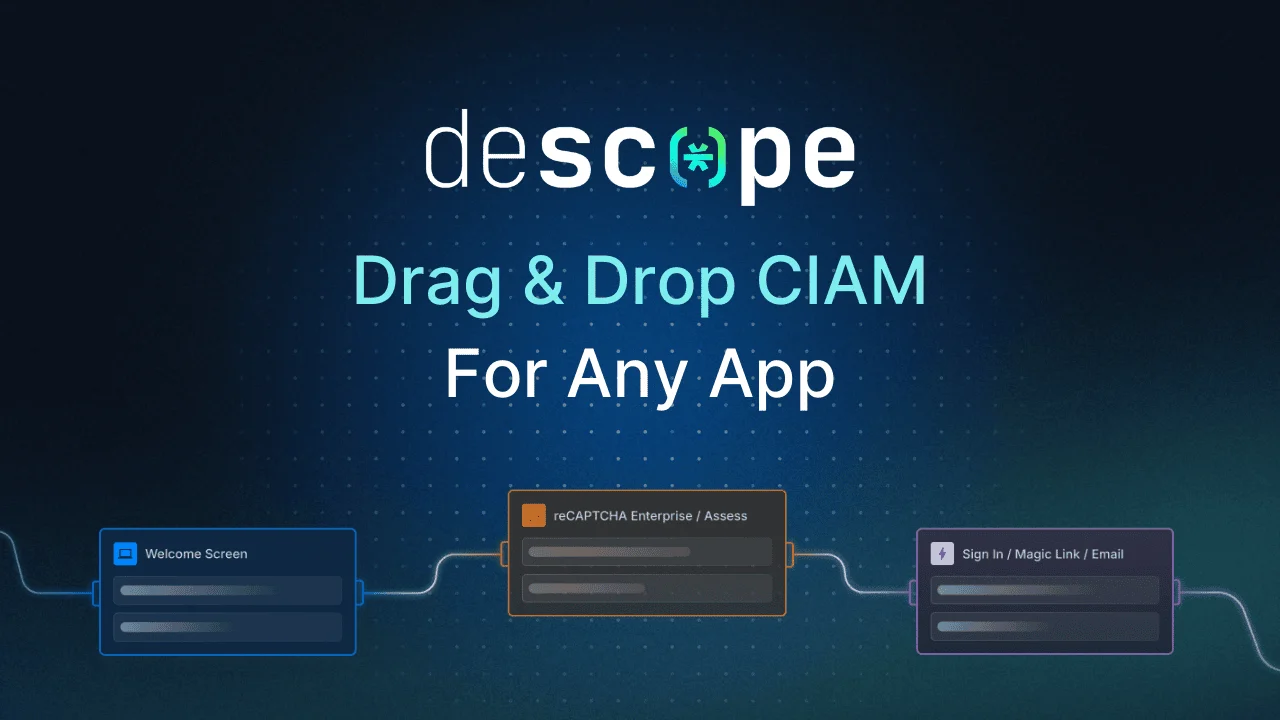
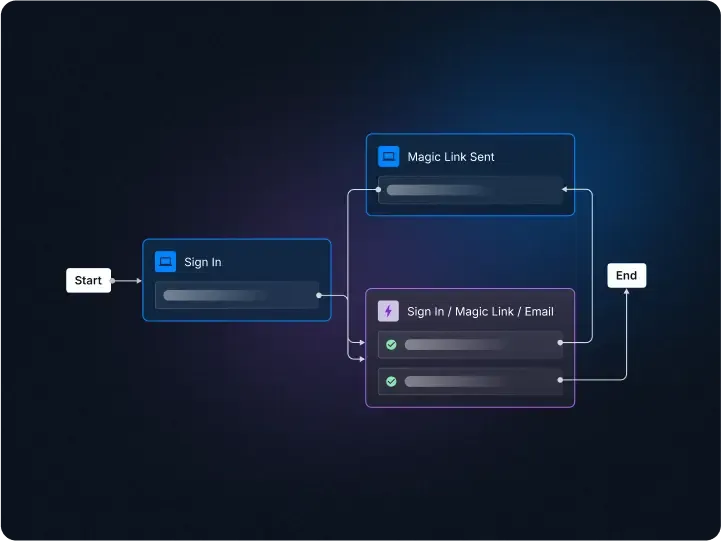
- Visual, conditional authentication flows can combine authentication methods, connectors, and flow logic without requiring every journey to be implemented as custom UI code.
- B2B SSO is configured per tenant, with customer self-service setup templates, attribute and group mapping, connection testing, and SCIM options.
- Projects can select from seven documented data regions, but a project's region is fixed after creation.
7 key claims verifiedOur editorial team checked this profile against company information, pricing information, product documentation. Supported by 7 documented sources.
Editorial assessmentDescope Pros & Cons
Pros
- Visual flow builder supports conditional authentication journeys and multiple authentication methods.
- Tenant-aware SSO, self-service setup, and SCIM support B2B customer identity workflows.
- REST API, OpenAPI specification, and web and mobile SDKs provide multiple implementation approaches.
- Published Free, Pro, and Growth pricing includes usage allowances and listed overage rates.
Cons
- Plan costs can rise with MAU, tenant, SSO connection, and other metered usage.
- Project data cannot be moved to another region after project creation.
- Rate limits require clients to handle throttling and retry behavior.
- The reviewed materials do not establish a self-hosted deployment option.
Descope Gotchas & Operational Limits
These are documented constraints or practical friction points that may matter before you adopt the product.
A project can only be hosted in one selected region, and its user and tenant data cannot later be moved to another region.
Select the project region before production setup; a later residency change requires a different project architecture rather than a project-region switch.
Evidence source ↗The Free plan has published MAU, tenant, and SSO connection limits, and the pricing page says exceeding Free limits can require an upgrade.
Model all three limits, not just sign-in volume, before a B2B product adds customer tenants or enterprise SSO.
Evidence source ↗Descope's REST API is rate-limited and signals throttling with HTTP 429 and a Retry-After header.
Integrations should implement backoff and avoid unnecessary retries to prevent throttled requests from disrupting account or management workflows.
Evidence source ↗Descope Pricing & Plans
Free
$0
month
Includes 7,500 MAUs, 10 tenants, 3 SSO connections, and other limited usage allowances. The pricing page lists additional limits and upgrade conditions.
Check current pricing →Pro
$249
month
Includes 10,000 MAUs, 35 tenants, and 5 SSO connections; published additional usage rates apply.
Check current pricing →Growth
$799
month
Includes 25,000 MAUs, 100 tenants, and 10 SSO connections; published additional usage rates apply.
Check current pricing →Enterprise
Custom
custom
Custom pricing and allowances; contact Descope for a quote.
Check current pricing →Pricing may change. Verify current plans on the vendor's website.
Cost contextTotal Cost & Hidden Costs
Additional costs or implementation requirements that are documented in the available evidence.
Usage overages
The current published Free, Pro, and Growth plans list included MAUs, tenants, SSO connections, and additional per-unit charges for some overages. Enterprise pricing is custom.
Evidence source ↗SMS and voice delivery
The pricing page states that use of Descope connectors is subject to a monthly SMS and voice delivery limit; it describes customer-provided connectors or purchased packages as options when that limit is exceeded.
Evidence source ↗Quick Comparison
Compare the product with documented alternatives across the factors that can change a buying decision. Each row is evidence-backed rather than a generic feature checklist.
Descope vs. Clerk
Documented comparisonOnly factors supported by the available research are shown. The comparison is descriptive, not a ranking.
Compare optionsDescope Competitors & Alternatives
Compare similar products directly, then see which alternatives may make more sense when your requirements differ.
At a glance
Identity and Access ManagementOnly factors supported by the available research are shown. The comparison is descriptive, not a ranking.
Direct competitors
These products address broadly similar requirements. The descriptions focus on documented reasons a buyer might compare them with Descope.
ClerkDocumented difference - Primary usage measure: Clerk's pricing page describes monthly retained users and monthly retained organizations.
Auth0
CapabilitiesDescope Features
Authentication
- Passwordless sign-in with passkeys, email or SMS one-time codes, and magic links
- Password, social login, authenticator-app TOTP, SSO, and recovery-code actions
- Conditional flows and adaptive MFA based on configured risk signals
B2B identity
- Tenant-level SAML and OIDC SSO
- Self-service SSO Setup Suite with provider templates, group and attribute mapping, and connection tests
- Inbound SCIM provisioning for users and groups
Developer integration
- Web, backend, and mobile SDKs
- REST API with OpenAPI specification
- Flow connectors for third-party services and webhooks
Administration and deployment
- User, tenant, role, and permission management
- Seven selectable project data regions
- Private-network connector execution through a Descope Engine
Descope Specifications
| Product type | Hosted customer identity and access management platform |
|---|
| API | REST API; OpenAPI 3.0 specification |
|---|
| Web support | Web SDKs and hosted authentication flows |
|---|
| Mobile SDKs | Swift, Kotlin, Flutter, React Native |
|---|
| SSO protocols | SAML 2.0 and OAuth 2.0 / OpenID Connect |
|---|
| Provisioning | Inbound SCIM 2.0 for user and group provisioning |
|---|
| Supported identity providers | Okta, Microsoft Entra ID, Google Workspace, and other SAML/OIDC providers |
|---|
| Data regions | United States, European Union, United Kingdom, Canada, Singapore, Australia, Brazil |
|---|
| Region change | Project user and tenant data cannot be moved between regions after project creation |
|---|
| Free trial | Free plan available; separate time-limited trial not verified |
|---|
| Hosting | Hosted SaaS; self-hosted deployment not verified |
|---|
Exit planningMigration & Lock-In
Documented portability, standards, export, or switching considerations. No switching-cost score is shown unless the evidence supports one.
Regional migration
Project user and tenant data cannot be moved between regions after the region is selected at project creation.
Evidence source ↗Identity migration example
A Descope customer story describes GoodRx importing tens of millions of users using an incumbent-provider export API and Descope session migration capabilities. This is a customer-specific account, not a general migration guarantee.
Evidence source ↗Our evidence-based assessmentTechZella Score
A proprietary editorial score based on product capabilities, usability, value, performance, support and user sentiment evidence.
8.2/10Moderate confidence
Assessment reflects documented authentication methods, SDKs, APIs, tenant SSO and SCIM capabilities, published plan limits, and G2's displayed rating. It is not based on hands-on testing; public review text was not systematically analyzed.
Methodology v1.0. The assessment weighs feature coverage (25%), ease of use (15%), value for money (20%), performance (15%), support (10%) and user sentiment (15%), using researched product evidence and verified review evidence where available. It is a TechZella editorial assessment, not a direct user-review average.
Editorial transparency
Our Review Methodology
Key claims are linked to the sources used to verify them. This evidence record is separate from third-party user ratings.
TechZella evaluates software using documented product capabilities, pricing information, usability and value considerations, independent user evidence where available, and competitive context. The assessment is an editorial review, not a hands-on test unless one is explicitly identified. Our editorial assessment is based on 7 documented sources.
What TechZella adds- Visual, conditional authentication flows can combine authentication methods, connectors, and flow logic without requiring every journey to be implemented as custom UI code.
- B2B SSO is configured per tenant, with customer self-service setup templates, attribute and group mapping, connection testing, and SCIM options.
- Projects can select from seven documented data regions, but a project's region is fixed after creation.
Important limitations- Descope documents that project user and tenant data cannot be moved between regions after project creation.
- Published plans have quotas for monthly active users, tenants, SSO connections, and other usage units; overages can increase the bill.
- The REST API applies rate limits and returns HTTP 429 responses with a Retry-After header when limits are exceeded.
- The standard cloud service is documented; the reviewed sources do not verify a self-hosted deployment option.
Evidence-backed claimsDescope was founded in 2022 and is headquartered in Los Altos, California.The company's 2023 launch announcement states its founding year and headquarters.
View source ↗Verified 2026-10-08Descope provides a documented REST API and publishes an OpenAPI specification.The API reference describes HTTPS JSON endpoints, authentication conventions, rate limits, and an OpenAPI file.
View source ↗Verified 2026-10-08Descope supports inbound SCIM provisioning for users and groups.The SCIM documentation describes IdP-pushed user and group provisioning, updates, and deactivation.
View source ↗Verified 2026-10-08Descope's SSO Setup Suite includes templates for common IdPs and a generic SAML/OIDC setup path.The documentation names Okta, Microsoft Entra ID, Google Workspace, and other templates, alongside attribute/group mapping, connection tests, and SCIM setup.
View source ↗Verified 2026-10-08Descope lists Free, Pro, Growth, and Enterprise pricing, with published monthly prices for Pro and Growth.The current pricing page lists Free at $0, Pro at $249 per month, Growth at $799 per month, and custom Enterprise pricing, plus usage allowances and overages.
View source ↗Verified 2026-10-08Descope documents seven selectable data regions and states that project data cannot be moved between regions after setup.The region architecture guide lists the project-region selection and says project data cannot be moved between regions.
View source ↗Verified 2026-10-08G2 displayed a 4.8 out of 5 average from 86 Descope reviews when checked.The public seller profile displayed the average and review count.
View source ↗Verified 2026-10-08 Independent review sources
Descope Ratings & Reviews
Ratings are published by the respective review platforms and may change over time.
Community feedback
Reviews
No reviews yet. Be the first to share your experience.
Write a Review
Please log in to submit a review.
FAQ
Is Descope a password manager?
No. Descope is an identity platform for adding authentication and user-management capabilities to applications. It supports passwords as one authentication method but is not a vault for storing and sharing people’s passwords.
Does Descope provide an API?
Yes. Descope documents a REST API for authentication and management, with an OpenAPI specification. API requests use HTTPS and JSON conventions; rate limits apply.
Which platforms does Descope support?
Documentation covers web and backend SDKs, native Swift and Kotlin SDKs for iOS and Android, and cross-platform Flutter and React Native SDKs. Frameworks without a native SDK can use OIDC endpoints.
Does Descope support Okta and Microsoft Entra ID?
Yes. The SSO Setup Suite documentation lists templates for Okta and Microsoft Entra ID, along with Google Workspace and other providers. A generic SAML/OIDC path is also available.
Does Descope offer a free trial?
The pricing page lists a Free plan rather than a separate time-limited trial. It includes stated usage limits, and paid features or overages may require a different plan.
Can a Descope project change data regions later?
No. The documentation says each project stays in the selected region and its user and tenant data cannot be moved between regions afterward.
Recently added software