Editorial overview
Aggregated Overview
The product combines encrypted overlay networking, access policies, routing, identity integrations, and cloud or self-hosted deployment. Public review evidence is limited to two G2 reviews, and support differs by plan.
This profile combines documented product information and independent evidence where available. It is not a hands-on test unless TechZella explicitly identifies one.
Overview
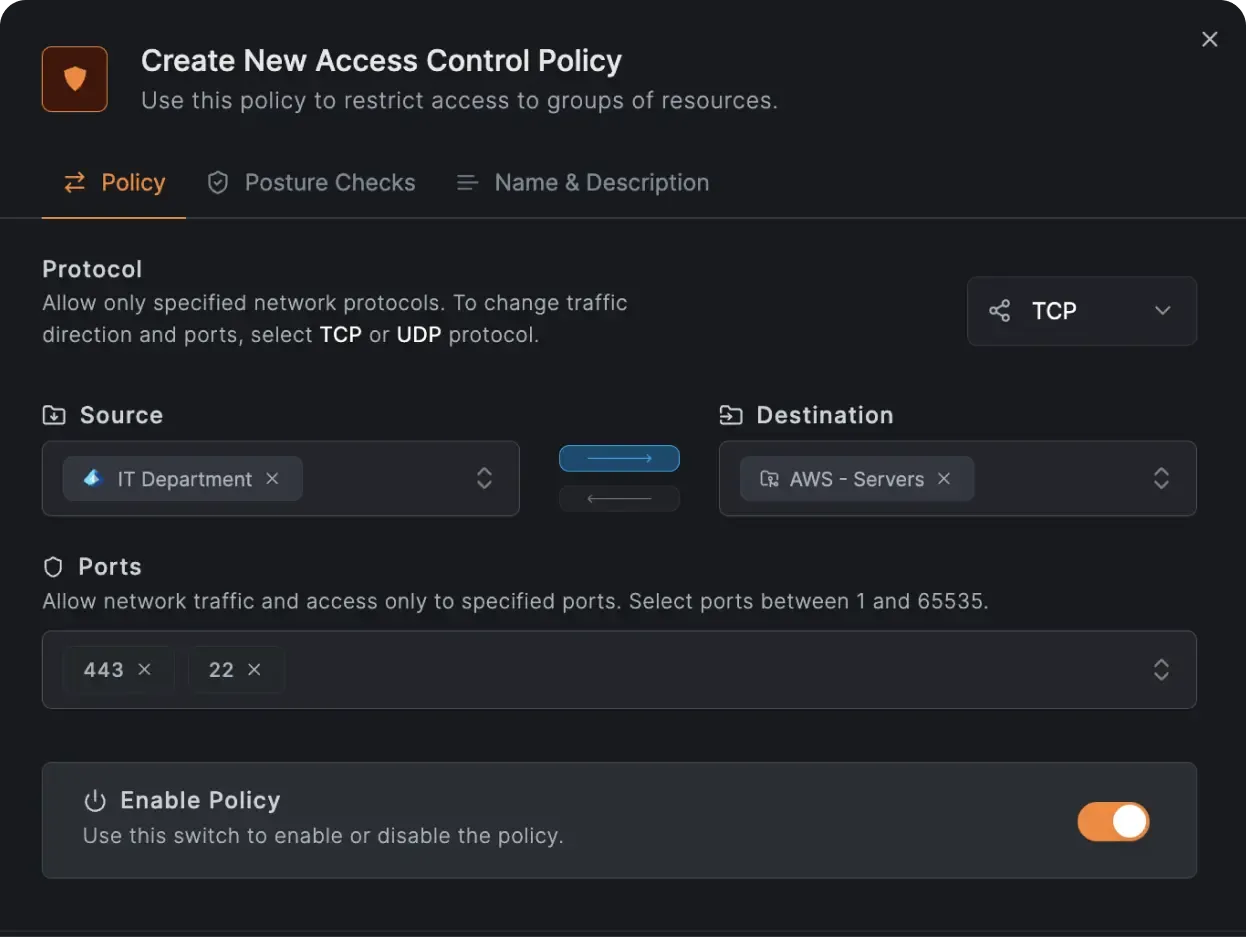
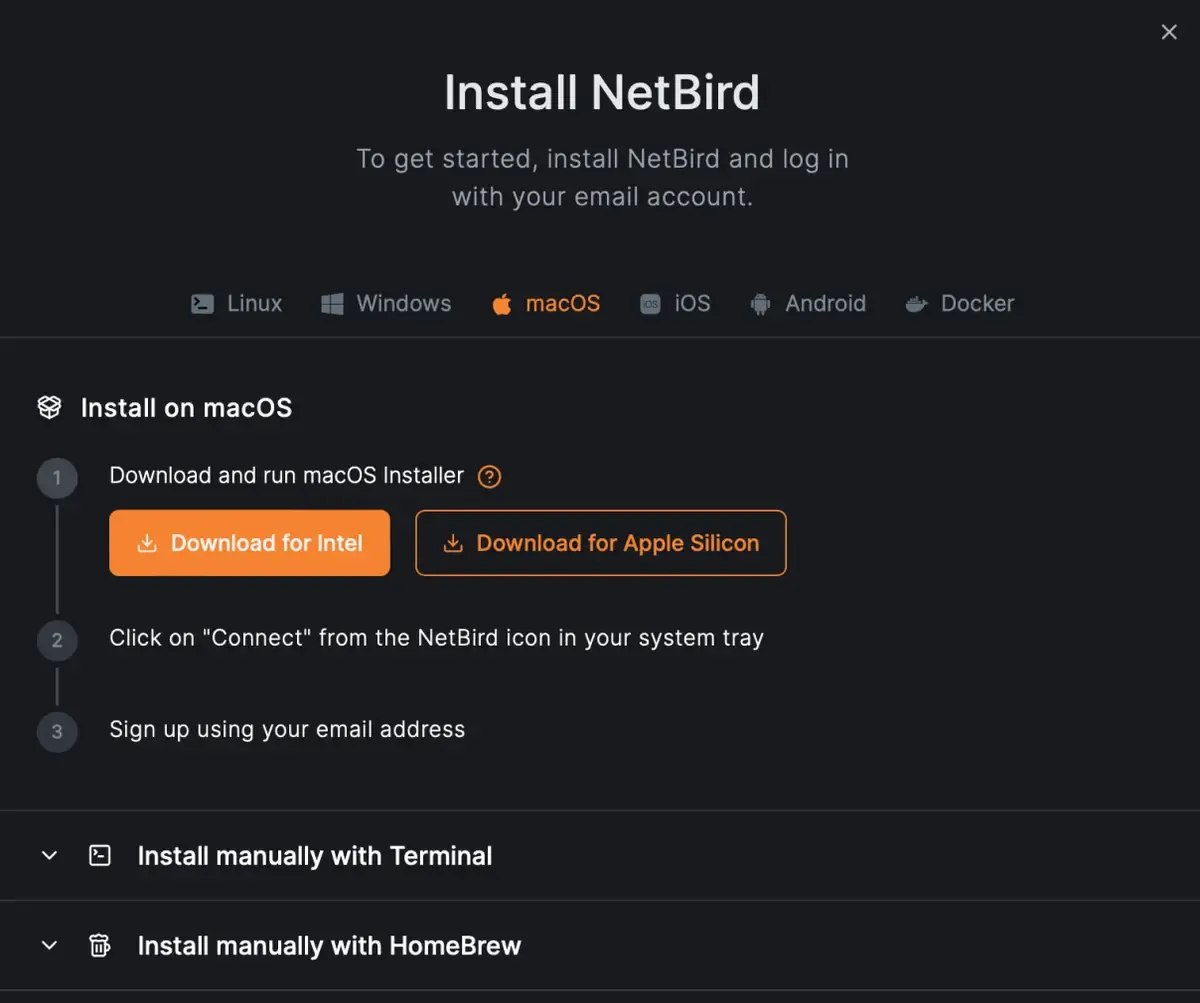
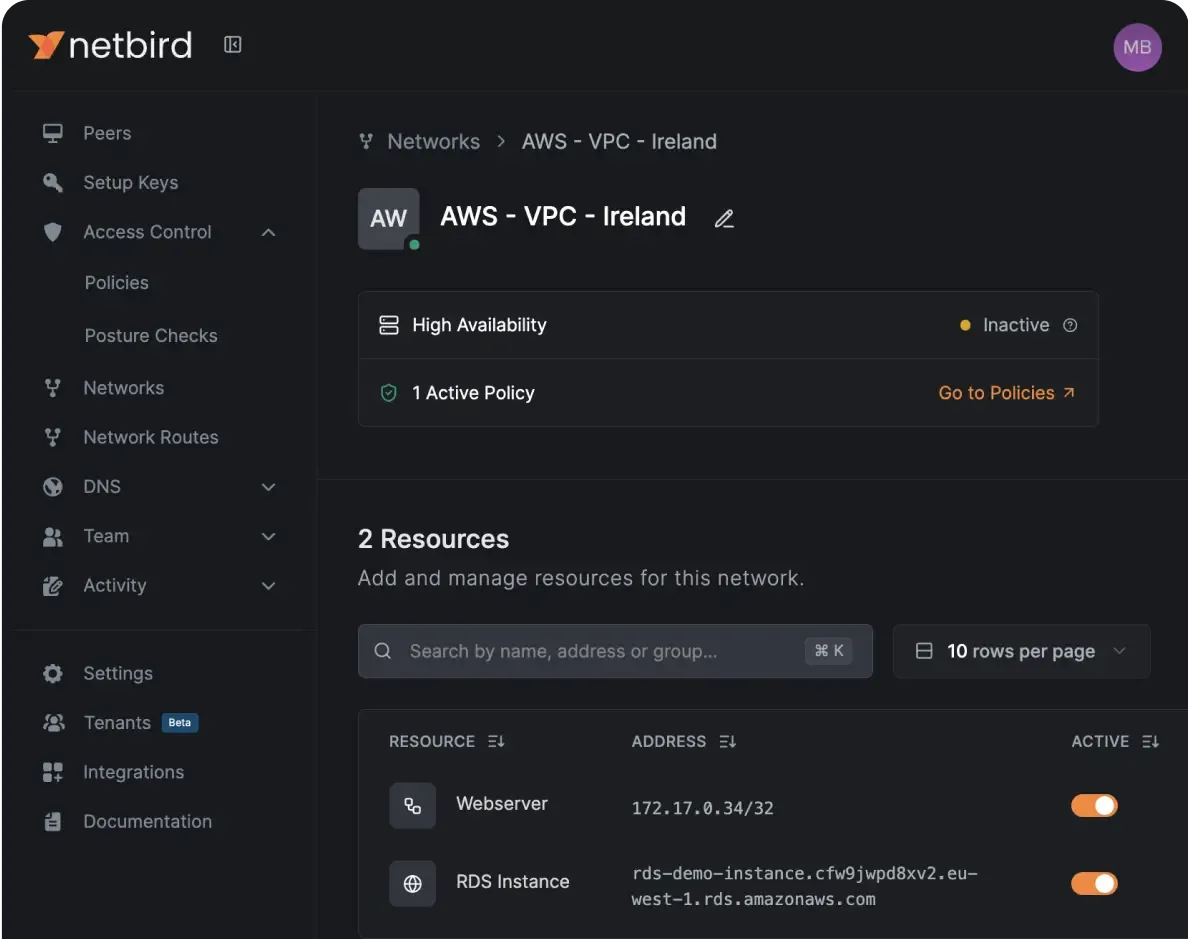
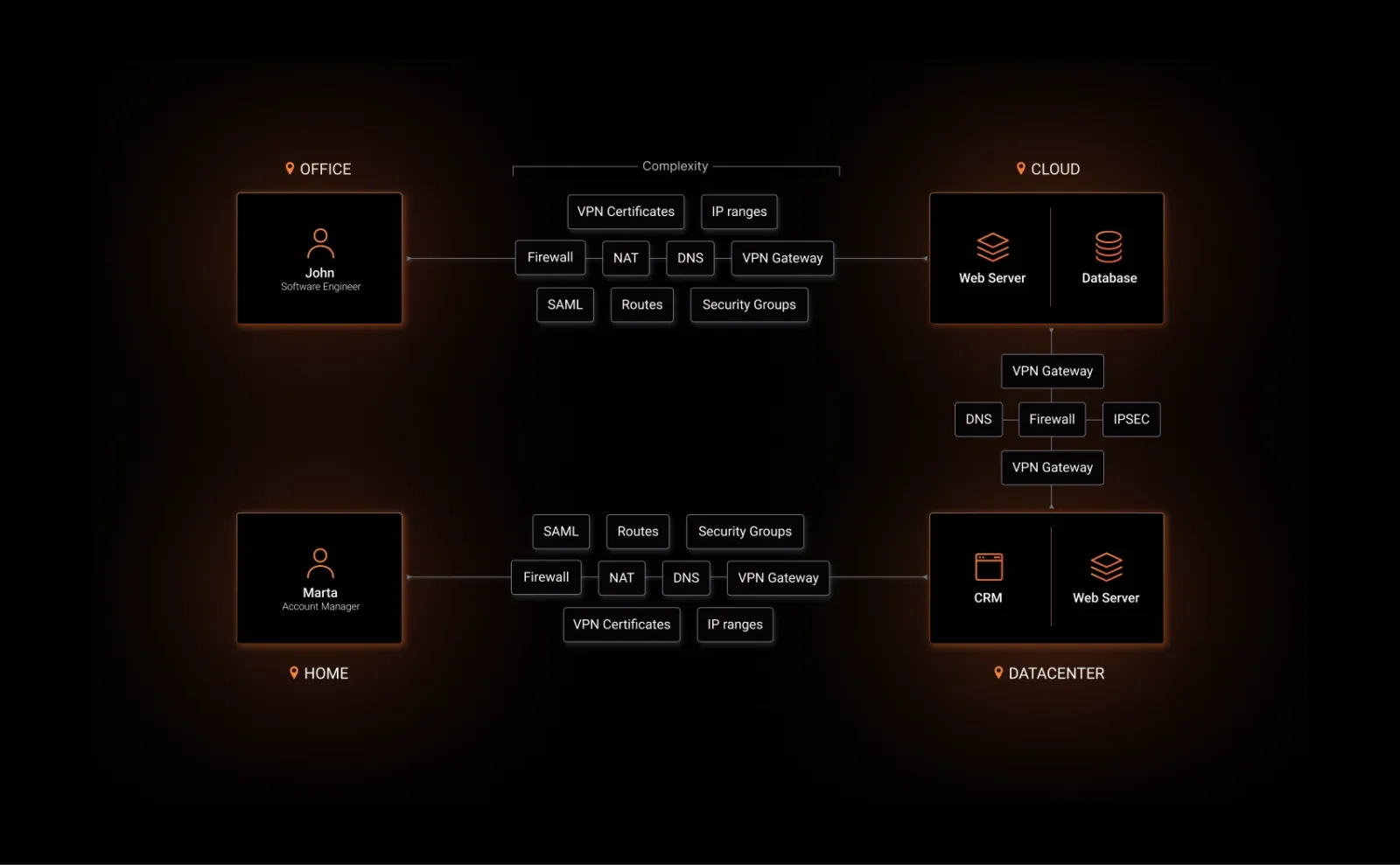
NetBird connects computers, servers, and other devices in a private overlay network. Its client uses WireGuard tunnels and identity-based access policies to govern which peers can reach specific resources.
Teams can use NetBird Cloud or deploy the control plane themselves. Self-hosting gives an organization control over its infrastructure, but also means maintaining the server, DNS, and network configuration.
NetBird Decision Snapshot
A quick way to understand who this product may suit, where its limits matter, and which facts are most relevant before you compare alternatives.
Best suited toIT and engineering teams needing identity-based remote access to private devices, services, and networks, with a choice between managed cloud and self-hosting.
Look elsewhere ifTeams that need a fully managed, zero-maintenance control plane should compare cloud pricing and plan boundaries; self-hosting requires a Linux host, public DNS, open ports, and ongoing administration, and should evaluate alternatives such as Tailscale or ZeroTier instead.
PlatformsCloud, Linux, macOS, Self-hosted, Windows
TechZella assessment8.2/10
NetBird — What Sets It Apart?
These are the product-specific differences that may matter when deciding whether the software fits your workflow. They are based on documented evidence rather than a universal ranking.
- Provides a self-hosted option alongside NetBird Cloud, with an open-source core and separately licensed commercial capabilities.
- Uses WireGuard tunnels between peers, preferring direct connections and relaying encrypted traffic when a direct path cannot be established.
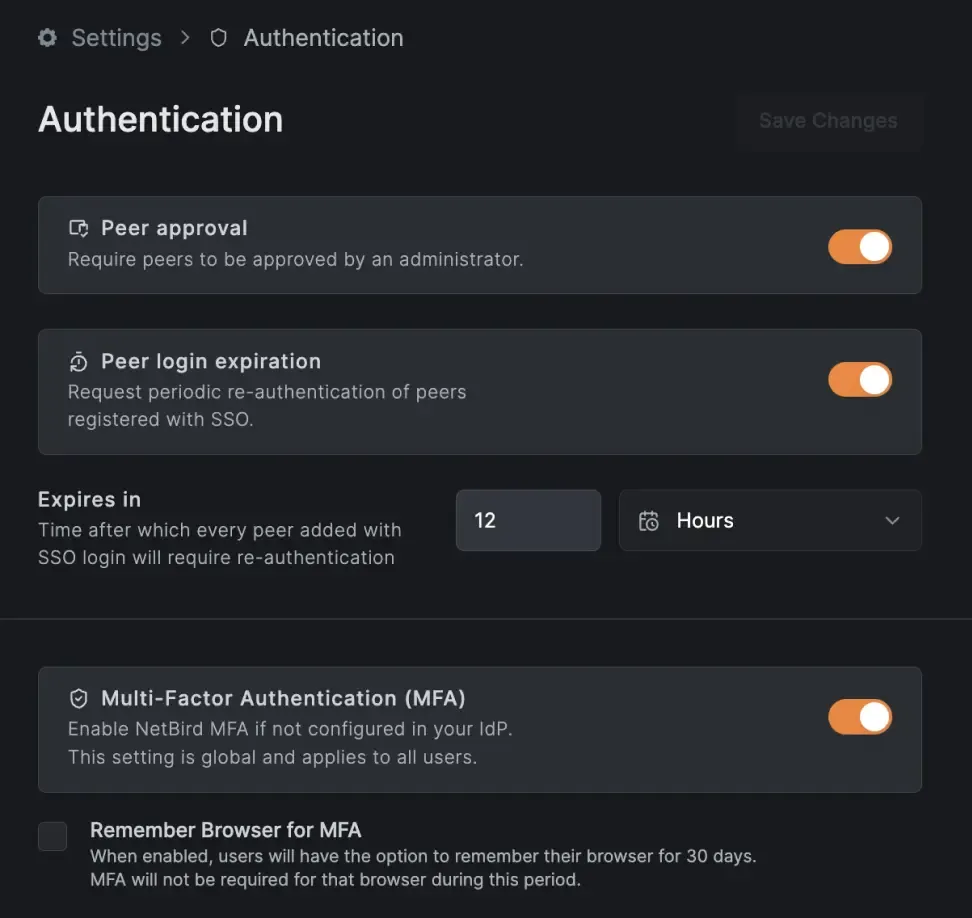
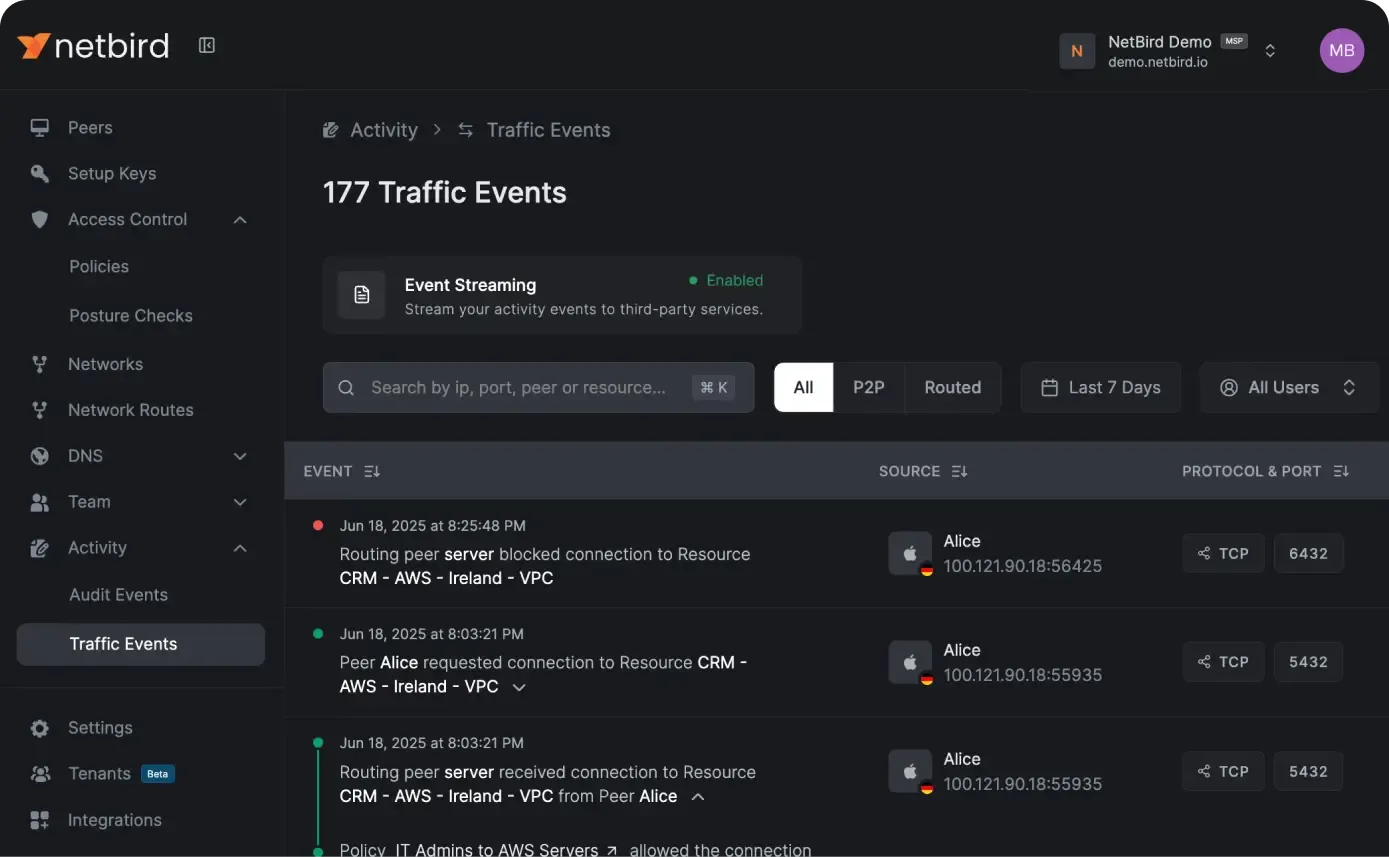
- Cloud Business adds device approvals, MDM/EDR checks, posture checks, and traffic-event logging; these paid cloud capabilities are not equivalent to the self-hosted open-source base.
Editorial assessmentNetBird Pros & Cons
Pros
- Offers both managed cloud and self-hosted deployment.
- Uses end-to-end encrypted WireGuard tunnels, with relay fallback when direct connectivity is unavailable.
- Includes an API for automating network and access-management tasks.
- Supports identity-provider sign-in and, on paid cloud plans, user and group provisioning.
- Documents endpoint management integrations and device posture controls on higher cloud plans.
Cons
- Self-hosted deployments require customer-managed infrastructure, DNS, and network configuration.
- Free and paid cloud plans have machine limits, with additional machines billed separately.
- MDM policy delivery documentation does not currently list Linux or Android.
- Public third-party review evidence is sparse, with only two G2 reviews located.
NetBird Gotchas & Operational Limits
These are documented constraints or practical friction points that may matter before you adopt the product.
Self-hosting requires a public DNS name and inbound access to TCP 443 and UDP 3478 in the quickstart configuration.
Organizations with restrictive firewalls or no public server endpoint need to plan network and DNS changes before deployment.
Evidence source ↗The cloud plans charge for active users, and additional machines cost €0.50 per month each after the plan allowance.
Large device fleets or month-to-month changes in active users can affect monthly spend.
Evidence source ↗NetBird's current MDM policy documentation lists Windows, macOS, iOS, and tvOS delivery channels, but not Linux or Android.
Mixed-device organizations may need different controls or management processes for those endpoints.
Evidence source ↗Security & Privacy
For security-sensitive software, TechZella focuses on documented architecture, authentication, data handling, deployment and privacy details that can affect a buying decision. This is product research, not an independent security audit.
Security posture at a glance
| Deployment | Managed cloud or self-hosted |
|---|
| Self-hosted server requirements | Linux VM, Docker, Docker Compose, public DNS, inbound TCP 443 and UDP 3478 in quickstart configuration |
|---|
What the documented evidence tells us
NetBird supports peer connections using WireGuard encryption and can relay traffic when peers cannot connect directly.The troubleshooting documentation states that NetBird prefers direct peer-to-peer connections and encrypts traffic end to end before relay forwarding.
Source ↗NetBird's self-hosting quickstart requires a Linux VM and Docker Compose.The vendor specifies a minimum Linux VM, public domain, and Docker Compose prerequisites.
Source ↗ Security claims are presented only when supported by documented sources. The presence of this section does not constitute a penetration test, certification or independent security audit.
Plans & pricingNetBird Pricing & Plans
Free
€0
user / month
Up to 5 users and 100 machines; includes peer-to-peer connections, encryption, access controls, private DNS, routes, NetBird SSH, and community support.
Check current pricing →Team
€6
user / month
Unlimited users; includes 100 machines plus 10 per user, enterprise IdP SSO and MFA, SCIM provisioning, audit event logging, and ticket-based support. Additional machines are €0.50 per month each.
Check current pricing →Business
€12
user / month
Includes Team features plus device approvals, MDM/EDR device controls, posture checks, connection traffic logging, event streaming, and standard support. Additional machines are €0.50 per month each.
Check current pricing →Enterprise
Custom
Custom plan with unlimited machines, custom integrations, invoicing, priority support, and implementation assistance.
Check current pricing →Pricing may change. Verify current plans on the vendor's website.
Cost contextTotal Cost & Hidden Costs
Additional costs or implementation requirements that are documented in the available evidence.
Implementation and administration
The vendor documents a self-hosting quickstart but does not publish a standard implementation duration or professional-services fee for ordinary deployments. Self-hosting requires customer-provided Linux infrastructure, DNS, Docker, and network configuration.
Evidence source ↗Hosting or infrastructure
NetBird Cloud is managed. Self-hosting places the VM and its ongoing maintenance with the customer; the quickstart specifies at least 1 CPU and 2 GB memory.
Evidence source ↗Usage, add-ons, and support
Cloud Team and Business include 100 machines plus 10 per paid user, then charge €0.50 monthly per additional machine. Enterprise pricing is custom; the pricing page lists priority support and implementation assistance for Enterprise.
Evidence source ↗NetBird Competitors & Alternatives
Compare similar products directly, then see which alternatives may make more sense when your requirements differ.
At a glance
Network SecurityOnly factors supported by the available research are shown. The comparison is descriptive, not a ranking.
Direct competitors
These products address broadly similar requirements. The descriptions focus on documented reasons a buyer might compare them with NetBird.
CapabilitiesNetBird Features
Networking
- WireGuard-based encrypted overlay connections
- Direct peer-to-peer connectivity with relay fallback
- Network routes and private DNS
- NetBird SSH
Access Management
- Identity-based access policies
- Single sign-on through supported identity providers
- SCIM provisioning on paid cloud plans
- Device approvals and posture checks on Business cloud plan
Integrations and Administration
- MDM/EDR integrations with CrowdStrike Falcon, FleetDM, Huntress, Microsoft Intune, and SentinelOne Singularity
- Public REST API for users, peers, groups, policies, routes, DNS, and events
- Cloud or self-hosted deployment
NetBird Specifications
| Deployment | Managed cloud or self-hosted |
|---|
| Client operating systems | Linux, Windows, macOS, iOS, Android, Android TV, tvOS |
|---|
| Self-hosted server requirements | Linux VM, Docker, Docker Compose, public DNS, inbound TCP 443 and UDP 3478 in quickstart configuration |
|---|
| API | Public REST API |
|---|
| Cloud free tier | Up to 5 users and 100 machines |
|---|
| Cloud paid billing | Active users with machine allowance; additional machines are billed separately |
|---|
| Identity providers | Google Workspace, Microsoft Entra ID, Okta, and other OIDC-compatible providers |
|---|
| MDM policy channels | Windows, macOS, iOS, and tvOS documented; Linux and Android channels are not listed |
|---|
Exit planningMigration & Lock-In
Documented portability, standards, export, or switching considerations. No switching-cost score is shown unless the evidence supports one.
Self-hosted deployment architecture
The current quickstart uses a combined server container and config.yaml; older deployments with separate services have a documented migration path and should review the version-specific guide before upgrading.
Evidence source ↗Our evidence-based assessmentTechZella Score
A proprietary editorial score based on product capabilities, usability, value, performance, support and user sentiment evidence.
8.2/10Moderate confidence
The product combines encrypted overlay networking, access policies, routing, identity integrations, and cloud or self-hosted deployment. Public review evidence is limited to two G2 reviews, and support differs by plan.
Methodology v1.0. The assessment weighs feature coverage (25%), ease of use (15%), value for money (20%), performance (15%), support (10%) and user sentiment (15%), using researched product evidence and verified review evidence where available. It is a TechZella editorial assessment, not a direct user-review average.
Editorial transparency
Our Review Methodology
Key claims are linked to the sources used to verify them. This evidence record is separate from third-party user ratings.
TechZella evaluates software using documented product capabilities, pricing information, usability and value considerations, independent user evidence where available, and competitive context. The assessment is an editorial review, not a hands-on test unless one is explicitly identified. Our editorial assessment is based on 5 documented sources.
What TechZella adds- Provides a self-hosted option alongside NetBird Cloud, with an open-source core and separately licensed commercial capabilities.
- Uses WireGuard tunnels between peers, preferring direct connections and relaying encrypted traffic when a direct path cannot be established.
- Cloud Business adds device approvals, MDM/EDR checks, posture checks, and traffic-event logging; these paid cloud capabilities are not equivalent to the self-hosted open-source base.
Important limitations- The Free cloud plan is limited to five users and 100 machines; paid plans have documented per-machine charges above their included allowance.
- The self-hosted deployment requires customer-managed Linux infrastructure, a public domain, Docker Compose, and network port configuration.
- NetBird's documented MDM policy delivery currently excludes Linux and Android.
Evidence-backed claimsNetBird Cloud offers Free, Team, Business, and Enterprise plans.The official pricing page lists four cloud plans and their headline prices or custom-price status.
View source ↗Verified 2026-11-22The cloud Free plan allows up to five users and 100 machines.The official pricing page lists the Free plan's user and machine limits.
View source ↗Verified 2026-11-22NetBird documents a public REST API for managing account resources.The API introduction describes API authentication and resources including users, peers, groups, networks, policies, routes, DNS, and events.
View source ↗Verified 2026-11-22NetBird supports peer connections using WireGuard encryption and can relay traffic when peers cannot connect directly.The troubleshooting documentation states that NetBird prefers direct peer-to-peer connections and encrypts traffic end to end before relay forwarding.
View source ↗Verified 2026-11-22NetBird Cloud supports documented MDM and EDR integrations with five named vendors.The documentation lists CrowdStrike Falcon, FleetDM, Huntress, Microsoft Intune, and SentinelOne Singularity and states the feature is cloud-only.
View source ↗Verified 2026-11-22NetBird's self-hosting quickstart requires a Linux VM and Docker Compose.The vendor specifies a minimum Linux VM, public domain, and Docker Compose prerequisites.
View source ↗Verified 2026-11-22 Independent review sources
NetBird Ratings & Reviews
Ratings are published by the respective review platforms and may change over time.
FAQ
Answers to common buyer questions appear in the structured FAQ data below and link to the pages that verify them.
Community feedback
Reviews
No reviews yet. Be the first to share your experience.
Write a Review
Please log in to submit a review.
Recently added Network Security