When no access-control policy is configured, the tailnet starts with a default allow-all policy.
Administrators should review or replace the initial policy before relying on it to restrict access between devices.
Evidence source ↗
Tailscale creates encrypted private networks connecting users, devices, servers, and cloud workloads. It combines WireGuard connections with centralized access policies and network administration.
Scores reflect documented networking, routing, access-policy, API, and client features, current public plans, and a limited set of accessible G2 review evidence. No hands-on testing was performed.
This profile combines documented product information and independent evidence where available. It is not a hands-on test unless TechZella explicitly identifies one.
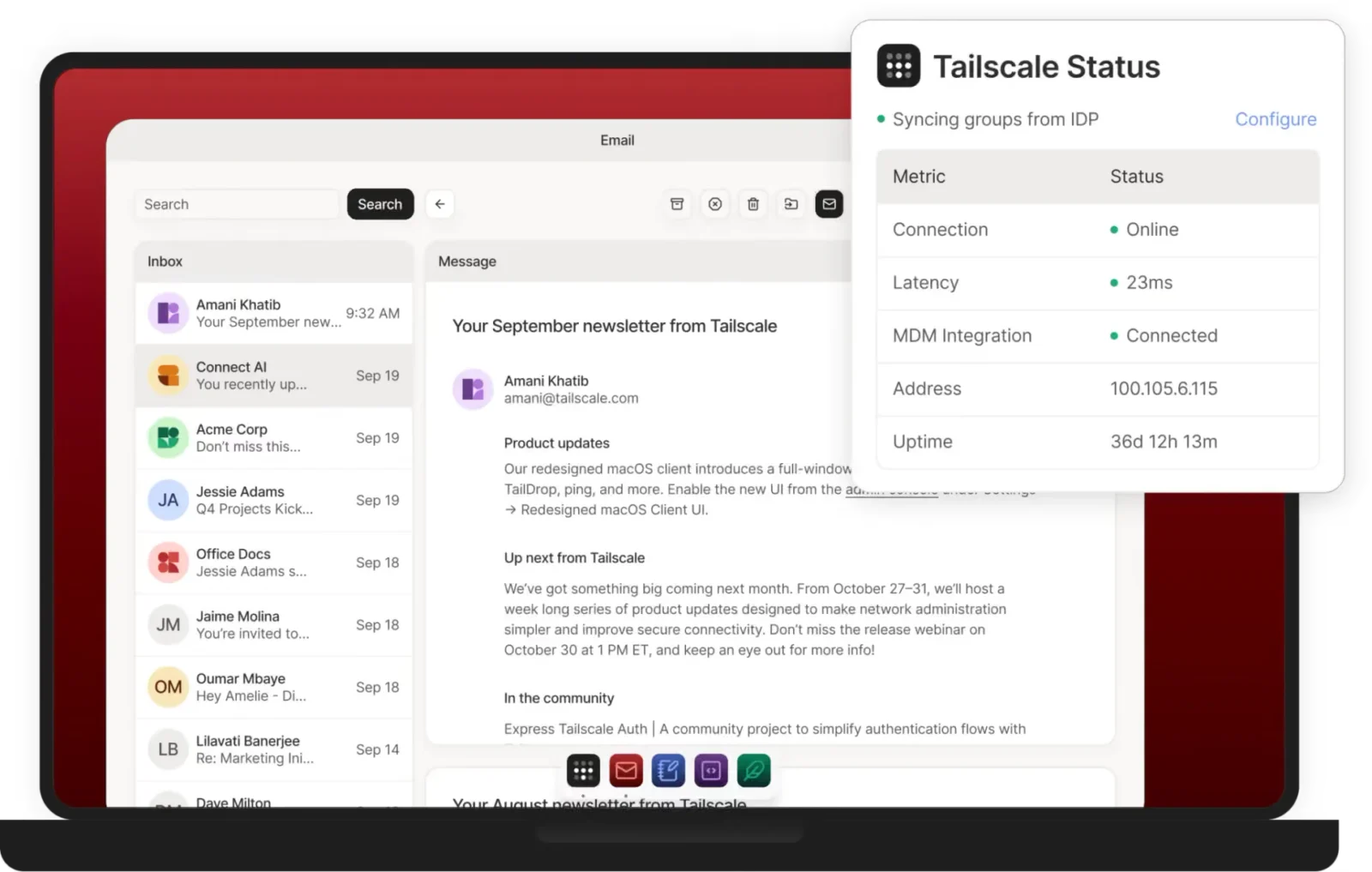
Tailscale connects users, devices, and workloads in a private network called a tailnet. It uses WireGuard encryption and attempts direct device connections, with relay options when network conditions prevent direct connectivity.
Its hosted coordination service distributes public keys and network configuration rather than routing ordinary traffic. Subnet routers can extend access to devices that cannot run the client, while access policies govern which tailnet devices may connect.
The product serves individual users as well as engineering and IT teams. Buyers should account for the seat-based business pricing, tagged-resource charges, and the policy configuration needed to control access.
A quick way to understand who this product may suit, where its limits matter, and which facts are most relevant before you compare alternatives.
Individuals, developers, and IT teams that need to connect devices, servers, cloud workloads, or private services through an identity-aware encrypted network.
Buyers requiring a fully self-hosted control plane, or teams that need predictable costs without seat and tagged-resource accounting, should assess deployment and billing requirements before adopting it, and should evaluate alternatives such as NetBird or ZeroTier instead.
Android, iOS, Linux, macOS, Windows
8.4/10
These are the product-specific differences that may matter when deciding whether the software fits your workflow. They are based on documented evidence rather than a universal ranking.
These are documented constraints or practical friction points that may matter before you adopt the product.
Administrators should review or replace the initial policy before relying on it to restrict access between devices.
Evidence source ↗A team should choose a plan before it needs to add users, devices, or authentication keys after the trial.
Evidence source ↗Billing administrators need to remove unused seats and account for month-end seat changes.
Evidence source ↗Firewall and NAT conditions can affect throughput and latency even though relayed traffic remains encrypted.
Evidence source ↗For security-sensitive software, TechZella focuses on documented architecture, authentication, data handling, deployment and privacy details that can affect a buying decision. This is product research, not an independent security audit.
| Encryption | WireGuard encryption for device traffic, including relayed traffic. |
|---|
Official security documentation describes WireGuard as the data-plane encryption mechanism and says device private keys remain on their respective nodes.
Source ↗Security claims are presented only when supported by documented sources. The presence of this section does not constitute a penetration test, certification or independent security audit.
Free plan for up to 6 users with unlimited user devices. Non-commercial personal use is supported.
Check current pricing →Self-service team plan; review the official plan comparison for current feature and resource limits.
Check current pricing →Paid plan with additional features and higher resource allowances than Standard, according to the plan comparison.
Check current pricing →Custom pricing and bundling for organizations adopting the broader Tailscale platform.
Check current pricing →Pricing may change. Verify current plans on the vendor's website.
Compare similar products directly, then see which alternatives may make more sense when your requirements differ.
| Decision factor | Tailscale | NetBird | ZeroTier |
|---|---|---|---|
| Pricing model | Standard is listed at $8 per user per month; Premium is $18 per user per month. | Team is listed at €6 per user per month; the page also offers a free tier. Source ↗ | Essential is listed at $18 per month and includes 10 devices, then $2 per additional device. Source ↗ |
| Deployment model | Hosted coordination and relay service with device clients and workload deployment options. | Offers both cloud and self-hosted deployment options. Source ↗ | The Enterprise plan lists self-hosted and air-gapped deployment. Source ↗ |
| Network access capabilities | Documents direct, peer-relay, and DERP connections, along with subnet routers and exit nodes. | Pricing lists peer-to-peer connections, access controls, private DNS, and network routes. Source ↗ | Provides virtual networking plans with network administration, flow rules, and device-based pricing. Source ↗ |
Only factors supported by the available research are shown. The comparison is descriptive, not a ranking.
These products address broadly similar requirements. The descriptions focus on documented reasons a buyer might compare them with Tailscale.



| Pricing model | Free personal plan; paid plans priced per user monthly; Enterprise custom pricing. |
|---|---|
| Free plan limit | Up to 6 users; unlimited user devices. |
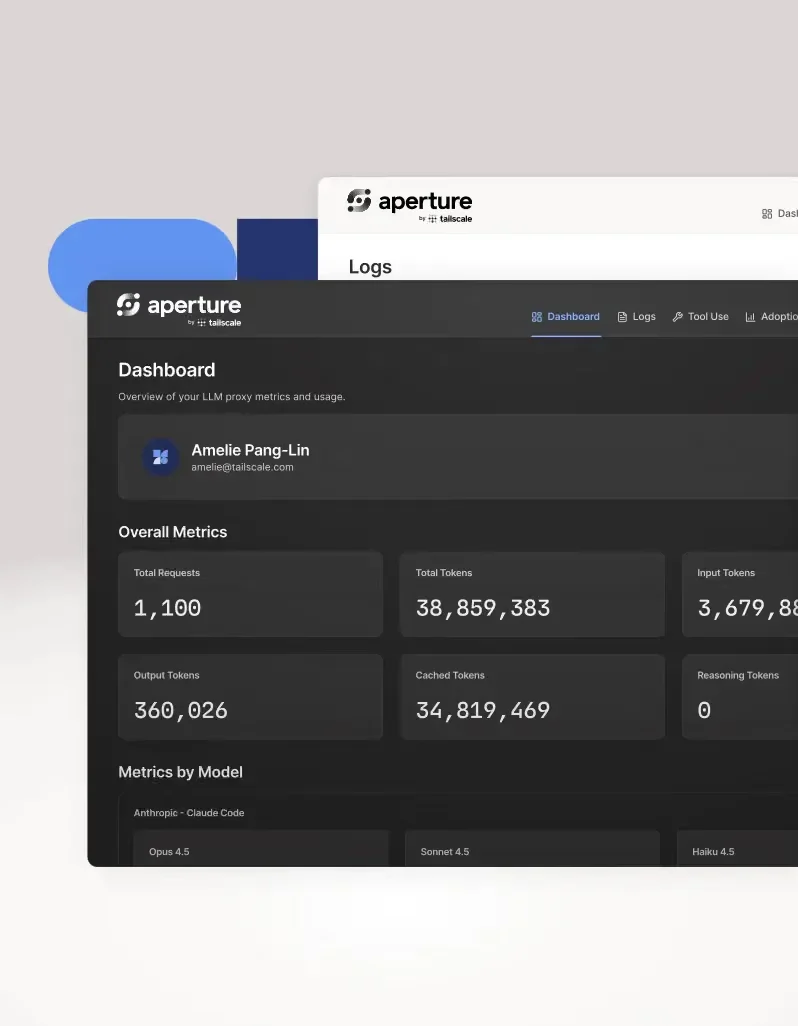
| API | Available on all plans; API access tokens expire after a selected 1 to 90 days. |
| Encryption | WireGuard encryption for device traffic, including relayed traffic. |
| Client operating systems | Linux, macOS, Windows, iOS, Android, plus Chromebook and other documented devices. |
| Workload options | Kubernetes operator, sidecar, proxy, subnet router, and Docker image. |
| Free trial | 14-day Enterprise trial for custom-domain signups. |
| Tagged resources | 50 included in the listed plan comparison; additional resources listed at $1 per month each. |
Verified installation, hosting, administration, or environment details that can affect implementation.
| Installation or hosting | Install clients on supported devices; Tailscale also provides Kubernetes operator, sidecar, proxy, subnet-router, and Docker deployment approaches. The hosted coordination and relay service supports network administration and connection negotiation. Source ↗ |
|---|---|
| Client platforms | Official installation instructions cover Linux, macOS, Windows, Chromebook, iOS, Android, Apple TV, and Amazon Fire devices. Source ↗ |
Documented portability, standards, export, or switching considerations. No switching-cost score is shown unless the evidence supports one.
Subnet routers can provide tailnet access to devices on existing subnets that cannot run the Tailscale client, allowing a gradual transition. Route advertisement and access policy require configuration.
Evidence source ↗A proprietary editorial score based on product capabilities, usability, value, performance, support and user sentiment evidence.
Scores reflect documented networking, routing, access-policy, API, and client features, current public plans, and a limited set of accessible G2 review evidence. No hands-on testing was performed.
Methodology v1.0. The assessment weighs feature coverage (25%), ease of use (15%), value for money (20%), performance (15%), support (10%) and user sentiment (15%), using researched product evidence and verified review evidence where available. It is a TechZella editorial assessment, not a direct user-review average.
Key claims are linked to the sources used to verify them. This evidence record is separate from third-party user ratings.
TechZella evaluates software using documented product capabilities, pricing information, usability and value considerations, independent user evidence where available, and competitive context. The assessment is an editorial review, not a hands-on test unless one is explicitly identified. Our editorial assessment is based on 5 documented sources.
A company security bulletin timeline says Tailscale started in March 2019; its 2020 launch post also says the company was founded just over a year earlier.
View source ↗Verified 2026-11-21Official security documentation describes WireGuard as the data-plane encryption mechanism and says device private keys remain on their respective nodes.
View source ↗Verified 2026-11-21The API reference explicitly states availability across all plans and describes network automation through API access tokens.
View source ↗Verified 2026-11-21The pricing page says custom-domain tailnets begin with a 14-day Enterprise trial, while personal-domain signups are assigned to the Personal plan.
View source ↗Verified 2026-11-21The official pricing page lists those monthly per-user prices alongside Personal at $0 and Enterprise at custom pricing.
View source ↗Verified 2026-11-21The access-control documentation describes the initial policy behavior and recommends defining access rules to control connections.
View source ↗Verified 2026-11-21Answers begin with the clearest available response, followed by the context that helps you act on it.
No reviews yet. Be the first to share your experience.
Please log in to submit a review.