
CONVERGE Explore licenses are learning licenses, not commercial licenses.
A team intending to run proprietary or commercial cases must evaluate academic or commercial licensing instead.
Evidence source ↗
CONVERGE is computational fluid dynamics software with automated meshing, adaptive mesh refinement, and models for complex and moving geometries.
Official materials document autonomous meshing, adaptive refinement, specialized physics, Windows and Linux support, and cloud licensing. Commercial pricing is not fully public, and no verifiable review rating was found.
This profile combines documented product information and independent evidence where available. It is not a hands-on test unless TechZella explicitly identifies one.
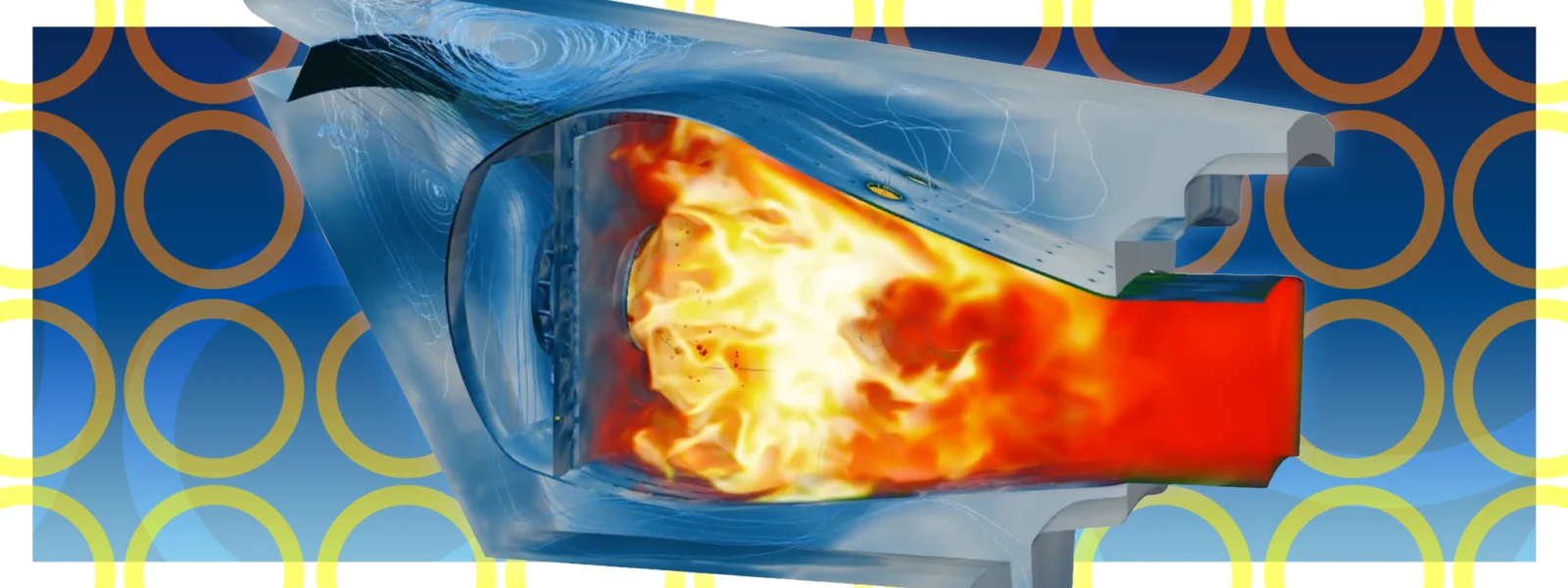
CONVERGE is computational fluid dynamics software developed by Convergent Science. The company says it sold its first CONVERGE licenses in 2008. Its workflow combines runtime mesh generation with adaptive mesh refinement, and supports complex moving boundaries and multiple physical models.
Applications listed by the vendor include engines, gas turbines, pumps, compressors, wind energy, biomedical flows, and hydrogen systems. CONVERGE is available for Windows and Linux; Horizon provides an on-demand cloud option.
A quick way to understand who this product may suit, where its limits matter, and which facts are most relevant before you compare alternatives.
Engineering teams and researchers running CFD cases involving moving geometries, combustion, heat transfer, multiphase flow, or complex flow physics.
Learners or commercial teams seeking an unrestricted free license; the Explore license is limited to learning use, eight cores, one node, and one million cells, and should evaluate alternatives such as Ansys Fluent or STAR-CCM+ instead.
Cloud, Linux, Windows
6.6/10
These are the product-specific differences that may matter when deciding whether the software fits your workflow. They are based on documented evidence rather than a universal ranking.
These are documented constraints or practical friction points that may matter before you adopt the product.
A team intending to run proprietary or commercial cases must evaluate academic or commercial licensing instead.
Evidence source ↗These limits may constrain larger learning simulations and make the license unsuitable for scaling production workloads.
Evidence source ↗Buyers should request a quote and confirm license scope and compute arrangements before budgeting.
Evidence source ↗Free learning license; not for commercial or proprietary use. Limited to eight cores, one node, and one million cells.
Check current pricing →Academic licensing is available through the vendor's academic program. License terms and fees depend on the inquiry.
Check current pricing →Contact the vendor for commercial license pricing.
Check current pricing →Published rate depends on subscription tier and allocated cores; on-premise use with an on-demand license incurs a $50 monthly license-server fee.
Check current pricing →Pricing may change. Verify current plans on the vendor's website.
Compare similar products directly, then see which alternatives may make more sense when your requirements differ.
These products address broadly similar requirements. The descriptions focus on documented reasons a buyer might compare them with CONVERGE CFD.




| Software type | Computational fluid dynamics |
|---|---|
| Latest release referenced by vendor | CONVERGE 6 |
| Supported operating systems | Windows and Linux |
| Deployment options | Local installation, customer hardware, or CONVERGE Horizon on-demand cloud |
| Free license restrictions | Explore: eight cores, one node, one million cells; learning use only |
| API | No general-purpose public API was verified; product materials describe an MCP server for CONVERGE Studio in CONVERGE 6. |
| Integration | Documented JMAG NASTRAN file import for a coupled heat-transfer workflow |
Verified installation, hosting, administration, or environment details that can affect implementation.
| Installation or hosting | CONVERGE supports Windows and Linux computers. CONVERGE Horizon is an on-demand cloud option; the company also documents use on customer hardware. Source ↗ |
|---|---|
| License server | The Windows installation guide says floating licenses require a license server; node-locked licenses do not. Source ↗ |
A proprietary editorial score based on product capabilities, usability, value, performance, support and user sentiment evidence.
Official materials document autonomous meshing, adaptive refinement, specialized physics, Windows and Linux support, and cloud licensing. Commercial pricing is not fully public, and no verifiable review rating was found.
Methodology v1.0. The assessment weighs feature coverage (25%), ease of use (15%), value for money (20%), performance (15%), support (10%) and user sentiment (15%), using researched product evidence and verified review evidence where available. It is a TechZella editorial assessment, not a direct user-review average.
Key claims are linked to the sources used to verify them. This evidence record is separate from third-party user ratings.
TechZella evaluates software using documented product capabilities, pricing information, usability and value considerations, independent user evidence where available, and competitive context. The assessment is an editorial review, not a hands-on test unless one is explicitly identified. Our editorial assessment is based on 6 documented sources.
The company profile gives its founding year and says its first licenses were sold in 2008.
View source ↗Verified 2026-11-10The product and meshing pages describe automated runtime meshing and refinement during simulations.
View source ↗Verified 2026-11-10The product page identifies CONVERGE 6 and outlines an MCP server and downloadable skills for selected Studio workflows.
View source ↗Verified 2026-11-10The Explore program page states the usage restrictions and distinguishes the license from full licenses.
View source ↗Verified 2026-11-10The Horizon page publishes per-core price ranges across subscription tiers and core-count bands.
View source ↗Verified 2026-11-10JMAG's partner page describes importing JMAG NASTRAN files into Studio and applying thermal conditions for coupled heat-transfer simulations.
View source ↗Verified 2026-11-10Answers begin with the clearest available response, followed by the context that helps you act on it.
No reviews yet. Be the first to share your experience.
Please log in to submit a review.